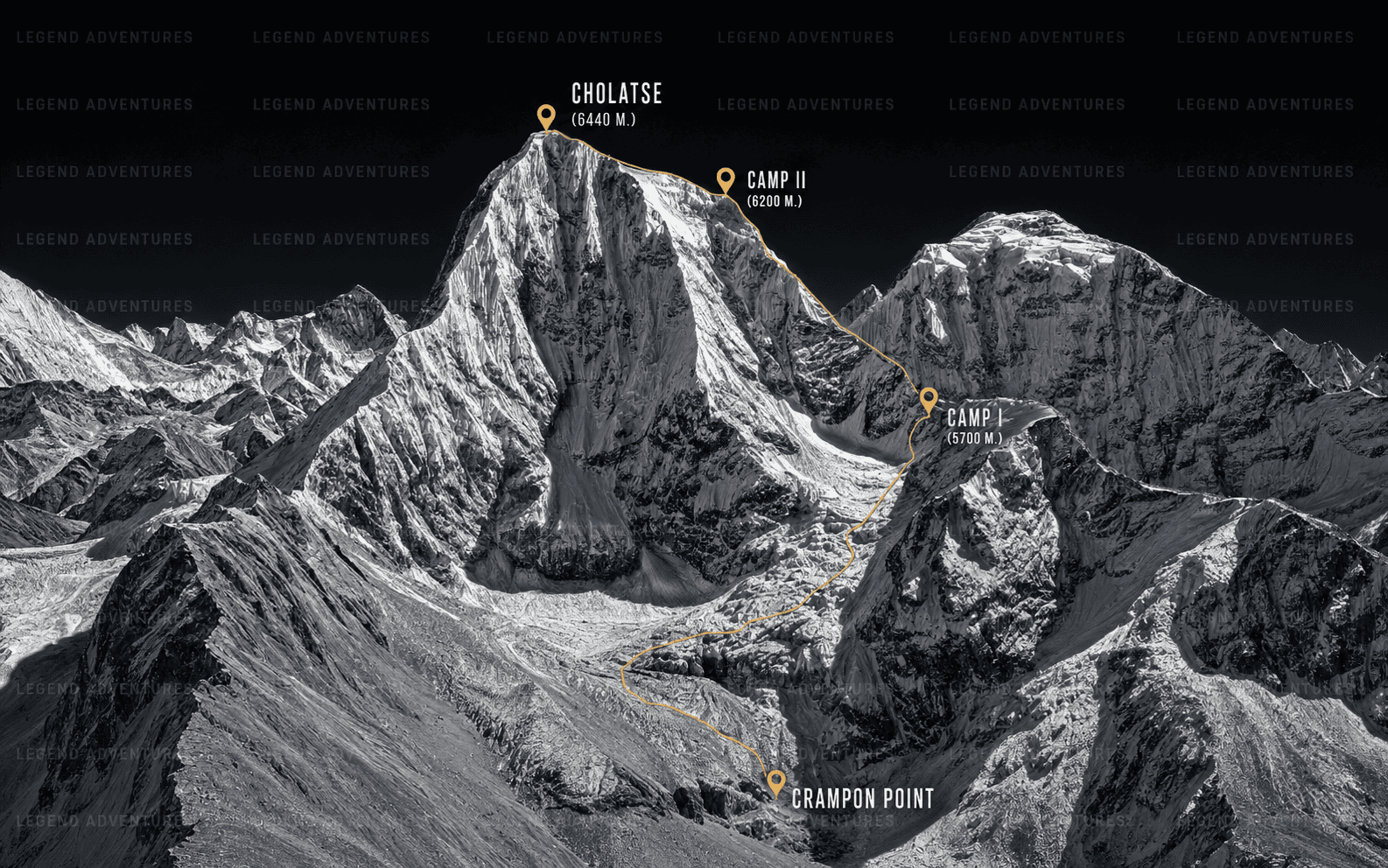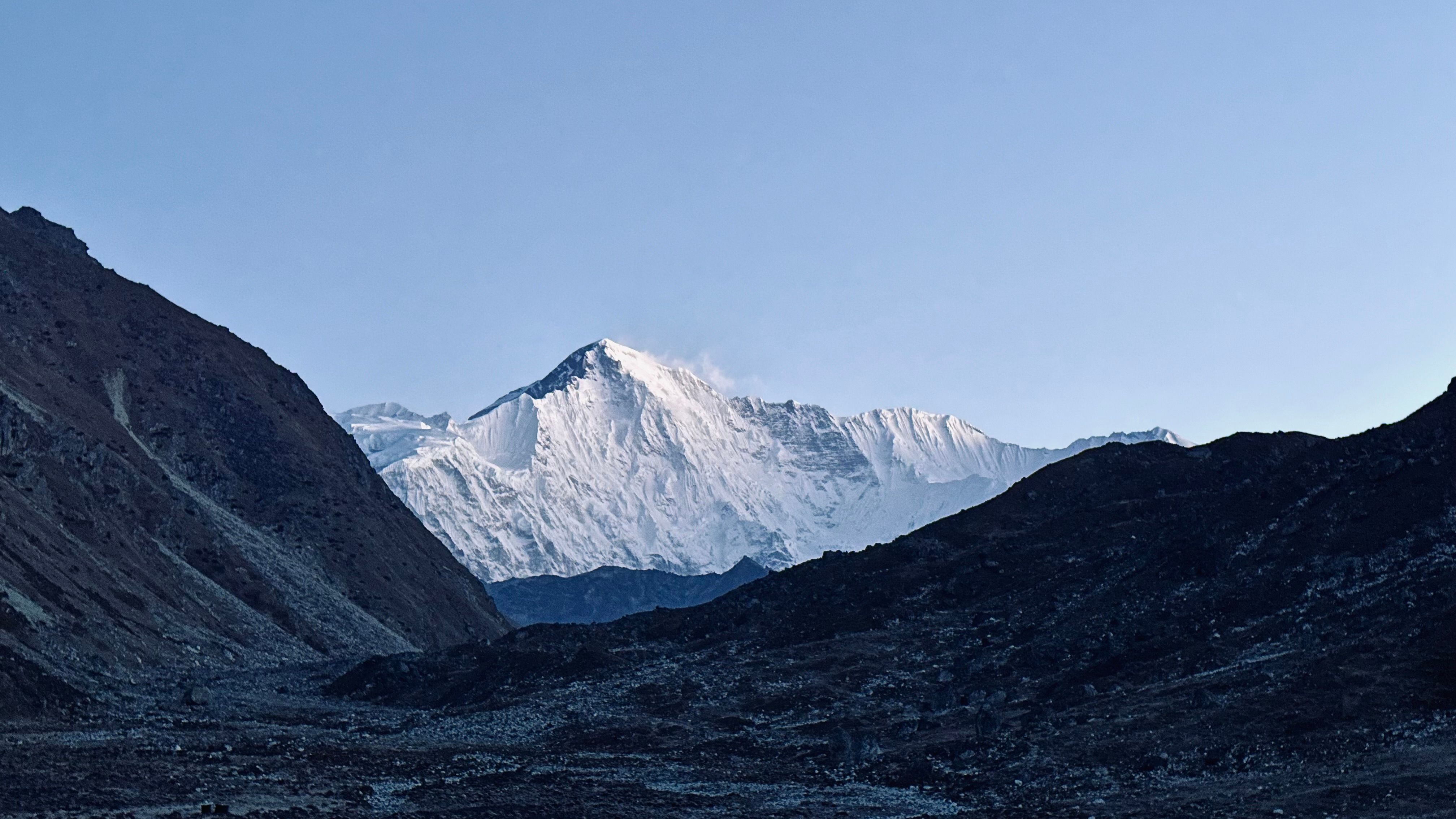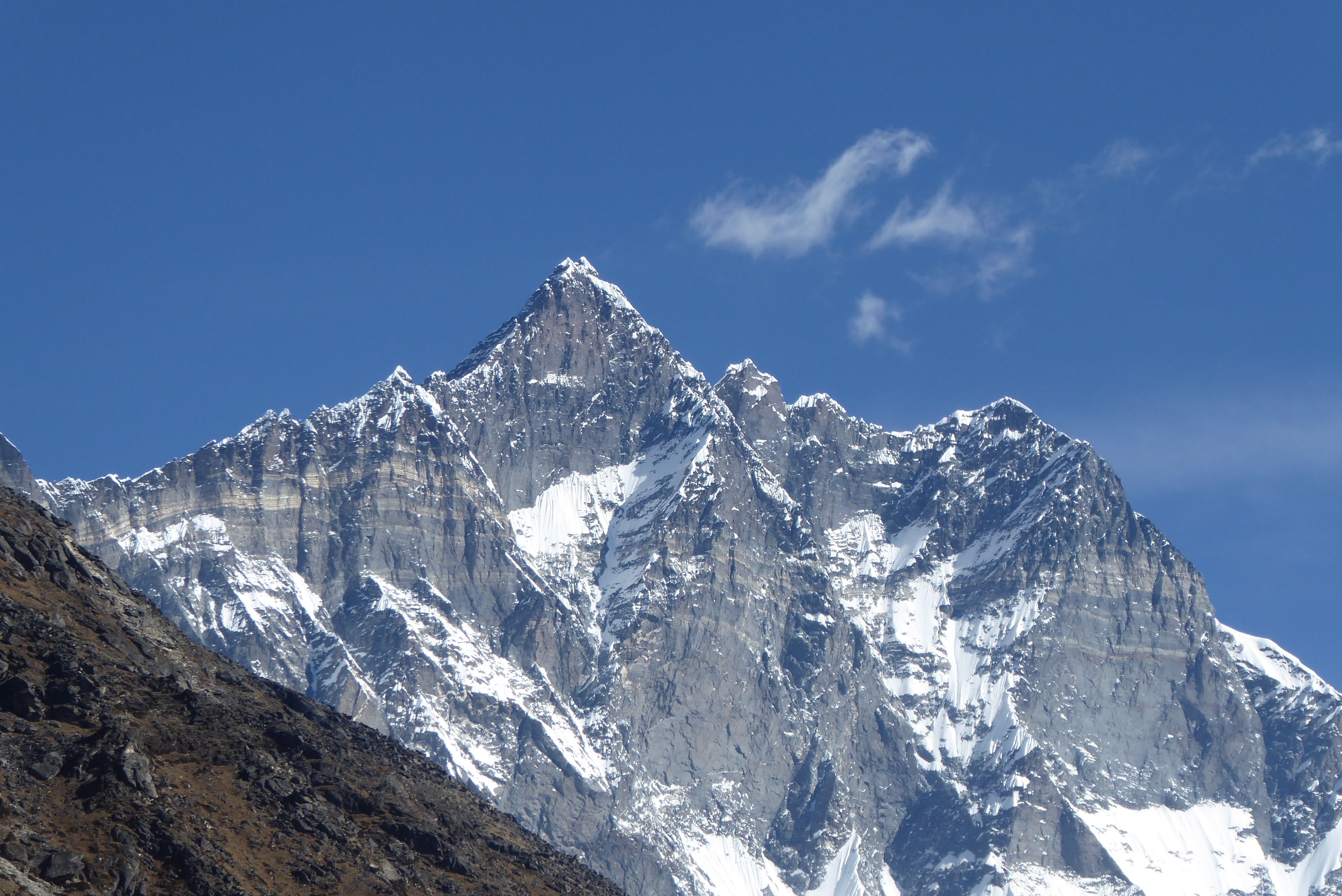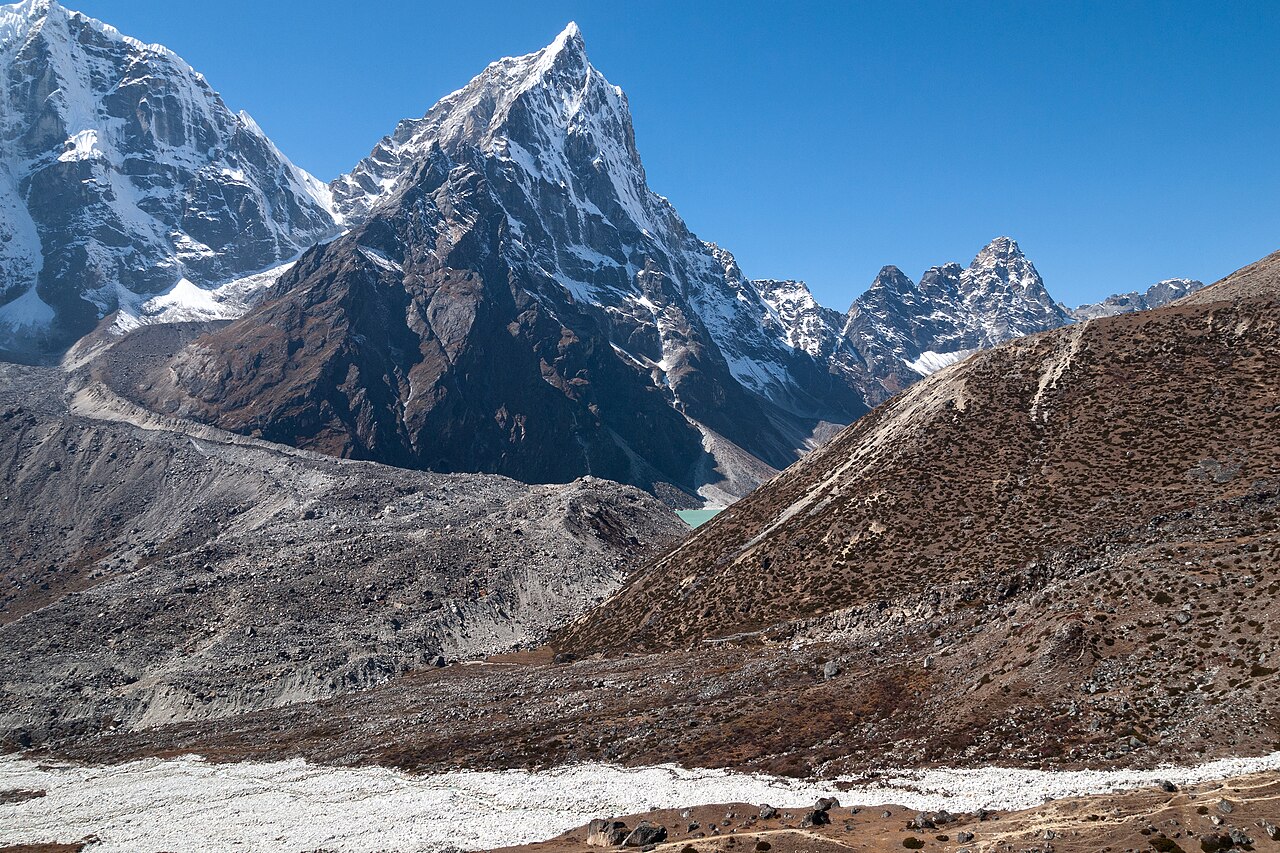
Cholatse Peak Climbing 2026 is one of the technical 6000ers located in the middle of the Khumbu and Gokyo Valleys. The steep climbing lines and the steep SW ridge makes Mt. Cholatse a formidable mountain to climb even for experienced climbers. The challenges are a lot, and the reward at the top is greatly valued.
The first to climb Cholatse on the southwest ridge were Vern Clevenger, Galen Rowell, John Roskelley, and Bill O'Connor, in 1982. Since then, the route has been followed by climbers.
Cholatse Peak Climbing is an amazing challenge of your stamina in a remote and secluded area of the Everest region. It is more favored by experienced climbers; thus, it's not as crowded as other popular peaks such as Mera Peak and Island Peak.
To base camp is a flight (to Lukla) followed by Phakding, Namche Bazaar, Dole, Machherma, Gokyo, Thagnak, Base camp, and finally the summit. We then retrace the path back to Lukla and fly back to Kathmandu.
Best season to climb Cholatse Peak
Autumn (late September to November) and spring (March-May) are the best times to climb Cholatse Peak (6,440 m / 6,423 m); the latter is usually more stable with views. Conditions are best in these seasons with the comfort of warm temperatures and no less clear skies to cross over the steep, exposed, and technical glacial landscape.
Preparation and Training
As an NMA trekking peak, Cholatse is one of the most technical 6000m peaks of the Himalaya. It rises between the Gokyo valleys and Khumbu valleys with almost every pitch above Base Camp high-angle snow, ice, and mixed rock climbing with no easy route to the summit on the Southwest Ridge. Not a beginner's goal, but the climber should also have two or more climbing 6000m trips prior to this, particularly multi-pitch rock and ice climbing (D+/5.9-5.10 and higher), and experience and comfort on fixed ropes beyond sustained exposed ground, and Ice climbing experience (WI2+/5.10 and higher). Many people suggest that you hike the peaks of Island Peak, Lobuche East, Chulu West and Ama Dablam first.
Training should start at least 6 months ahead, and should include high-volume cardiovascular training and focused technical training including steep ice climbing, mixed rock and ice movement, multi-pitch rope systems and under-load rappelling. Aerobic fitness, strength and grip endurance are also a factor here: The crux areas and the narrow, corniced summit ridge demand speeded-up endurance as well as controlled and precise movements, which are more about the endurance of hands and legs than merely speeded-up endurance. The advantage of most itineraries is that they start acclimatising on Lobuche East or Gokyo Ri, prior to reaching Cholatse Base Camp, which is a wonderful place to spend more time above 5,500-6,000m.
Gear and Equipment
Cholatse's technical conditions require complete alpine climbing equipment, besides high elevation clothes and camping gear.
-
Technical mountaineering boots – double-layered – crampons allowed.
-
Crampons, technical tool (front-point), ice axe and another technical tool
-
A full harness/ascender/descender and a full set of carabiners and slings.
-
Helmets, headlamps, sunglasses and sunblock.
-
Don't forget down layers or a down suit for Camp 2 and summit day.
-
Hypothermic sleeping bag.Cold weather sleeping bag.
-
Base layers, fleece and mixed weather – Hardshell
-
Approach trek daypack and trekking poles.
-
Personal first aid kit and prescribed medication (as appropriate)
-
On the upper mountain (to be provided by the team)
-
Gather at the Base Camp/high camp with equipment (tents, kitchen supplies).
-
High altitude rescue and travel insurance are also offered. Travel and high altitude rescue insurance is available as well.
Safety and Support
The danger of Cholatse is due to its technical features: the narrow passage of crevasse at Camp 2 to summit, the single climber-only small passage through rock/ice at the true summit, and steep exposure on either side of the route at the summit with serious consequences if slips occur. This is a mountain where the size of the group is less important than the skill level of clients and the guiding person; it's a mountain in which good fixed rope management and pacing of an experienced and well-controlled climbing group is more important than a large group.
The safety plan will depend much on the quality and timing of the fixing of the ropes, as well as on the close watch of the weather; the ridge is open to the wind. Evacuation is possible along the Khumbu and Gokyo trekking routes, if there is a need to evacuate, which will depend on the ability to reach lower, more accessible areas along the trekking route. Helicopter evacuation may be available as needed in these areas. The rotation before the high-consequence, sustained terrain of Cholatse is to acclimatize the climbers for the technical climb on Lobuche East or Gokyo Ri.
This expedition is led by our experienced Sherpa climbing team who have the technical expertise and knowledge of the challenging Southwest Ridge of Cholatse and is one of the most challenging but rewarding expeditions to undertake in the Khumbu region.