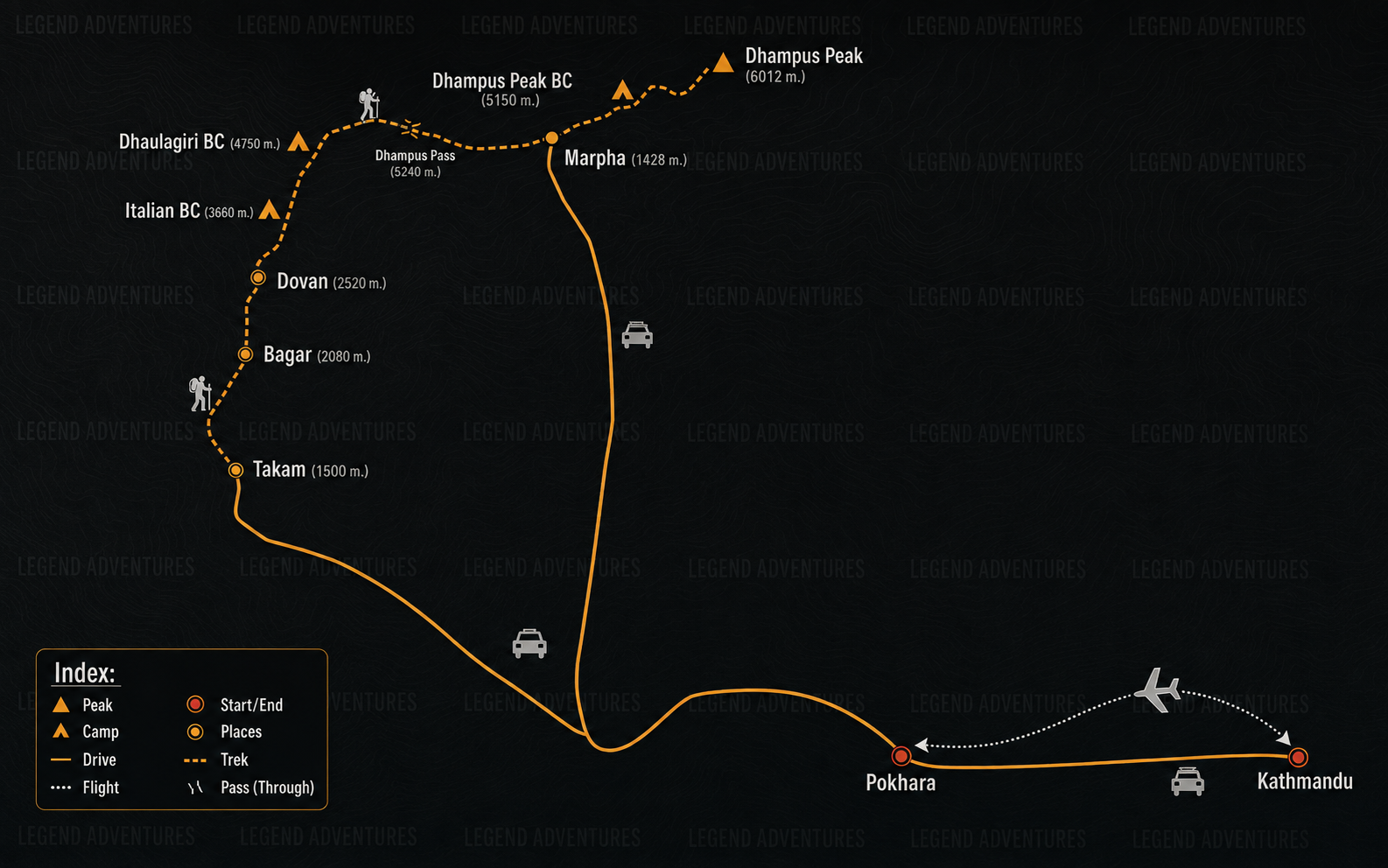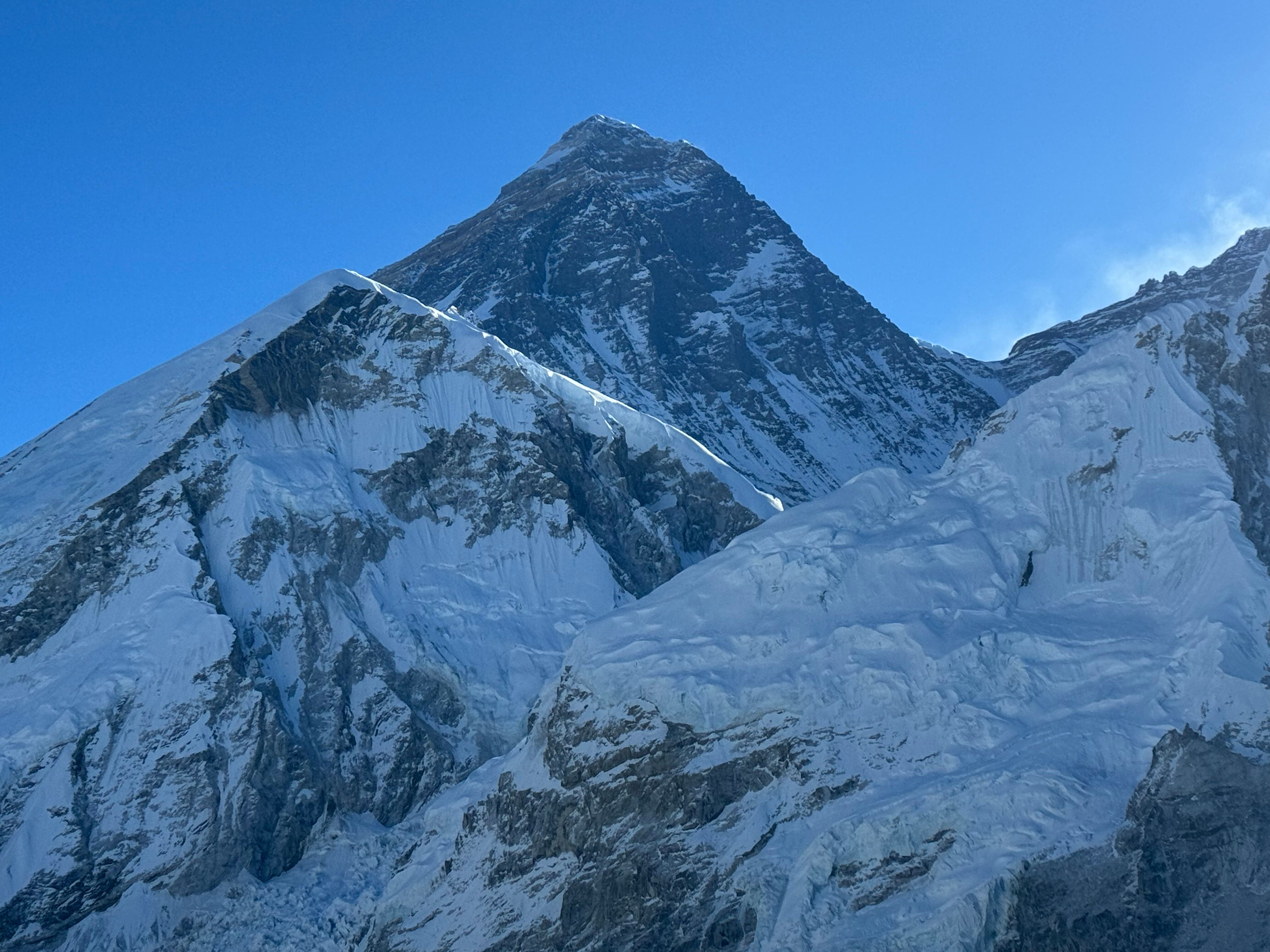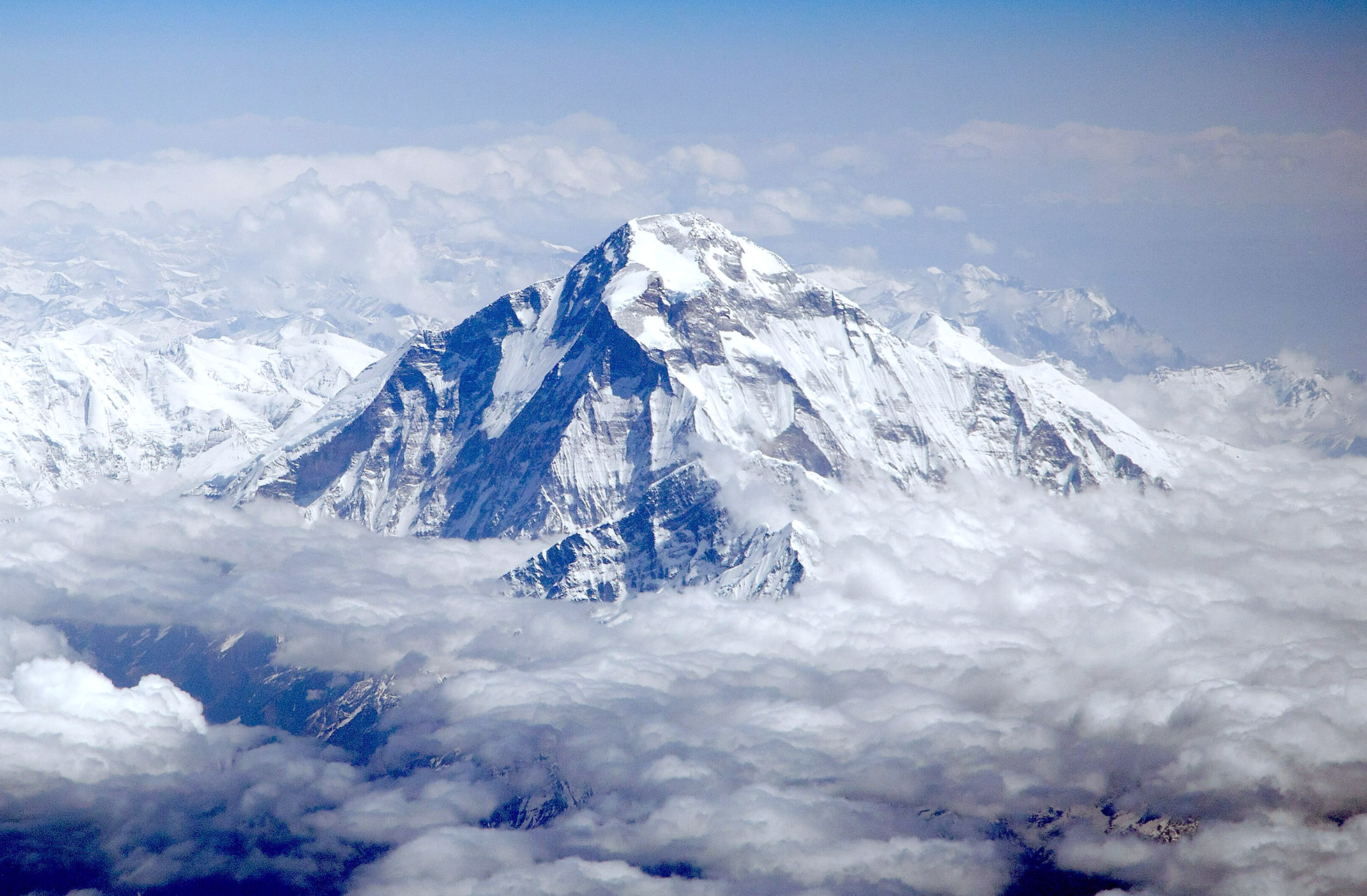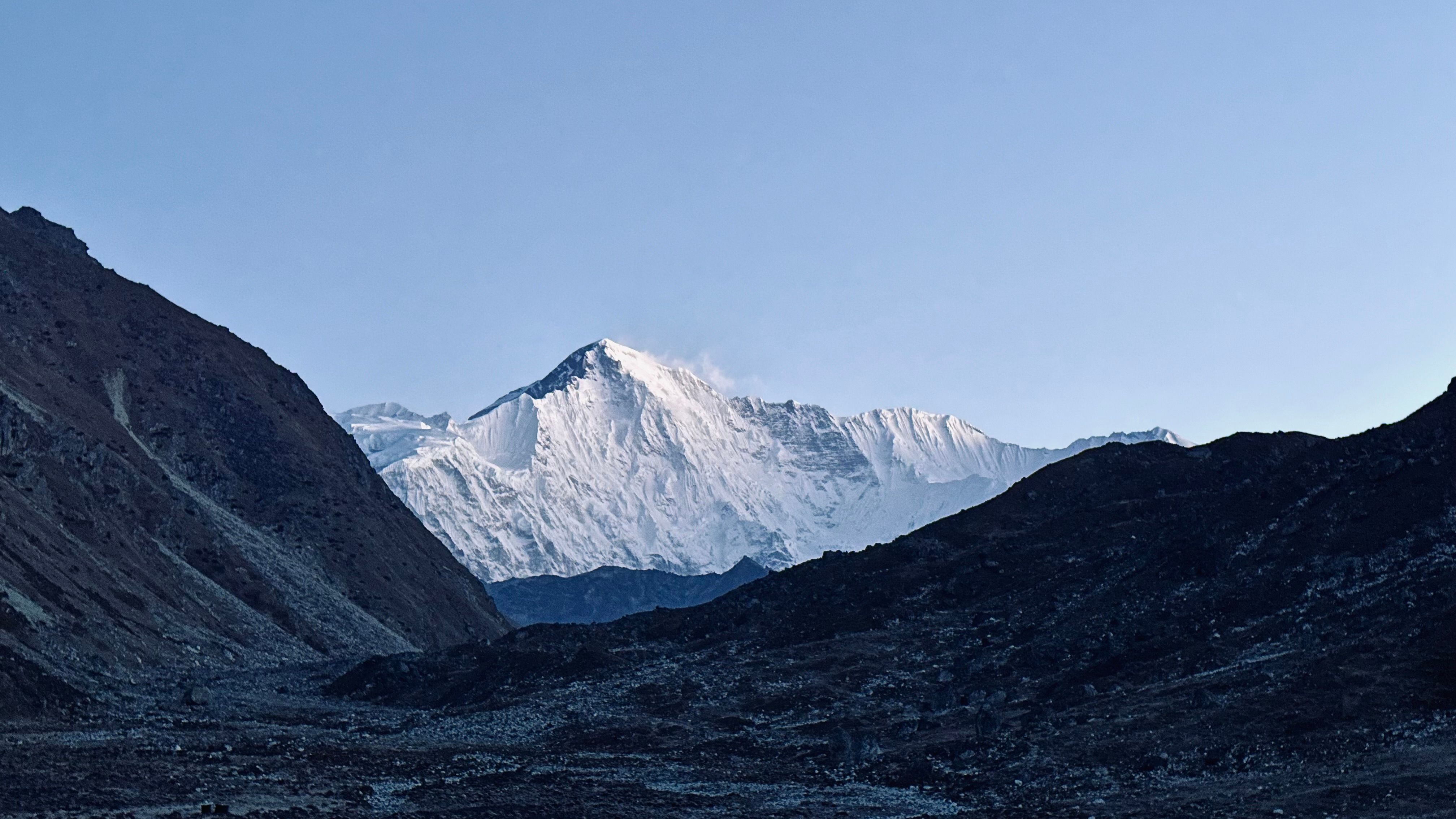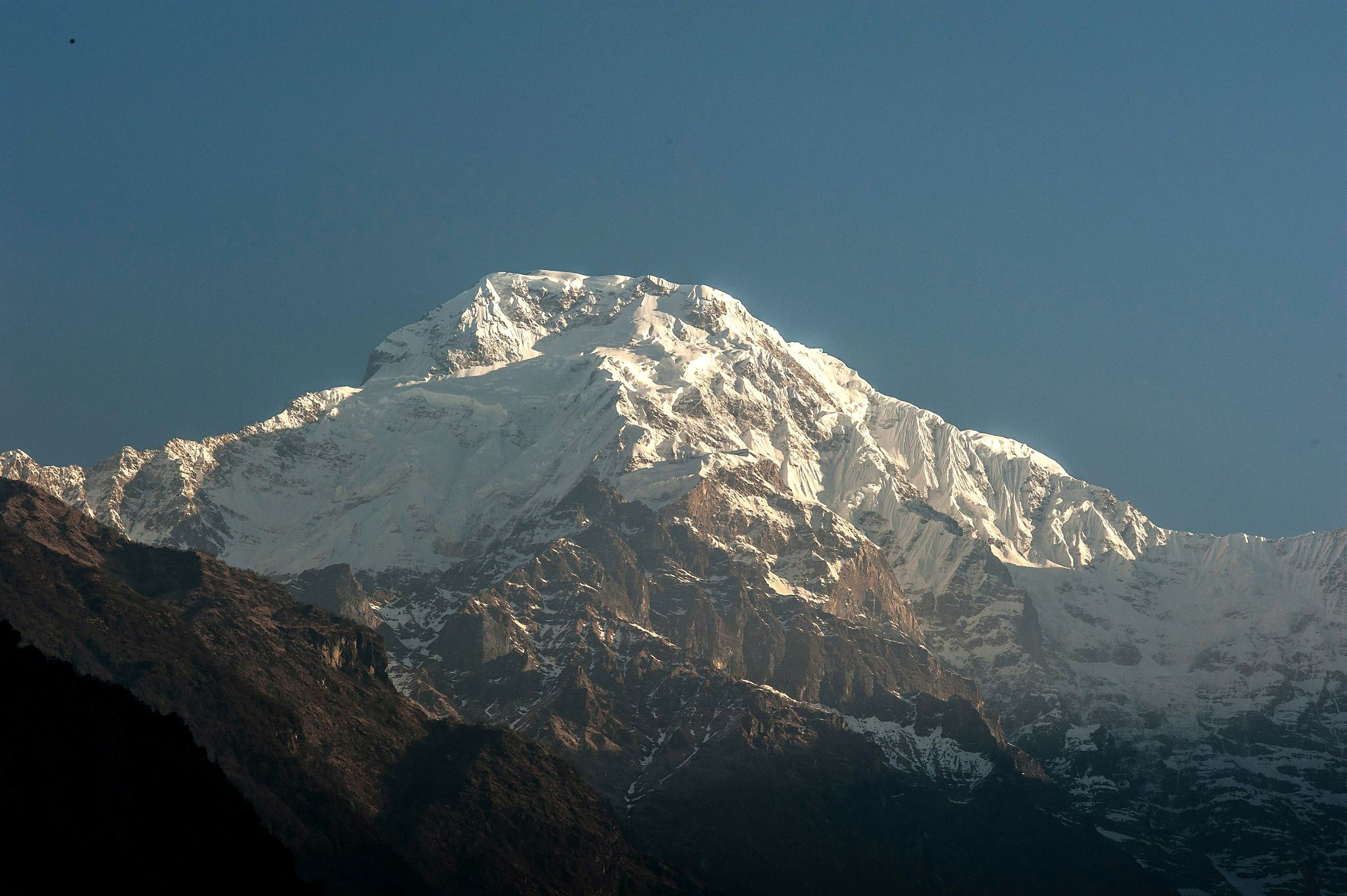
Dhampus Peak, also locally known as Thapa Peak and with a height of 6012m, it is located in the Dhaulagiri massif. This peak is not difficult to climb and requires no special climbing skills. This peak is a wonderful opportunity for the beginning climber who is willing to go up higher mountains.
It is not the day on the mountain itself that makes this climb special, but rather the views from the top of the mountain (from above): Dhaulagiri, Annapurna, Nilgiri, Tukuche are worth every step! It's the walk in. Then the Kali Gandaki Gorge, the world's deepest, and you pass through the villages of Thakali, and before the final push you enter the Hidden Valley. Very few climbers come out like this as opposed to the crowds on Everest or Annapurna trails, and that is what attracts many to come on this trail.
Best Seasons to Dhampus Peak
The most favorable seasons to visit Dhampus are Autumn (October-November) and Spring (March-May) as the weather remains clear and mild in these times.
Preparation and Training
Dhampus Peak is not a difficult climb, but it does require some expert technique. Above high camp, the route is glacier travel, up to the headwall, with fixed ropes needed, and up to the summit ridge on a snow slope, so climbers should bring at least basic comfort, using crampons and an ice axe. There is no previous certification required for mountaineering experience, although anyone who has no experience in the snow should spend one or two days with someone supervising them before summit day.
Stamina is a more important factor; the route through the Dhaulagiri Circuit will take several long days of trekking and a couple of passes over 5000m, even before you reach base camp, that being Thapa Pass. Vigorously loaded backpacking should be done 2-3 months prior, running and cycling for cardiovascular fitness, and a bit of leg building for strength. If you have done trekking on any other route above 5,000m prior to this trip, it will make a significant difference for your body.
Gear and Equipment
Climbing boots, crampon-compatible (insulated) and sturdy trekking boots
-
Crampons, ice axe, harness, and a jumar for the fixed-rope headwall area
-
Helmet, headlamp, glacier glasses, and sunscreen.
-
Down jacket and warm layers for high camp and summit night
-
Sleeping bag capable of withstanding subzero temperatures.
-
The base layers, fleece, and a waterproof outer shell are included.
-
Daypack and trekking poles
-
Personal First Aid Kit and any medication that is routinely taken.
-
Tailored routes and rope preparation above high camp (team organised)
-
Base camp equipment (tents, kitchen equipment)
-
Travel insurance including high altitude rescue
Safety and Support
Dhampus is not the most dangerous peak to climb; it's the most remote. The Dhampus is also much less popular than the Everest and Annapurna region, and in the event of an emergency, rescue is further away, and adequate buffer days should be planned for weather delays or acclimatization delays. The technical sections (headwall and glacier crossing in the upper part) are achievable with the assistance of a guide and some fixed ropes, but require careful pacing and awareness of and sensitivity to the possibility of returning if conditions deteriorate. They will usually closely monitor each of the climbers through the passes and the push to the top because the problem is usually altitude sickness, not technical misfortune. It takes a little while to arrive at base camp after transiting over French Pass and Dhampus Pass (both over 5,000m), and in this part of the acclimatization programme it really does matter.
Our skillful guides have a great deal of experience in the Dhaulagiri Circuit and go slow to ensure that the trekking is safe and sound, as well as the climbing.