The Physical Terrain of the Dhaulagiri Region
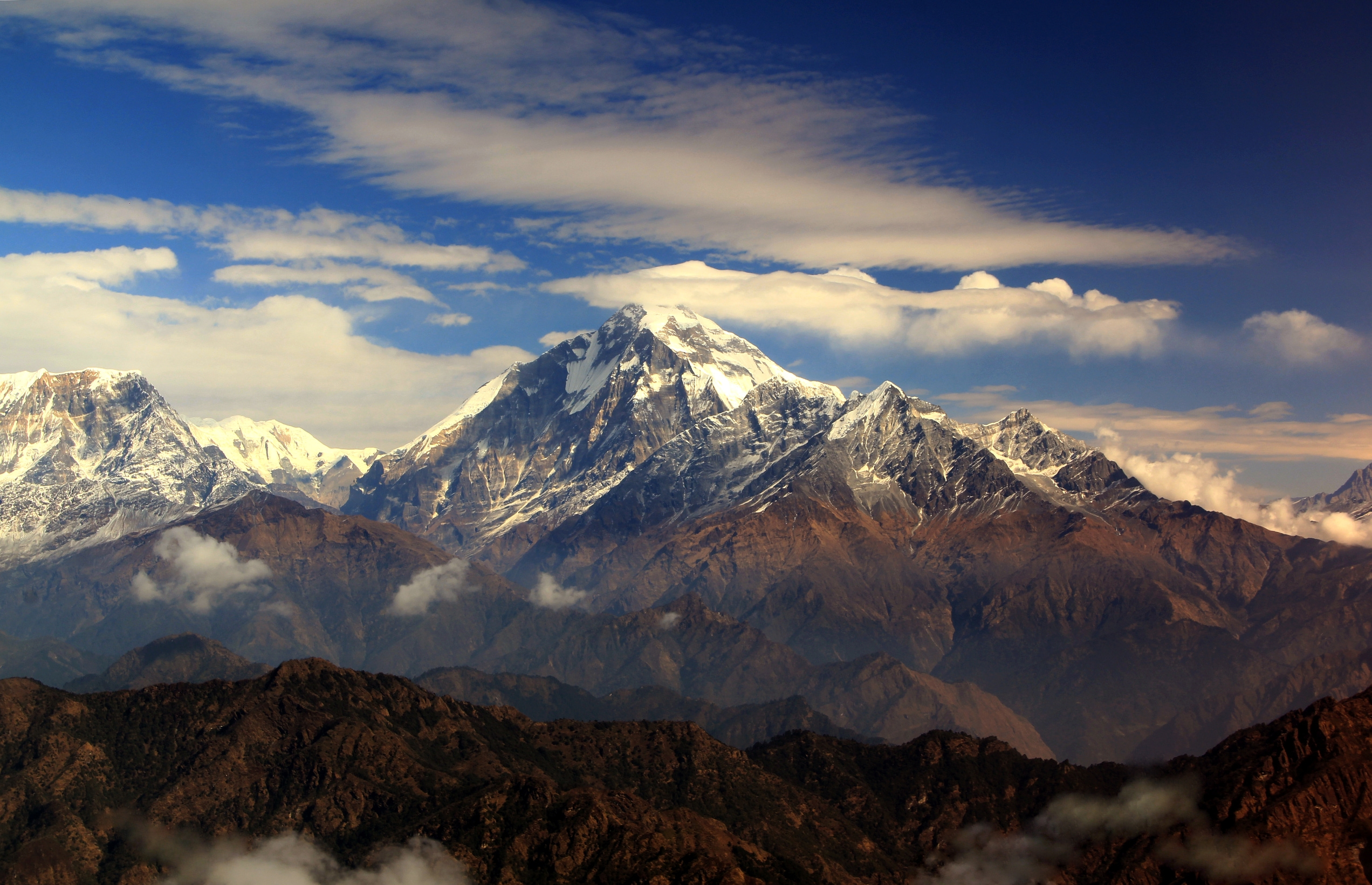
Dhaulagiri lies toward the west of the Kali Gandaki, separated from the Annapurna massif by one of the deepest river-cut valleys in the Himalaya. The journey begins in Pokhara by road toward the remote stone-built village of Marpha via Mustang before parting from the familiar Annapurna trekking trail. Over a span of a few days, travellers witness apple orchards and dry rocky valleys, wind-polished ridges and isolated corners of the Hidden Valley.
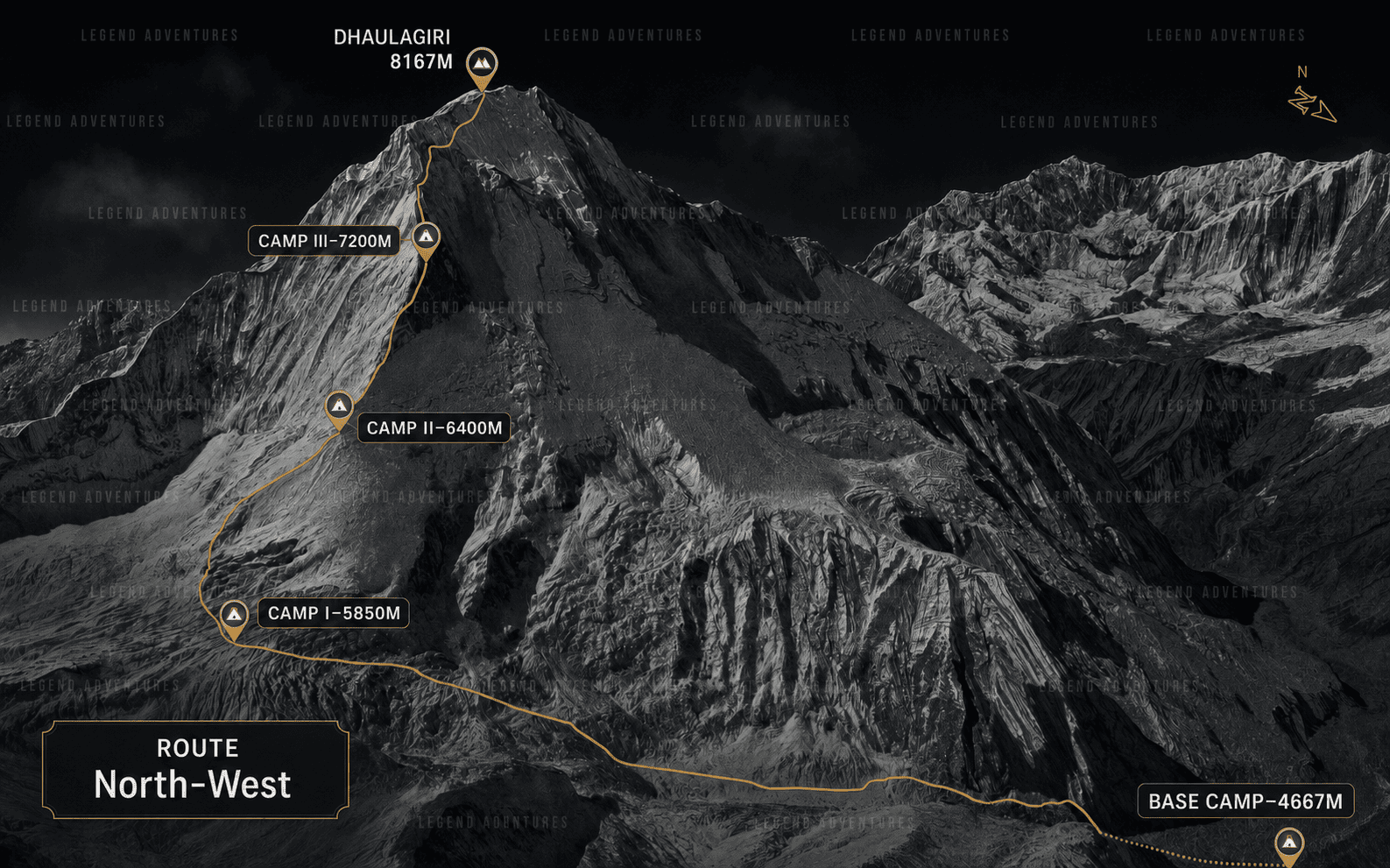
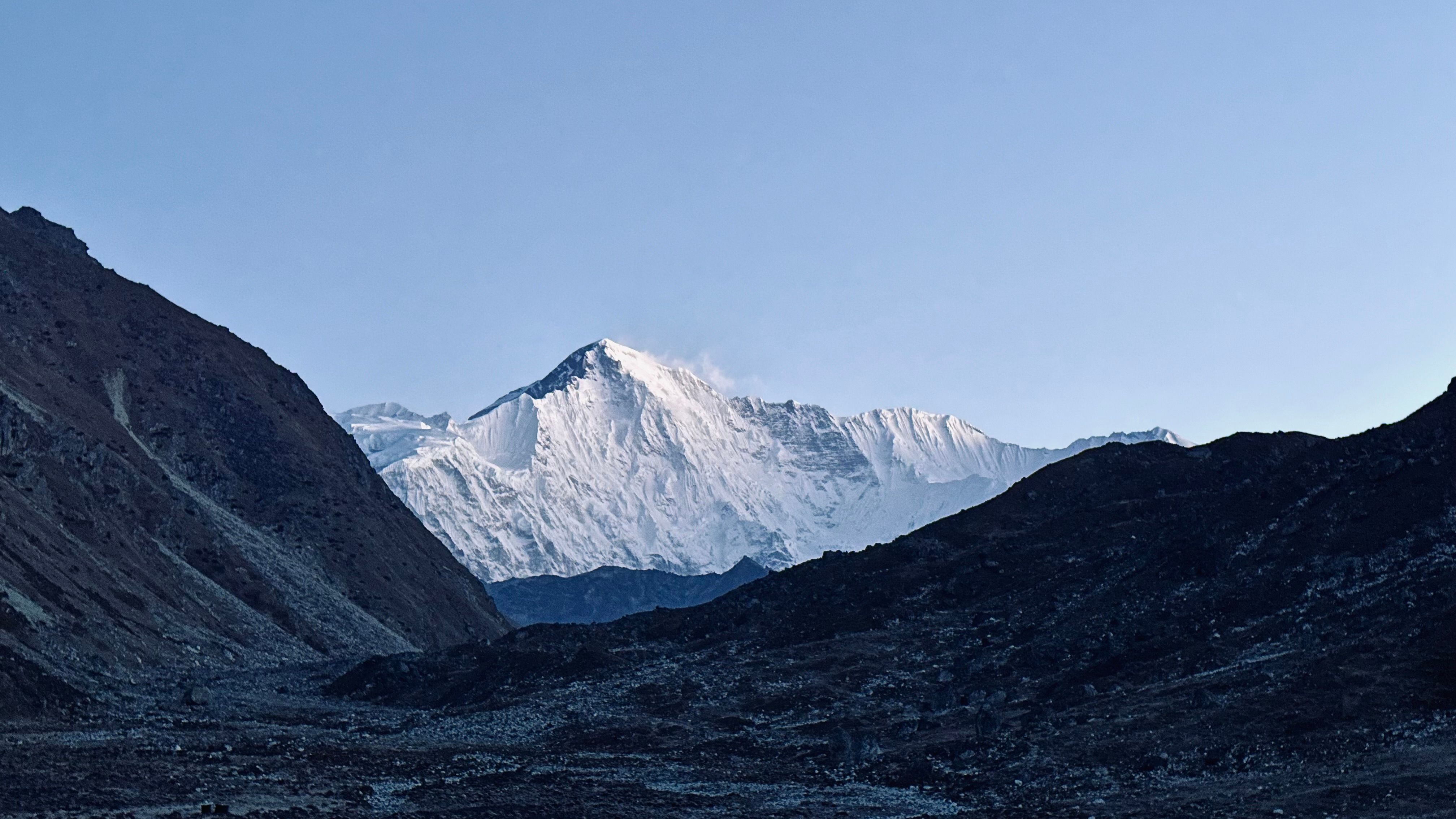
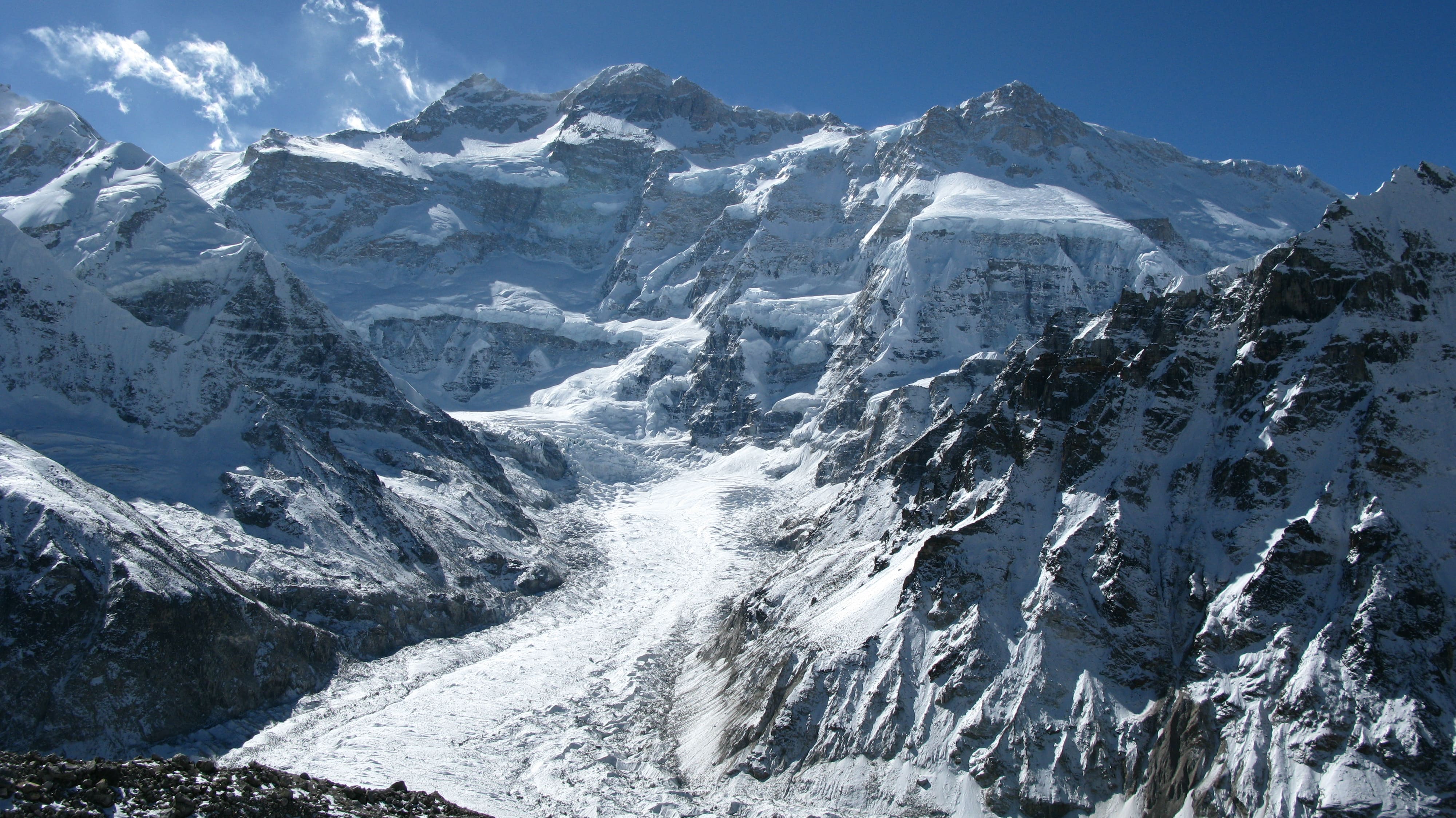
Mt. Dhaulagiri is a mass of snowfields, hanging glaciers, broad shoulders and steep faces that seem to fill the horizon. Its name comes from Sanskrit roots commonly translated as “white mountain”, or “the mountain of Jewels”. This name is justified by the view showcased from Base Camp, where ice dominates the entire visibility. The climbing line is exposed to severe weather, while the distance between higher camps pose a significant challenge during the expedition.
Unlike the earlier phase of the trekking journey, the upper Dhaulagiri approach becomes gradually isolated. All logistics required for the entire climbing period, including the base camp stay, must be arranged in advance, as porters, mule teams, and helicopter-supported cargo may not be widely available on demand.
Remoteness is an ironic part of the experience; it changes how every rescue, resupply and turnaround decision is made but is very satisfying and peaceful.
The Culture of the People in the Dhaulagiri Region
The expedition journey to Dhaulagiri begins from Pokhara, a vibrant city, with mixed culture and traditions. The villages of Marpha are dominated by Sherpa where the lanes are paved with stones and houses colored with white lime. Mustang welcomes the passers with wide apple orchards and Yak pastures. The overall route is less commercial, used specifically by herders, traders and seasonal travelers rather than housed by a significant population. Markets and teahouses are scarce, therefore we spend most nights in camping tents, eat warm food prepared by our cooks and enjoy the tranquility of the isolated Western region of Nepal.
Like all other expeditions, the puja ceremony is held at the Base Camp before the rotation climbs seeking permission from the mountain itself for safe Summit and return.
Best Season for the Dhaulagiri I Expedition
Spring is the preferred season for Dhaulagiri I expedition. April is suitable for teams to establish Base Camp, acclimatize and build the route; May is usually reserved for the strongest summit opportunities before the monsoon clouds enter western Nepal. The mountain is notorious for wind, and a good forecast often means a short period of reduced wind rather than truly calm weather.
Similarly, autumn expeditions are also possible with lower government royalties, but shorter days, colder temperatures and post-monsoon snow patterns make spring the more established commercial season.
Legend Adventures does not schedule a summit based on the date marked in the itinerary. The final push begins only when route condition, wind, health and oxygen reserves are perfectly aligned and favorable.
With proper planning of logistics and an experienced team, we can organize the expedition at any time of year.
Considerations and Trip Notes
Visa Requirements
Most nationalities are eligible for an on-arrival visa at the airport counter. Because the expedition is designed around 40 days and delays can occur on mountain roads or during the summit period, a 90-day visa is the practical choice for most international climbers. We strongly recommend you checking your eligibility before your arrival to avoid any inconveniences.
Insurance Requirements
Dhaulagiri I Expedition requires an explicit insurance policy specialised for an 8000m expedition, covering technical mountaineering, emergency helicopter evacuation, hospital treatment and medical checkup, repatriation, trip cancellation and in worst case, death.
Fitness, Technical and Experience Standards
-
A strong record above 7,000 metres is mandatory. Previous 8,000-metre expedition experience is strongly preferred for this route.
-
Climbers must independently manage crampon technique, fixed-line ascent, Jumar changeovers, rappelling, glacier travel and safe crevasse movement.
-
Comfort with steep snow and hard ice is required; this is not a suitable first expedition for learning high-altitude systems.
-
Each member must be able to operate a mask, regulator and oxygen cylinder without relying on a Sherpa for every adjustment.
-
Expect to function with a 10-12 kg personal load, poor sleep, cold hands and reduced appetite while still making safe technical decisions.
-
Final acceptance is based on climbing history, medical screening and a practical assessment of skills and expedition judgement.
Environmental Conduct Policy with Legend Adventures
The visual purity of Dhaulagiri makes careless waste impossible to excuse. Legend Adventures records oxygen cylinders and critical expedition material, uses managed toilet systems at Base Camp, and requires carrying sealed human-waste bags down from high camps where required, and removes non-biodegradable rubbish from the mountain. Rope, batteries, food packaging and damaged equipment are handled as required even after the completion of the Dhaulagiri I expedition.
Gear List Suggestions
-
8,000-metre down suit, expedition layering system and three-layer waterproof outer shell.
-
Triple mountaineering boots rated for extreme cold, with tested liners, vapour barriers and spare socks.
-
Automatic crampons, alpine axe, helmet, harness, Jumar, descender and a fixed-line safety system configured before arrival.
-
Category 4 glacier glasses, full storm goggles and a spare optical system.
-
Sleeping bag rated around -40°C with a dual insulated-pad arrangement for Base Camp and high camps.
-
Expedition mitts, liner gloves, face protection, balaclava, spare headlamps and cold-resistant batteries.
-
Personal medical prescriptions, power banks, insulated hydration bottles and a satellite communicator if required by the final plan.
We issue a complete checklist after booking. The rule is simple: test critical equipment before Nepal because Dhaulagiri is too high and too remote to discover equipment problems during the summit rotation.
Team Expertise at Legend Adventures
Dhaulagiri I expedition with Legend Adventures is planned under the leadership of an IFMGA-certified mountaineering guide along with an experienced high-altitude team. Each member is assigned a climbing Sherpa for rotations and the summit push. Other team members include senior Sirdar, Base Camp manager, cooks, porters and logistics crew. The climbing team coordinates fixed-line work, high-camp loads and oxygen placement before members commit to the upper ridge.
Base Camp functions as the expedition’s control room. Weather data, radios, satellite communication, medical equipment, oxygen reserves and movement plans are reviewed daily. A leader can change a camp target, shorten a rotation or call the entire team down without waiting for consensus when conditions become unsafe.
Important Note for Dhaulagiri I Expedition
Dhaulagiri does not reward rushed schedules. Its broad glacial basin, high winds, long camp carries and exposed upper ridge make it one of Nepal’s more serious 8,000-metre objectives. This draft follows a standard commercial Northeast Ridge programme with a western approach through Pokhara and Marpha, acclimatization around the Hidden Valley, three high camps, one-to-one climbing Sherpa support and supplemental oxygen for the summit phase.The timetable is a framework, not a promise to move on a fixed date. Snow loading, crevasse conditions, rope-fixing progress, team health and forecast quality decide the actual climbing calendar. Legend Adventures places safe return above summit statistics.