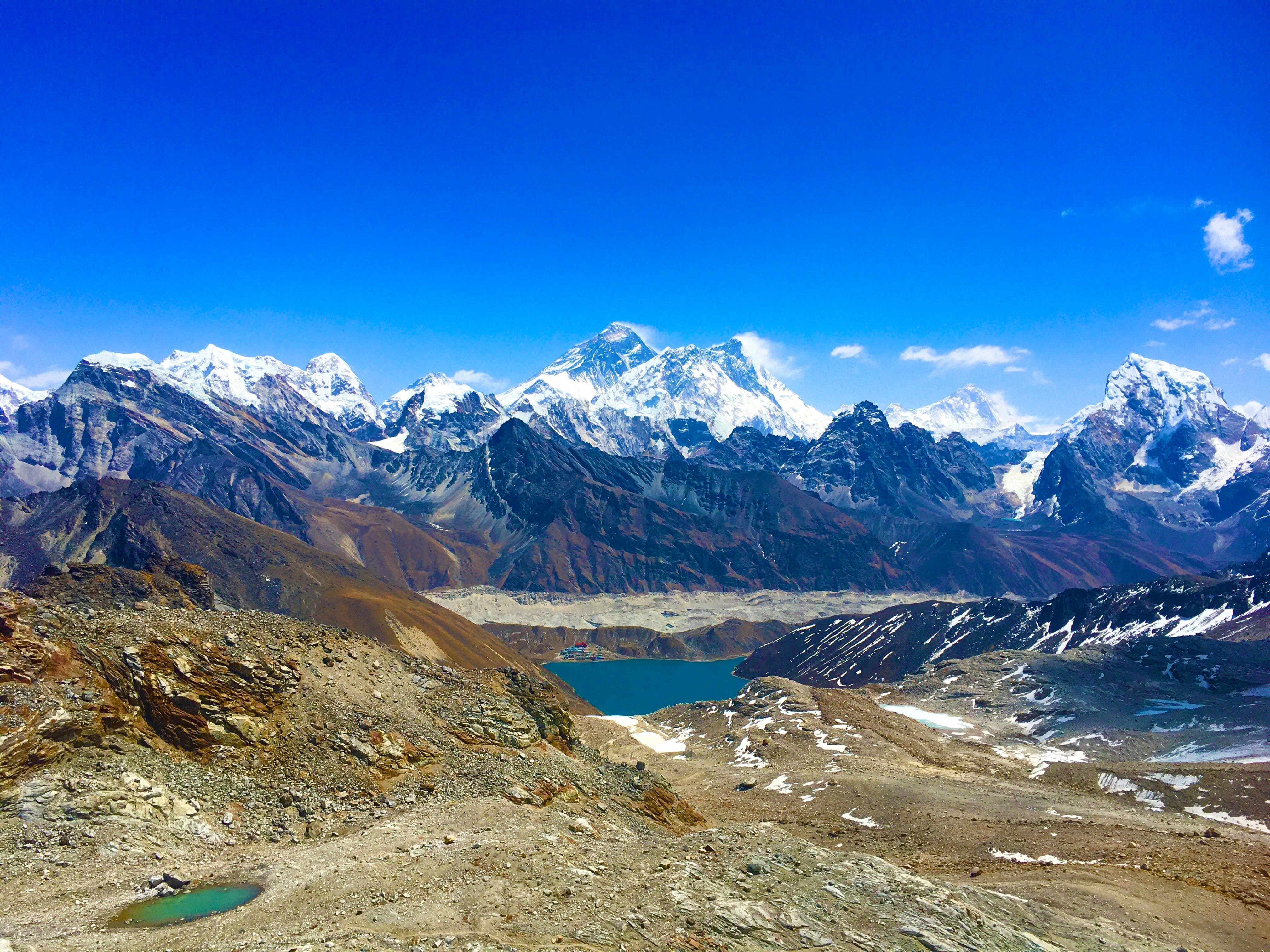
Everest to Gokyo Lake in the Everest region is a wonderland for travellers, trekkers and climbers. With numerous destinations for Trekking, Peak climbing, as well as Mountaineering, the Everest region never fails to amaze its visitors with its natural beauty and cultural richness. Everest Base Camp Trek with Gokyo Cho La Pass is one awesome package designed meticulously for the travellers who wish to experience the real gem of the Khumbu Region, the base of the world's highest peak and one of the most beautiful valleys, Gokyo Valley. Gokyo Valley is also a favorite place to visit for its crystal-clear lakes, which captivate all visitors with their water of Turquoise colour. Another world's highest village is Gokyo village, which has a stunning view of the mountains surrounding the village. The highlight of this trek is Cho La Pass at 5420m, where it connects EBC to Gokyo.
The best time for the Everest Base Camp Trek with Gokyo Lakes
The spring season will be the time to go on this adventurous journey to Everest Base Camp and Gokyo Valley via Cho La Pass, as the weather is predictable and good. The whole hike from Lukla to Base Camp and back will be a journey in the middle of fully bloomed nature.
Preparation and Training
This is not the EBC trek; hence, training for it should not be done in the usual way. The day of the pass crossing Gokyo Lakes and Cho La, in addition to being one of the most difficult days of the whole trip, is also a day of being at altitude and a proper glacier crossing over the Ngozumpa. These should be 16-18 days, with most days having 5-7 hours of walking. The occasional 8-9 is quite a challenge, particularly the day that you cross Cho La at 5420m. From Dragnag, the descent to the pass is steep and hard compared to Dzongla, and by the time the ice is reached, the climb to the pass will be long and hard along loose scree and boulders. If possible, start training 3 months in advance. Legs can't take standing, walking, running all the time without a break, so build up with hiking, stairs, running, whatever for periods. When packing, take advantage of hills or stairs if available. This is where having spent days above 4000-5000m is helpful much more than would be on the standard EBC route, as you can understand how much time you spend at such high altitudes before you even reach the glacier.
Gear and Equipment
-
Wear boots that have been used and wear them after walking on some rocky terrain.
-
The state of the glacier crossing is not always as good on Cho La. You don't want to find out firsthand.
-
Down jacket, Gokyo, Dzongla, and the pass itself.
-
On Cho La morning, base layers, fleece, and waterproof shell are a must!
-
Bring a hat, gloves, and glacier-grade sunglasses; it will be very bright off the Ngozumpa.
-
The poles you bring with you are helpful in the free scree below the pass.
-
Early starts are often seen along this route at Pass Day and Gokyo Ri, with headlamps.
-
The sleeping bag is rated for freezing temperatures.
-
Daypack to carry layers as the climate changes quickly up there.
-
Don't expect to be able to get an aid kit plus your own medication in Gokyo
-
Water purification tablets or a filter
-
Sun cream and lip balm, harder than they sound at this height.
-
Need travel insurance. This route is suitable for high-altitude trekking and helicopter evacuation, and will need to be read and understood for what it is and isn't covered.
Safety and Support
With regard to the difficulties, the extra days above 4000m, crossing the Ngozumpa Glacier, and the Cho La itself are the three main ones. No technical climbing, but all of it is a display of respect. The glacier crossing from Gokyo to Dragnag changes every week as the glacier melts and flows, so a guide or a group of people who have been on the crossing before is more important than usual. The path is not the same every week. The approach to Cho La is loose and unstable, may be icy or snow-covered, and is steep. There should be time for acclimatisation on the itinerary: this increases with every day spent at altitude, and the quicker you rush, the more likely you are to become unwell. A poor performance at Cho La does not reflect badly on the group; if it is the weather, snow conditions, or how the group is coping with the altitude, there is nothing to be said about dropping it and taking a different route back to the main EBC trail. If you notice a headache, nausea, or fatigue that doesn't go away, tell someone immediately. In this case, the alternative route is further from any assistance over longer distances, so having a guide who is familiar with the glacier and the pass isn't an extravagance here but the very thing that makes the trip safe.
Pemba Rita Sherpa, a founder himself, is a fourteen-time Everest summiteer and experienced weather window reader and team pacing guide, who knows firsthand how to navigate long, arduous routes at high elevations. This experience will be directly applicable to this summit traverse.