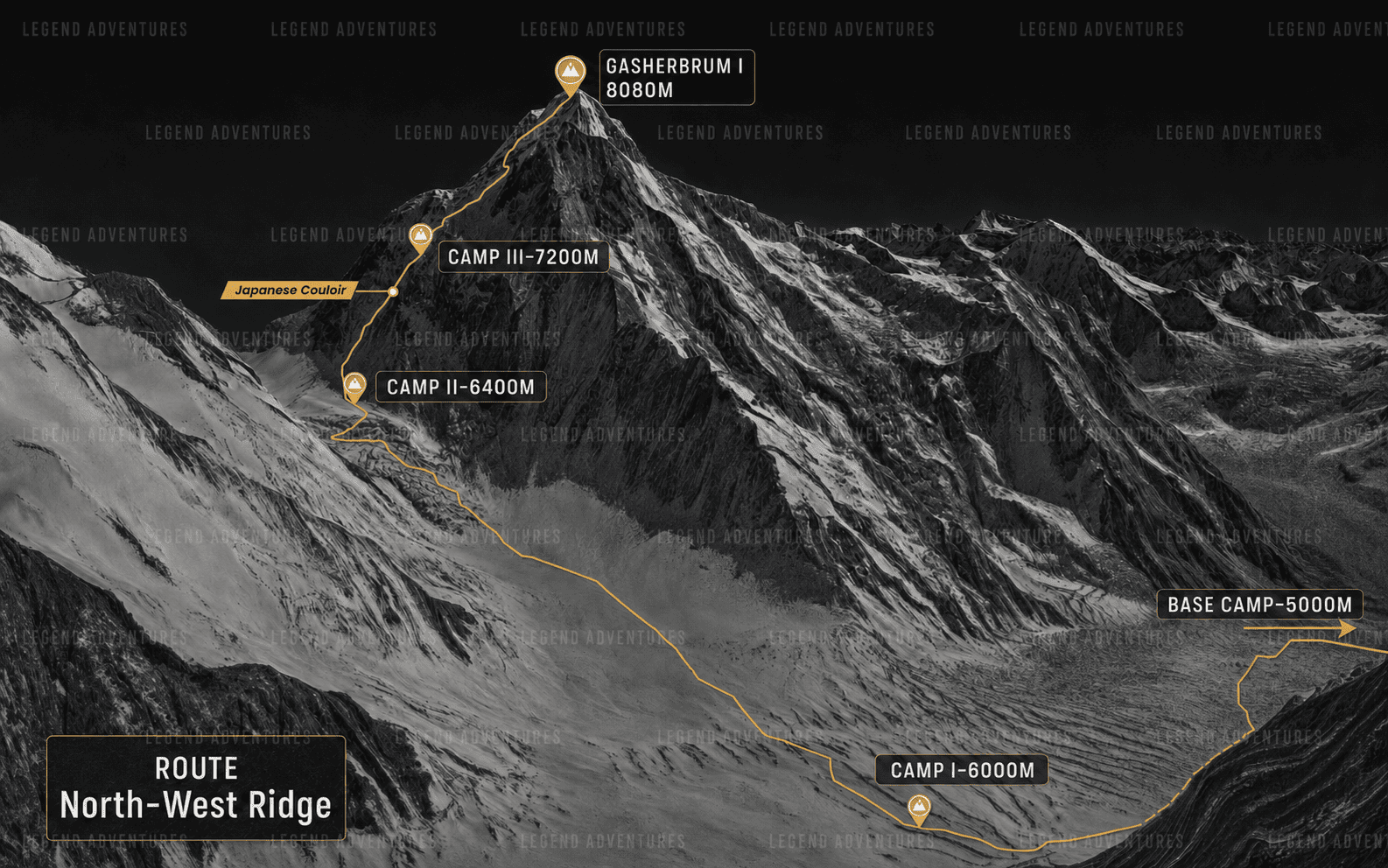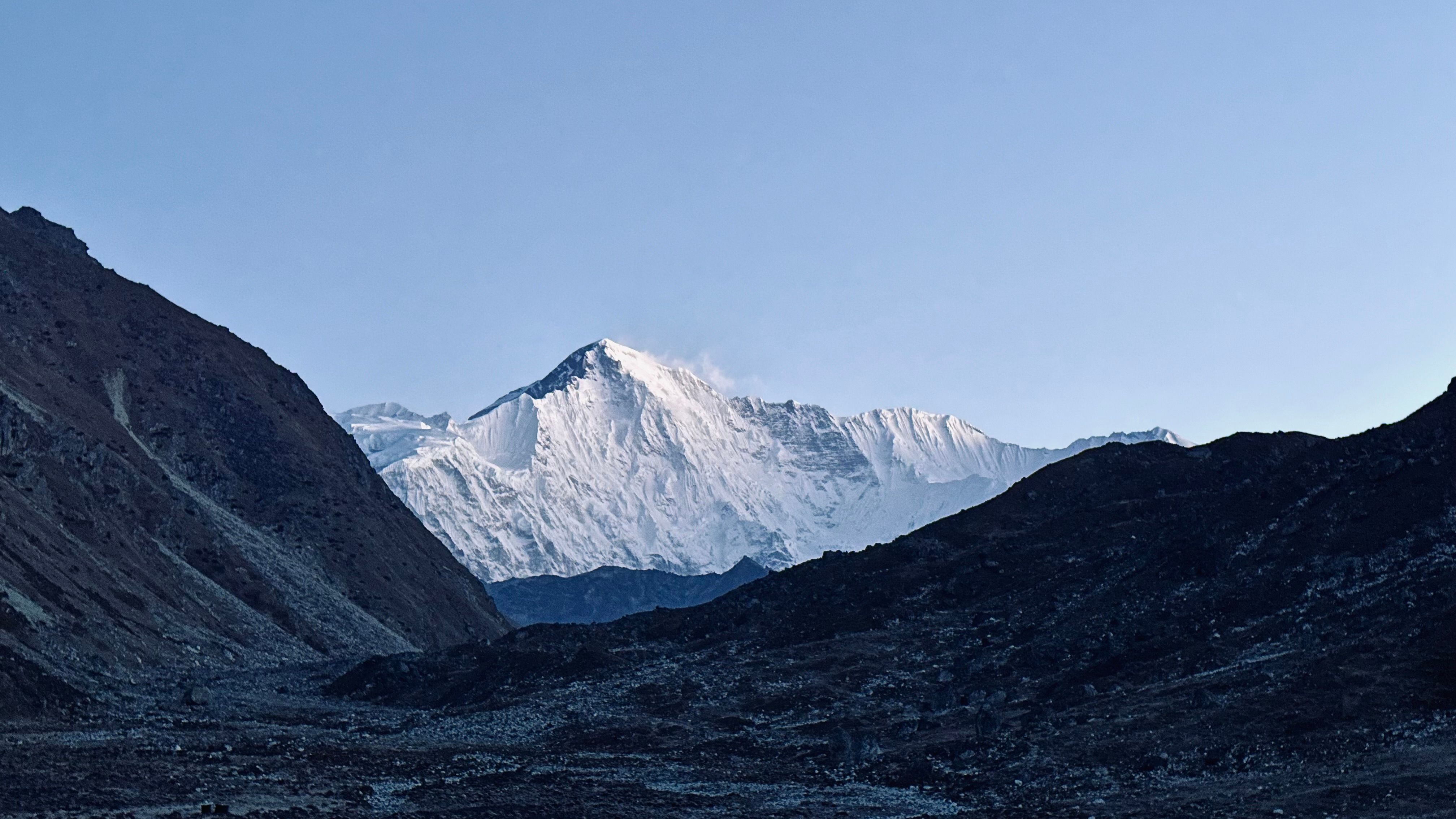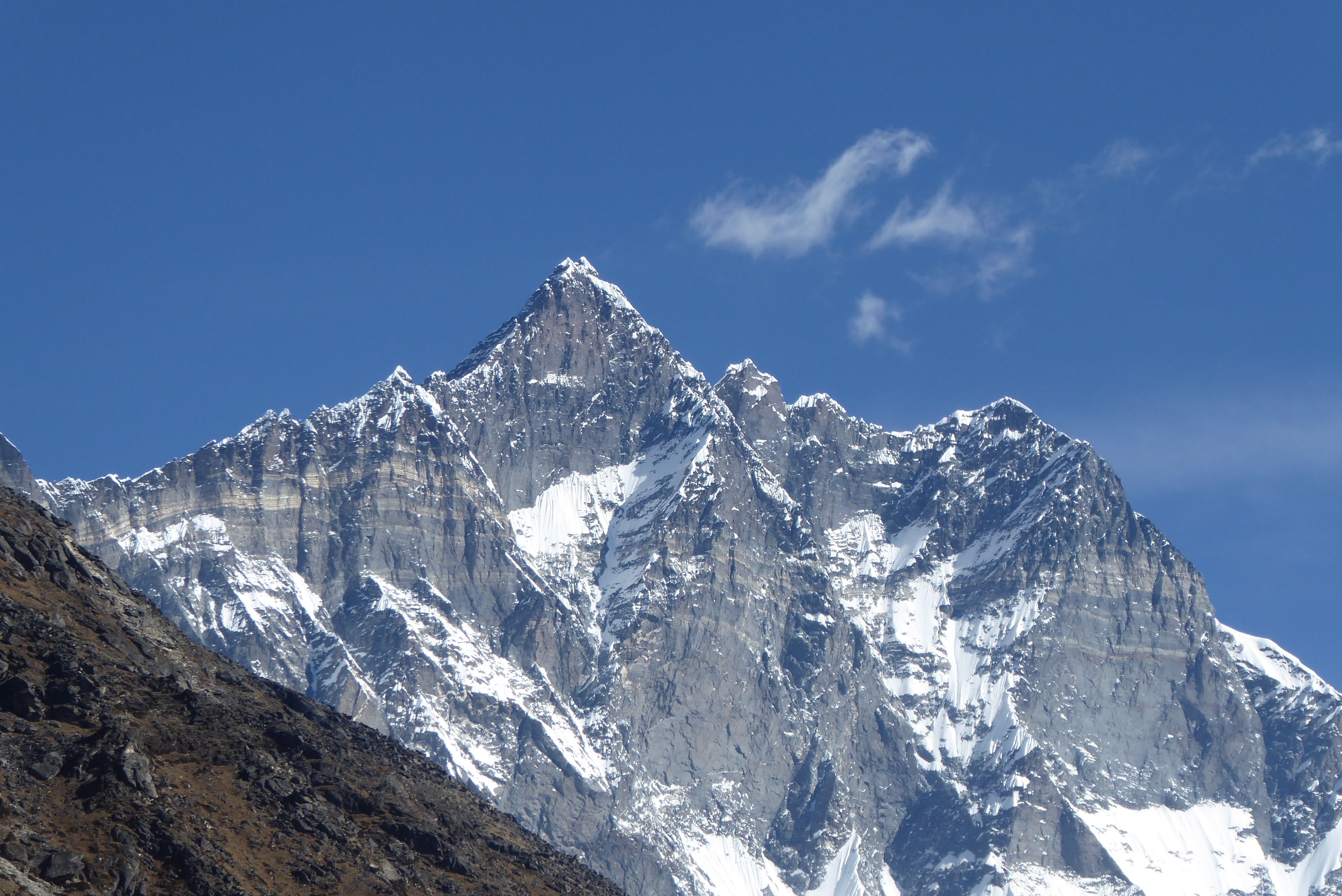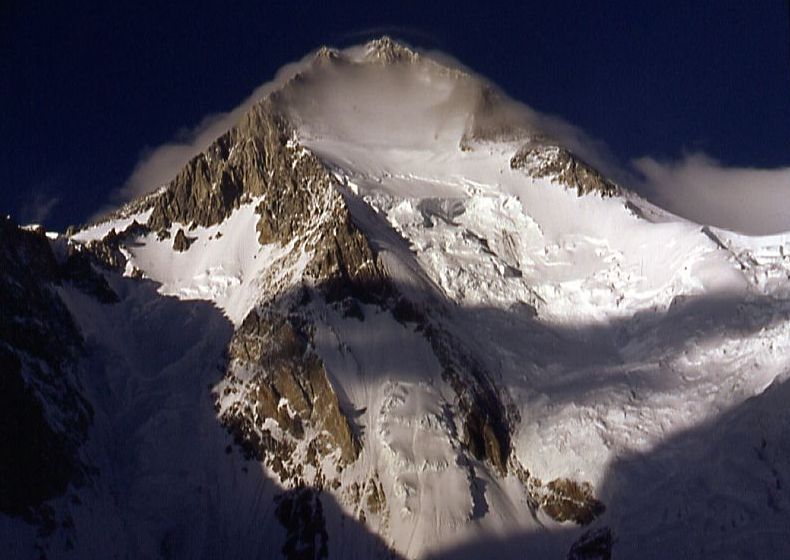
At 8,080 meters, Gasherbrum I is one of the “least popular” 8000ers, not in the sense that it is not beautiful or demanding, but because only high skill and experience levels are required for mountaineers to take its route. It is also one of the peaks with the least fatalities, probably because of the level of expertise needed to try it for the first time.
Gasherbrum I has a special and honorable importance in the history of mountaineering. It was where the world's first 8,000m ascent was attempted in pure Alpine Style, a bold and minimalist style of climbing when the team starts at the base of the mountain with all gear, and sets up bivouacs as they climb higher. The style is very demanding in terms of strength, skill, and commitment.
The optimum period to climb Broad Gasherbrum I (G1)
The best time to climb is in the summer months. In the summer, July and August, most of the ascents have been made, because it is the hottest time of the year. The expedition to the summit of Gasherbrum I (G1) is more gratifying in these months than in winter. An extraordinary history was made with the first winter climb to the summit by Adam Bielecki and Janusz Golab from Poland without additional oxygen on March 9, 2012.
Preparation and Training
Although it is somewhat lower than the other 8,000m summits, don't be fooled; Gasherbrum I, also known as Hidden Peak, reaches a height of 8,080m in the Karakoram and is only 68m higher than the "death zone" threshold. It is advisable for candidates to have already summited one of the 8,000m summits as well as having two summits in the 6,000m – 7,000m range before attempting it, as it requires sustained glacier travel, crevasse navigation and steep sections on fixed lines. Training should begin 6 to 8 months in advance, and focus on building a solid aerobic foundation that allows for a sustained quality of training at altitude (12-18 hours of continuous activity), followed by strengthening the legs and core with specific exercises, and regular hiking with a loaded pack on diverse terrain.
Technical preparation should consist of at least jumping, rappelling, and practicing crevasse rescue as the Base Camp to Camp 1 route goes through a heavily glaciated and crevasse-prone section where rope travel is common. Pulses of high altitude (above 6,000m) before the start of the expedition will have a meaningful effect on adaptation.
Gear and Equipment
Gasherbrum I calls for standard 8,000m equipment, with particular emphasis on glacier travel and crevasse-rescue gear given the terrain below Camp 1.
Included:
-
Cooking and eating facilities at Base Camp: Tents for kitchen, shower and toilet area.
-
Camps 1-3 (or 4) tents
-
Climbing from Base Camp to the Summit by fixed ropes, ladders and anchors.
-
Oxygen, mask and regulator (supplemental)
-
Fully self-contained meals, with catering personnel.Fully self-contained meals and catering staff.
-
The Sherpa assist at high altitudes for carrying loads and fixing routes. The Sherpa help in carrying loads and fixing routes at high altitude.
-
Two-way satellite radio and TV, two-way walkie-talkie.
-
Liaison officer and permit arrangements.
Not included (client brings):
-
8,000m-level down coat and alpine boots.
-
A sleeping bag that has a rating of -40 degrees.
-
Crampons, harness, ascender, ice axe, carabiners
-
If not using shared team gear, crevasse rescue kit (prusiks, pulleys)
-
You should wear a hat, headlamp, glasses for glaciers, and sunscreen.
-
The lower camps will have a layering system.
-
Personal First Aid Kit & Medication(s)
-
What is required are ‘duffel bags', ‘day packs' and ‘trekking poles'.
-
High-altitude rescue insurance
Safety and Support
The main hazards below the high camps of Gasherbrum I are crevasse falls and serac collapse on the glaciated approach to Camp 1, and rockfall/avalanche hazard on the couloir areas above, especially in the summer when the rock melts. A well-organized expedition keeps a climber-to-guide ratio of approximately 1 climber to 1 guide on summit day, available reserve climbing Sherpa staff to stand by, and a Base Camp manager to keep an eye on weather conditions and to give direction on rope fixing on the route. Supplemental oxygen can be used and is sometimes used above Camp 3, and rescue is offered via helicopter evacuation (if possible). This is followed by a gradual rotation through conditions of the death zone, just above the top of Camp 1, according to a mutually agreed-on multi-rotation plan before any effort is made to ascend to the summit.
The founder, itself the Pemba Rita Sherpa, a 14 Everest summiteer, knows how to read the weather windows and how to deal with fatigue-driven risk at extreme altitudes, both of which are pertinent for a glacier-heavy expedition like Gasherbrum I.