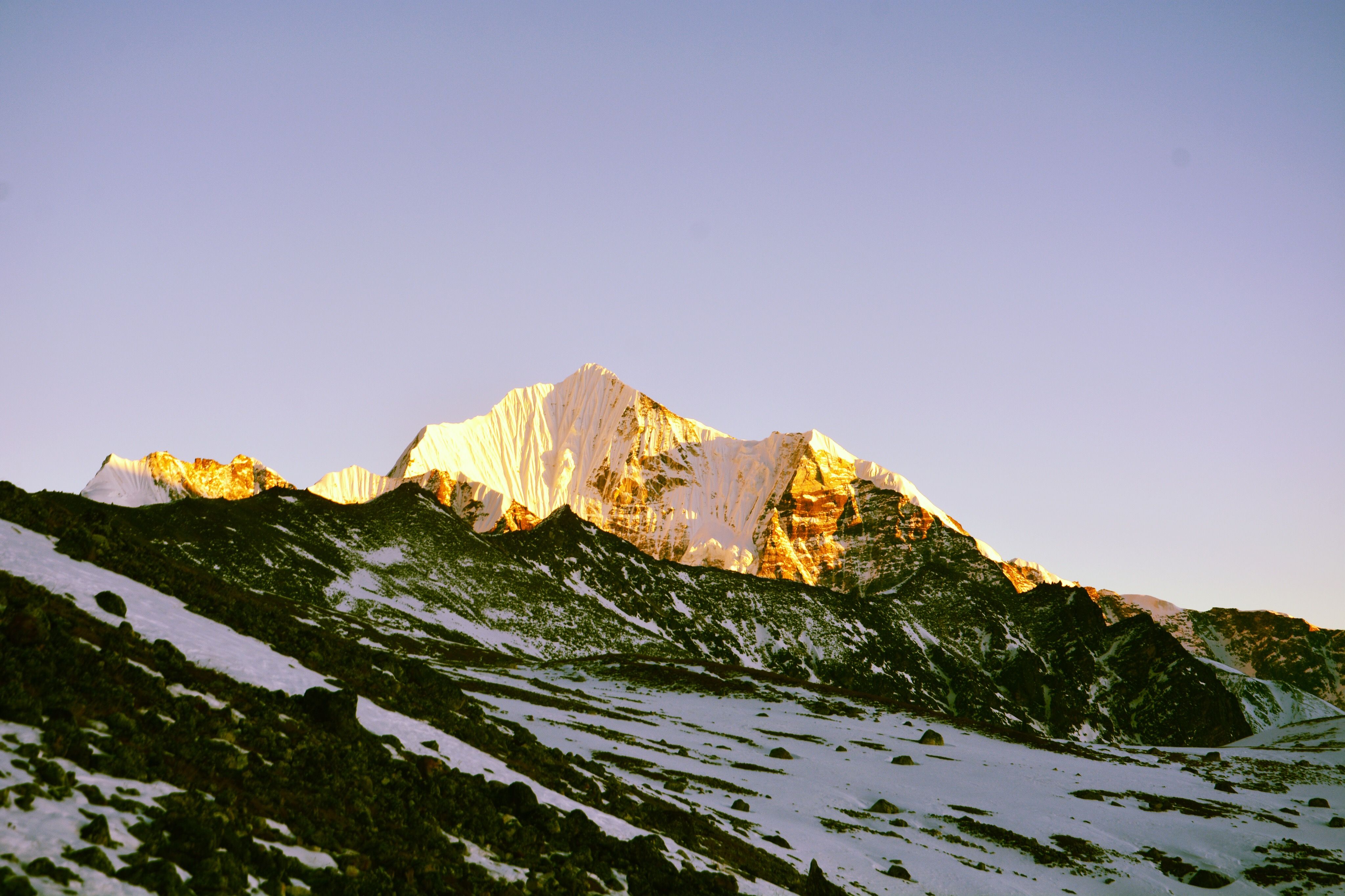
In the heart of the Khumbu region, there is a comparable peak with similar altitudes that is comparatively easy, “Baruntse Expedition (7129m)”. "Barun-Tse", as its name implies, is the peak in the western part of the Barun Glacier Valley. Towards the south of Baruntse lies the Hunku Glacier, while the Imja Glacier limits it towards the Northwest. Crowned by four peaks, Baruntse has four routes that lead to the summit, the South one being the popular one. The path along Southeast Ridge is slightly more difficult, however, because it is a simple ascent up a steep (up to 50-degree) but hard ice cliff with the possibility of avalanche release.
Successfully ascended for the first time on May 30, 1954, by Colin Todd and Geoff Harrow from the Expedition team led by Sir Edmund Hillary, Baruntse Peak (7129m) is an ideal choice for those wanting to leap from 6000 m to 7000-meter peaks. With a higher rate of success than other peaks above 7000 m, Mt. Baruntse (7129m) is a spectacular peak to prepare for an 8000-meter peak.
The best time to climb Mt. Baruntse(7129m)
The best seasons to go on the Baruntse Expedition (7129m) are Spring and autumn, as the weather is moderate, skies are clear, days are longer, and the chance of extreme snowfall, storms, and winds is minimal. But a good group of legends can arrange an expedition to Baruntse Expedition even in Autumn or Winter.
Preparation and Training
The Southeast Ridge route of Baruntse is considered semi-technical, easy among the neighboring giants but challenging in itself; there is a steep ice slope to the west of the West Col, reaching as high as 50° with real avalanche danger at this point. Climbing on 6,000m peaks with some snowy and icy climbing experience and fixed rope use is recommended before attempting Baruntse.
Training should start 4-6 months out and include a good cardio base, hiking with a loaded pack, running, and cycling, as well as technical work on steep snow and ice, crampon work, and jumaring. Many climbers use Mera Peak as a stepping stone on their way to Baruntse Base Camp, so having prior experience above 5,000- 6,000 m is definitely a plus here as far as experience and confidence is concerned.
Gear and Equipment
-
Climbing boots (insulated & suitable for crampons) and warm trekking boots
-
Crampons, ice axe, harness, ascender, and carabiners
-
Helmets, headlamps, glacier glasses, and sunscreen.
-
Ski jackets/suits and insulated layers for the higher camps
-
Structural cord for above-zero-temperature sleeping bag.Structural cord for above-zero sleeping bag.
-
The base layers, fleece, and waterproof outer shell.
-
Trekking poles and day bag.
-
First aid kit and any medication prescribed for the child
-
Fixed ropes and route preparation on the West Col and upper mountain (provided by the team)
-
Camping and Base Camp equipment - ( tents, kitchen, dining facilities)
-
Supplemental oxygen, mask, and regulator (as requested)
-
High-altitude rescue insurance
Safety and Support
The main hazards are found on the steep ice slope to the West Col, where the ground rises to about 50° and has real avalanche danger, and crevasse crossings on the glacier on the way to Base Camp. Weather in this part of the Khumbu can change rapidly and unpredictably, so a well-organised expedition is essential, with close monitoring of snow conditions and an experienced team of guides who take care of rope fixing through these areas. On summit day, typically guides will have a very low climber-to-guide ratio and will start the alpine phase of the day early, around midnight, to get to the summit by dawn, and then down before conditions get bad.
The route passes through the less-used Hinku Valley, not the popular Everest corridor, allowing for extra buffer days in the itinerary, and satellite communication and helicopter pick-up/rescue from easier spots when climbers descend into easier terrain below the technical routes. A staged acclimatization plan, typically developed around an ascent of Mera Peak in advance, provides climbers a good base before the push to the summit.
Climbed by our experienced climbing team, with their understanding of the technical challenge of the West Col and the remote approach to the Hinku Valley, Baruntse is supported, so it is a natural step to 8,000m objectives.