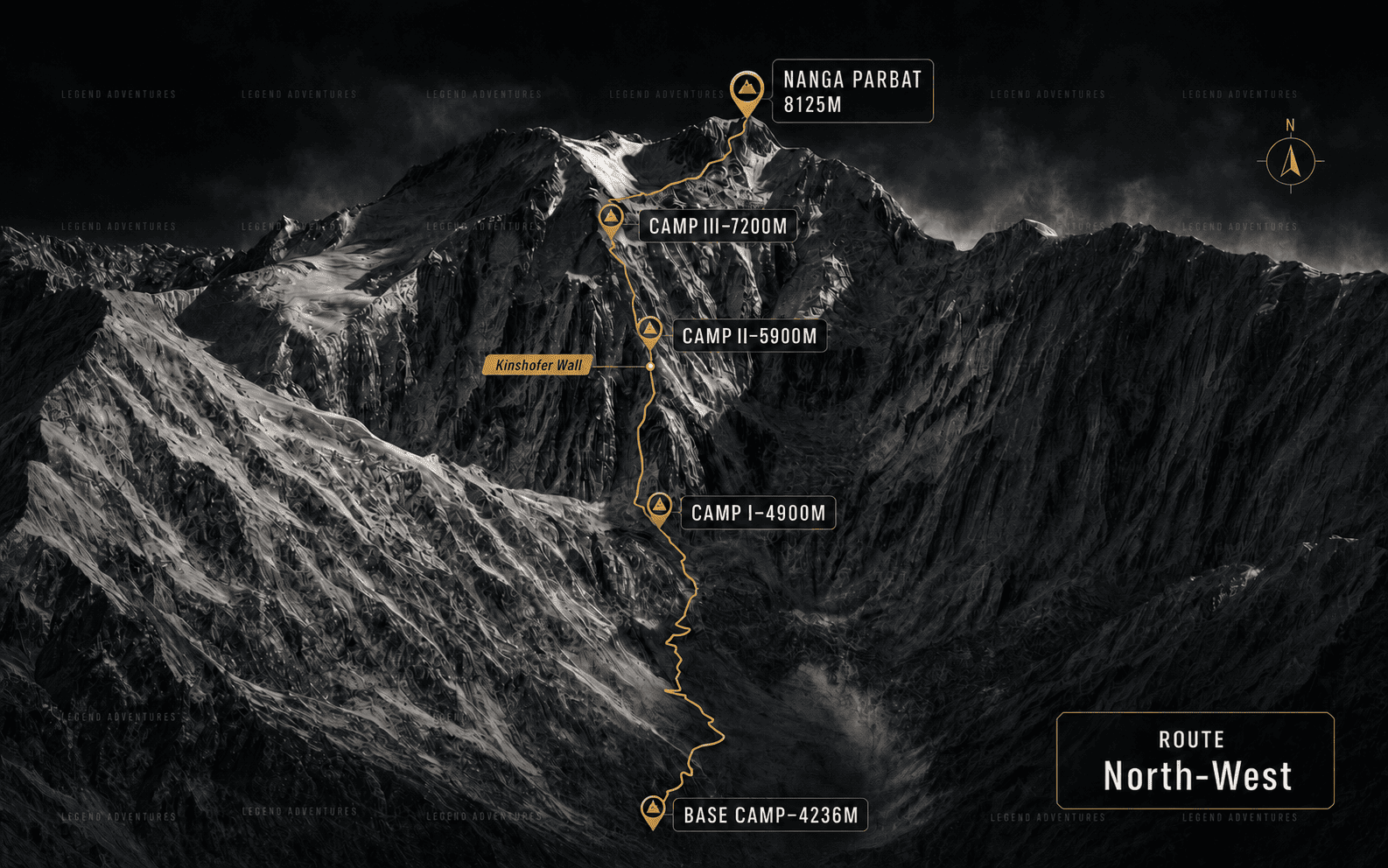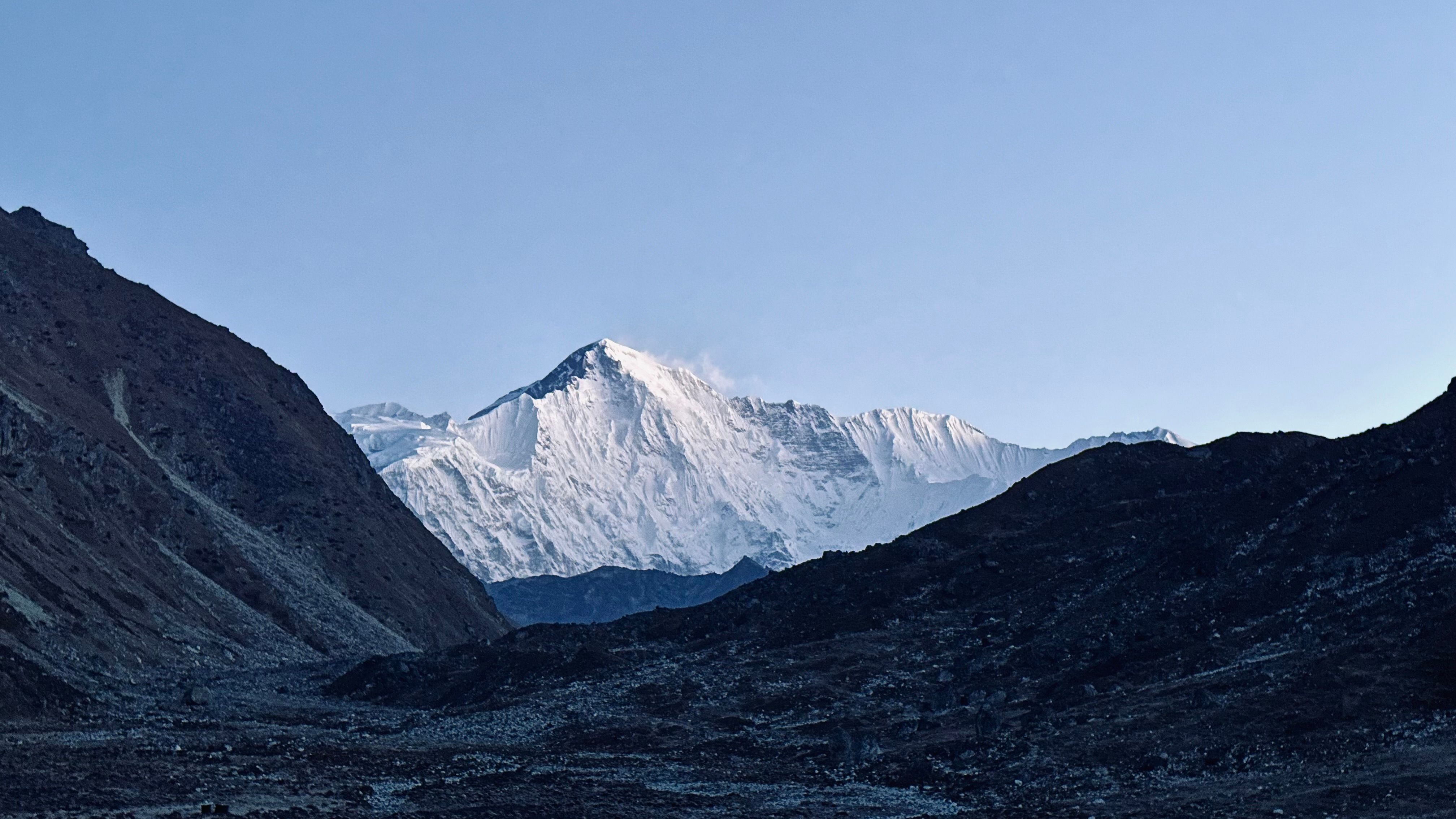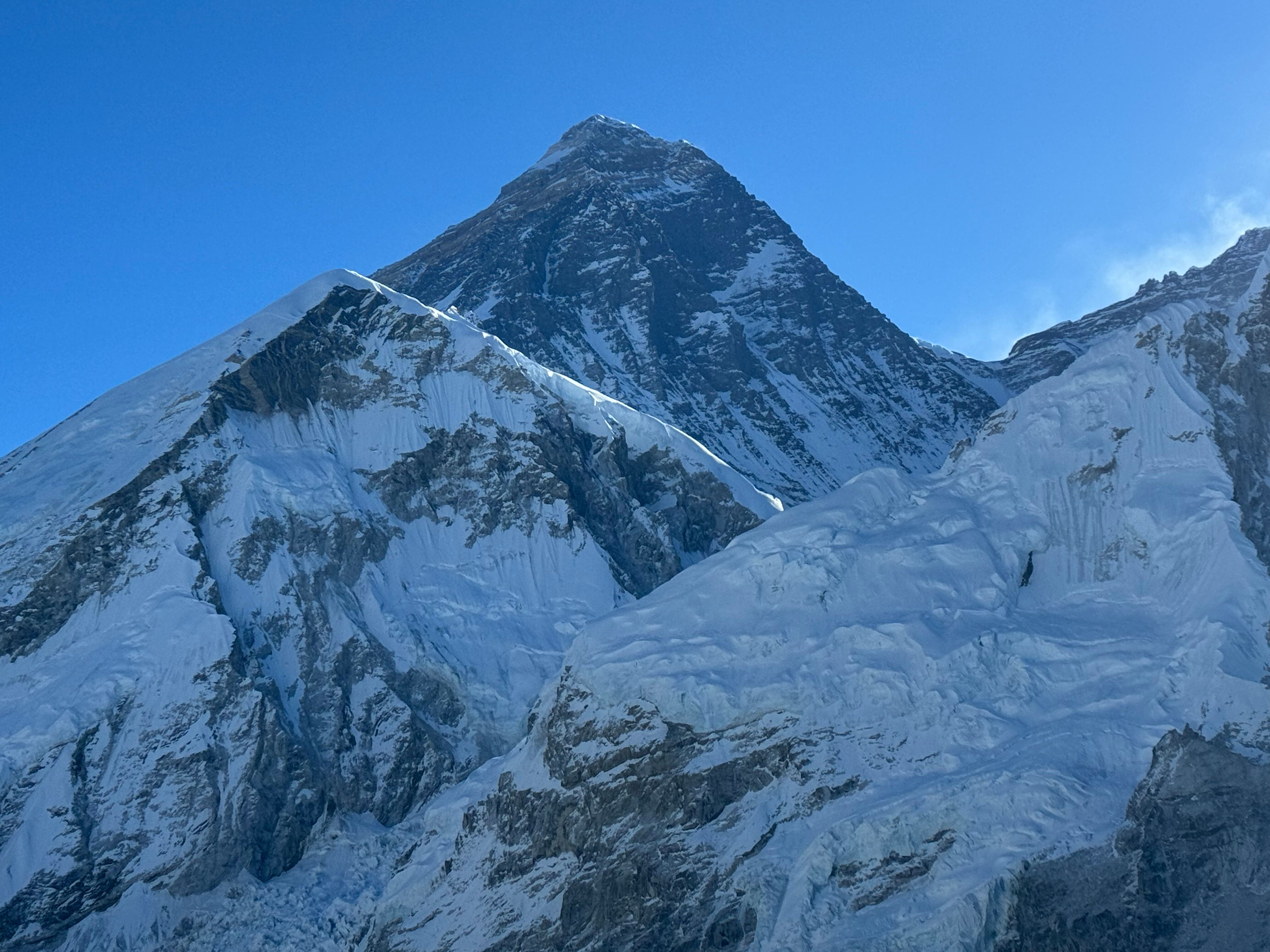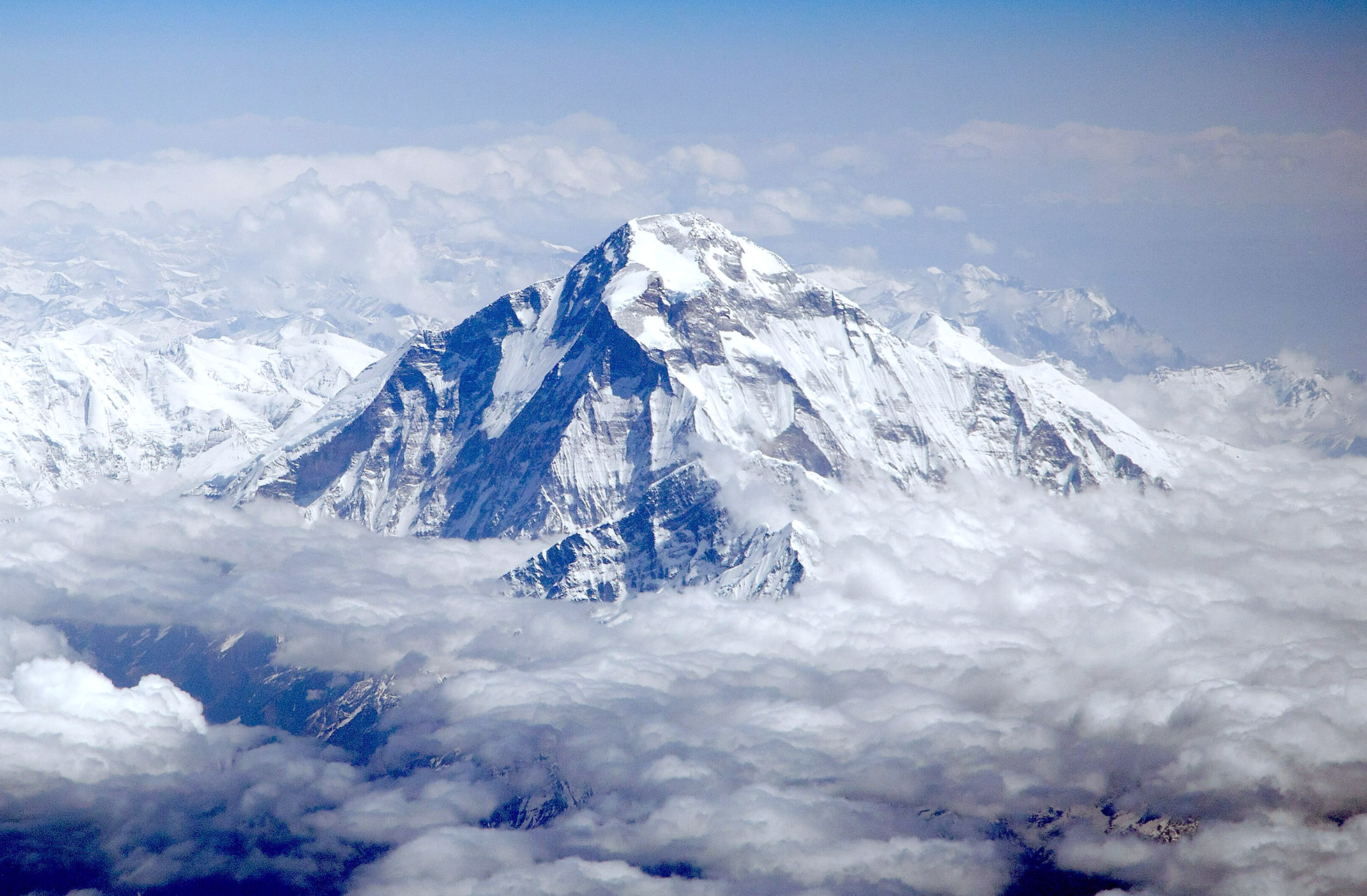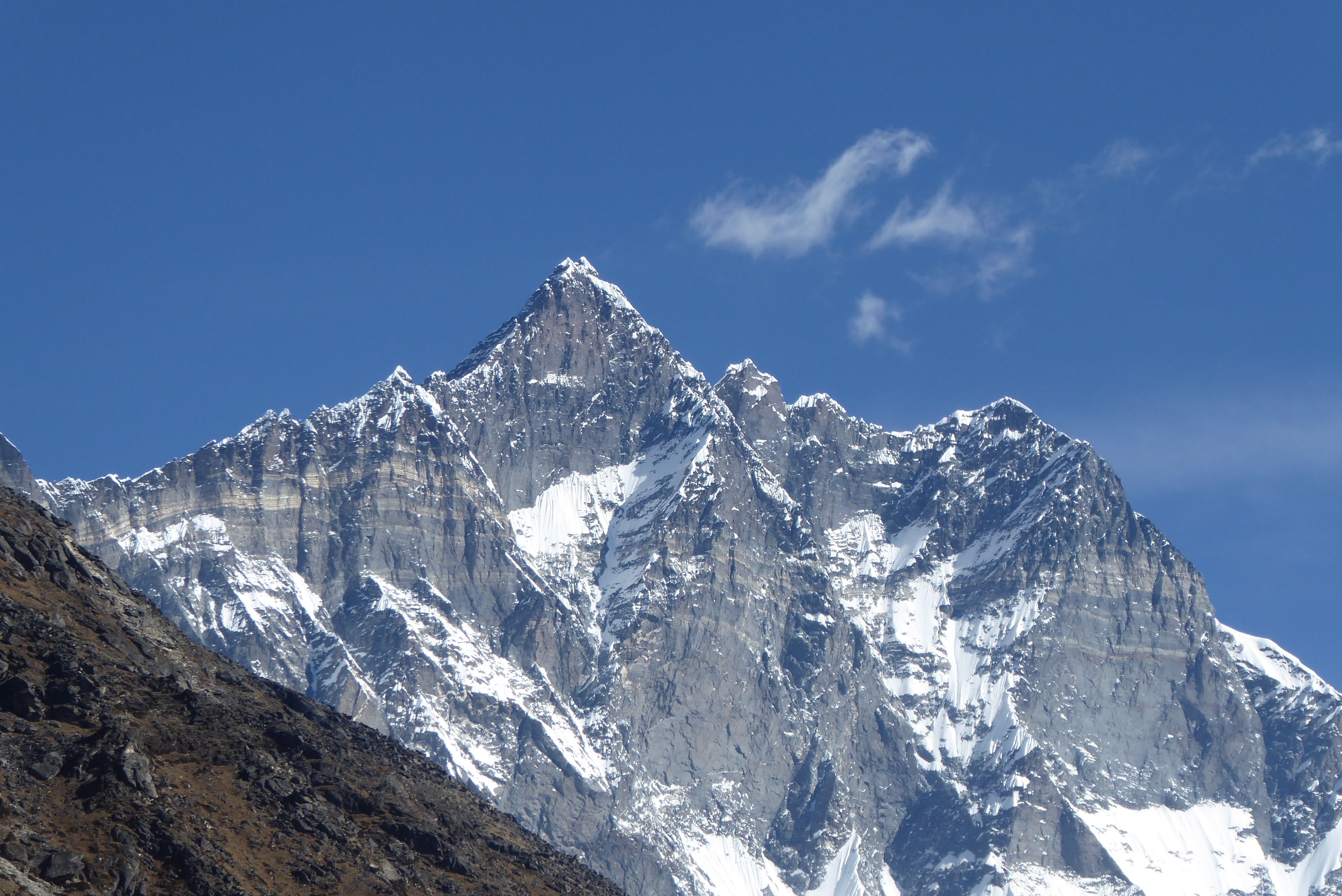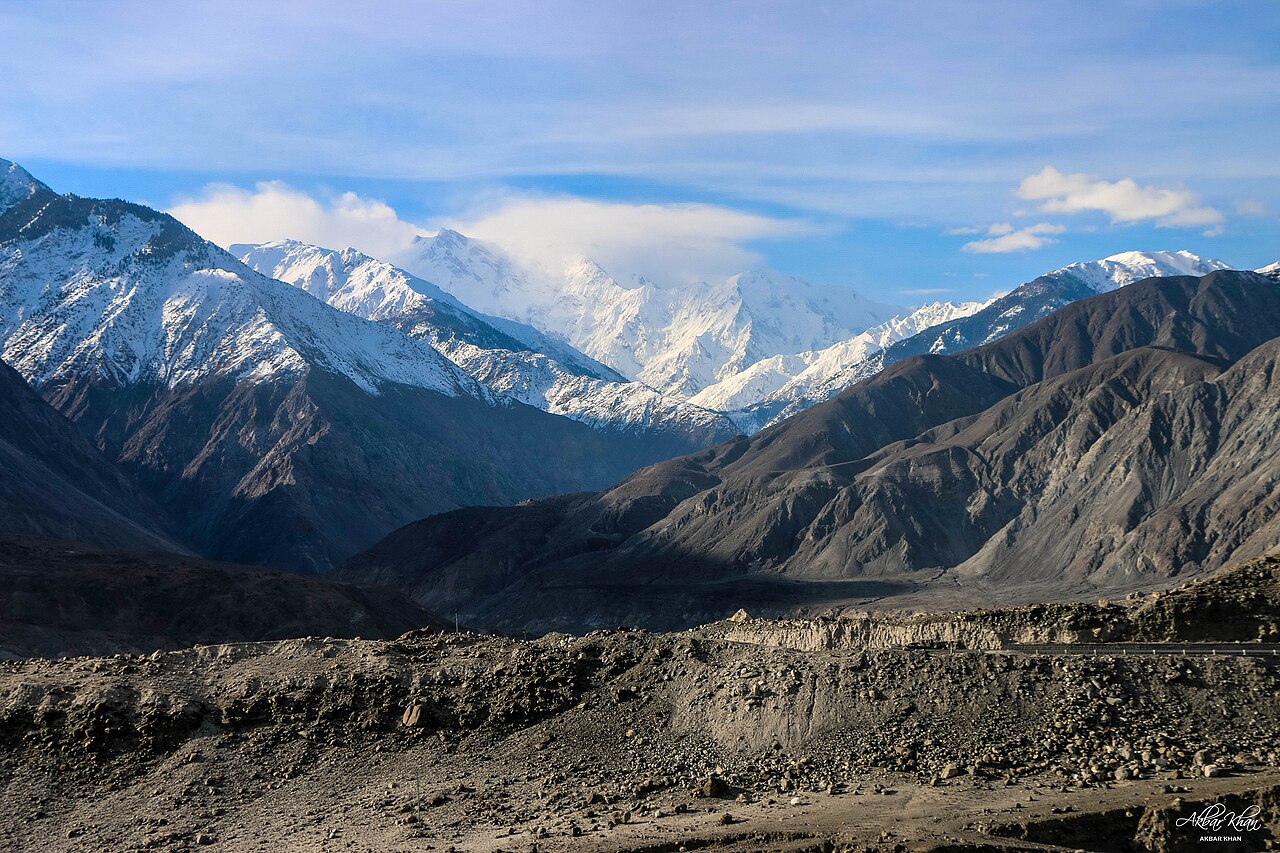
Nanga Parbat Expedition (literally in Sanskrit means Naked Mountain) is in Pakistan. It is the ninth-highest mountain in the world with a summit elevation of 8,126 metres (26,660 ft) above sea level. Nanga Parbat massif is located at the western corner pillar of the Himalayas and close to the Karakoram Range. It is an isolated mountain surrounded by the rivers Indus and Astore. It has 3 huge faces. The Rakhiot (Ra Kot) face is overlooked by the north and south silver crags and silver plateau; the Diamir face is rocky in the beginning. The Rupal face is the highest precipice in the world. Anyone who has ever stood at the foot of this Rupal face up above the ‘Tap Alpe ’ gets amazed by its sheer size. The ice wall of Mount Nanga Parbat is the highest in the world. It is really challenging to climb.
As many mountaineering deaths happened in the mid and early 20th century, climbers have lent it the nickname ‘killer mountain.’ It was first climbed on 3rd of July 1953 via East Ridge (Rakhiot Flank) by Hermann Buhl, a member of the German-Austrian Expedition Team. Buhl was the first climber to summit Mt. Nanga Parbat above 8,000 metres alone without oxygen. We followed the easiest and safest Kinshofer route for the expedition via the Westerly Diamir face.
The best season to climb Mount Nanga Parbat Expedition
Climbing Mount Nanga Parbat (8125m) in the summer season is the best option because the weather is the warmest. The expedition to the mountain peak of Mt. Nanga Parbat becomes more manageable in the months of July and August compared to winter.
Preparation and Training
Nanga Parbat, the 8,126m “Killer Mountain”, is not an 8,000m peak for the unprepared. Prior experience on at least one 6,000-7,000m grade is required, and it is highly advisable to have climbed another 8,000m peak beforehand considering the technical challenges of the Kinshofer Route. Training should start six months to a year in advance and involve long cardiovascular workouts (hiking, running, biking) as well as strength building (focusing on legs, core, and grip).
Technical practice is also essential, as the grade of the rock face on the Khimsher route is generally IV/V, which is comparable to a difficult mountain climb. Climbing with a heavy pack and long hikes will prepare you for the grueling trek and will help you get used to the 15-20kg pack you will be wearing during the expedition. Previous high-altitude experience is similarly necessary to adjust to the harsh conditions of Nanga Parbat Expedition and help you get accustomed to the extreme vertical gain from Base Camp to the summit.
Gear and Equipment
Nanga Parbat requires the same high altitude equipment as other 8,000m summits, but with more emphasis on technical rock & ice equipment for the Kinshofer Wall.
-
8,000 m rated down suit and high altitude summit boots
-
It can be filled with down to 40°C. The sleeping bag is rated to minus 40°C.
-
Crampons, harness, ascender, ice axe and carabiners.
-
Hiking boots, walking boots or approach shoes for lower parts (optional)
-
Helmets, headlamps, glacier glasses and sunscreen
-
Insulated jacket, base layers and mid layers for lower camps and technical climbing.
-
Individual First Aid Kit and any prescribed medication.
-
A daypack, duffel bag and trekking poles
-
Regulator (supplied by the team), mask and supplemental oxygen
-
Team provided: Base Camp to summit, rope, route preparation.
-
Vehicles and equipment for camping and Base Camp (including tent, kitchen, and dining facilities)
-
High-altitude rescue insurance
Safety and Support
Nanga Parbat Expedition is one of the most lethal 8,000m peaks due to objective hazards like avalanches, serac falls and extreme weather as well as the technical difficulties posed by the Kinshofer Wall. A good support crew will give you the best chance at making it up the mountain, and that often involves a 1:1 ratio on the summit day and a competent Base Camp manager who will monitor the weather, the route and the team, and will extend lines as needed. Most of the time, oxygen is used during the climb to Nanga Parbat Expedition because of its high elevation and strenuous conditions of the journey. This is accessible from Camp 3 to the summit, and in some cases, rescue is only available via helicopter if weather permits.
This particular expedition is guided by Pemba Rita Sherpa (IFMGA Guide), a climber and fourteen-time Everest summiteer, who has considerable experience in high-altitude decision-making, including knowing when to push and when to retreat.