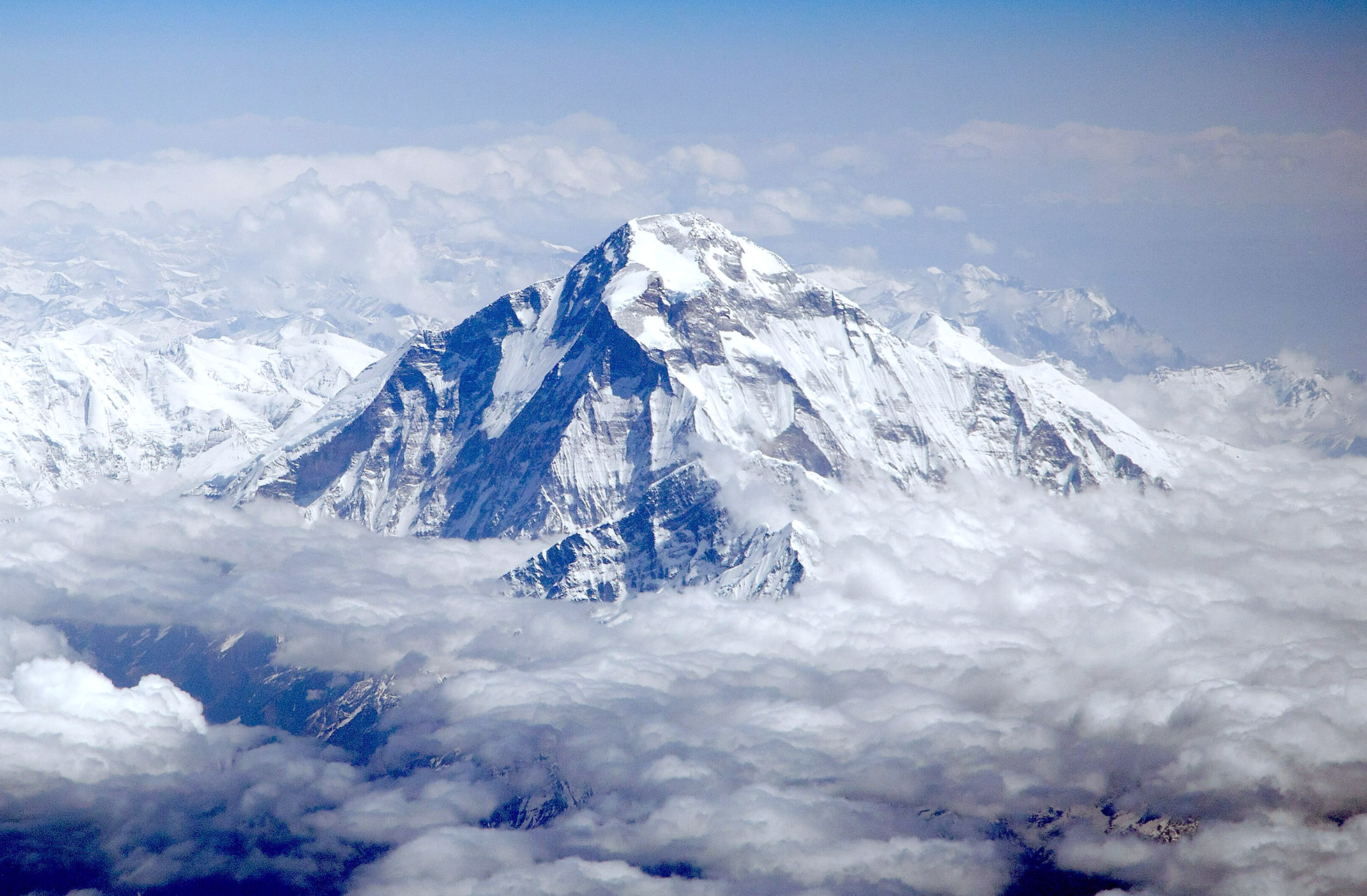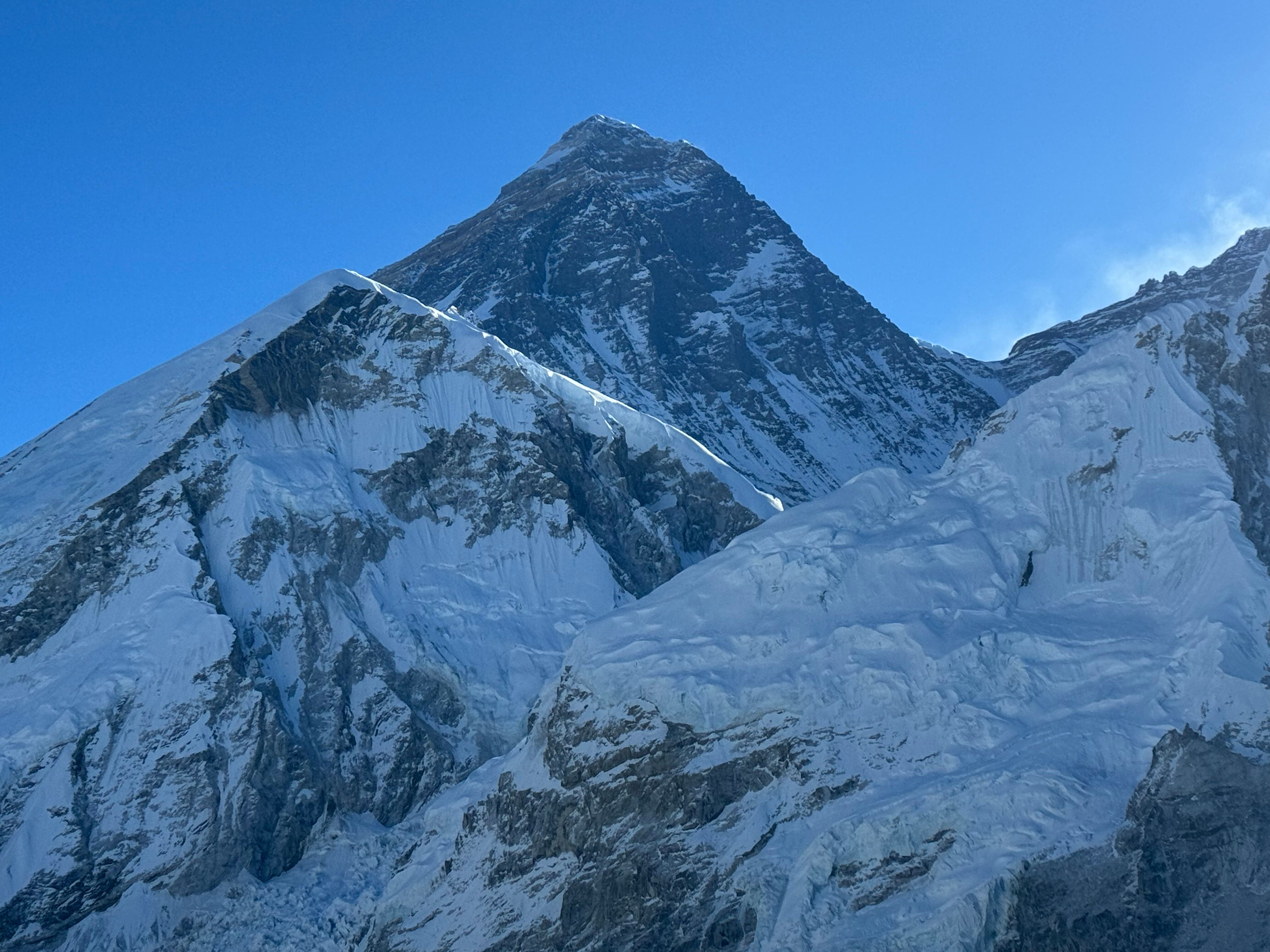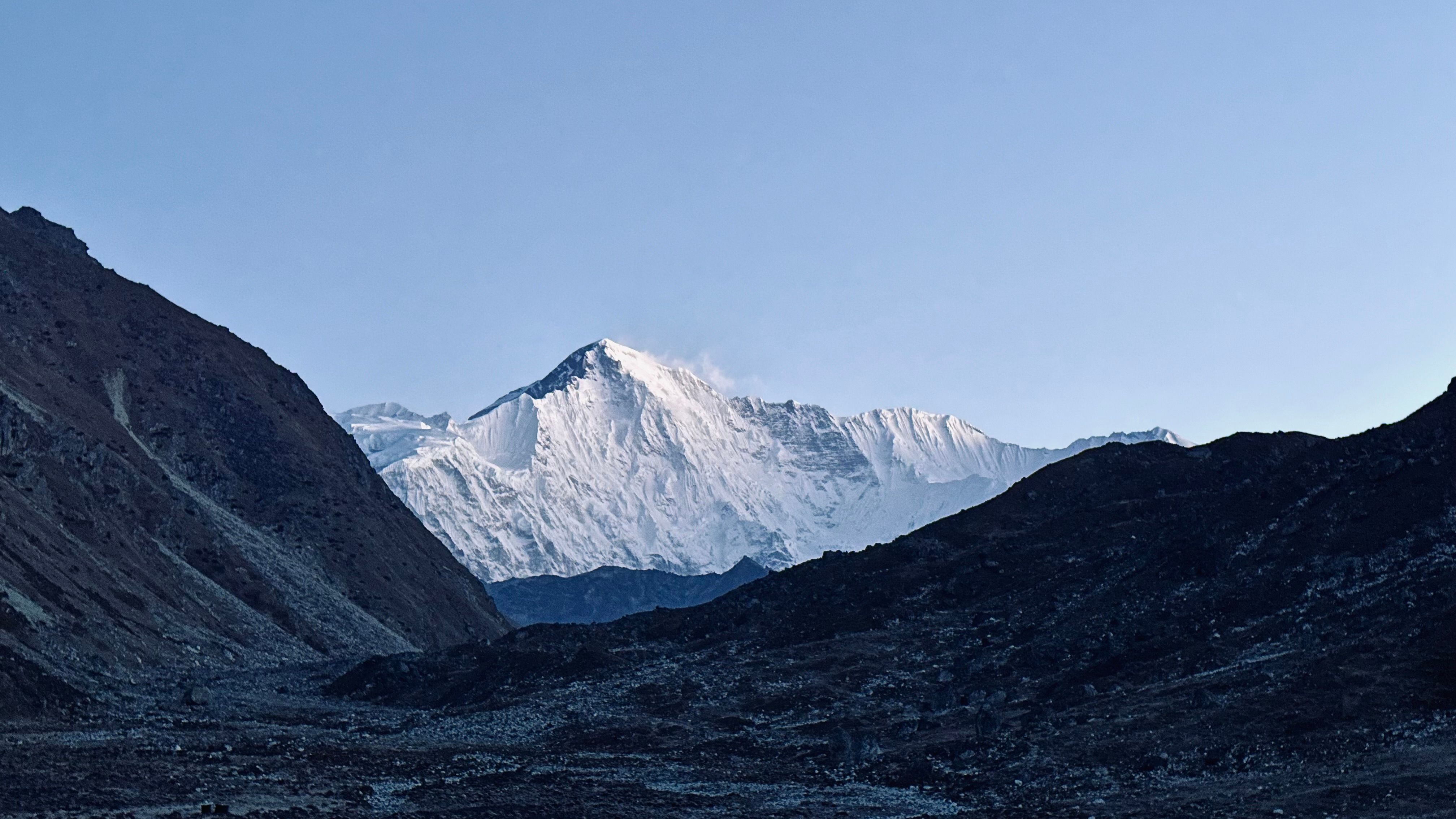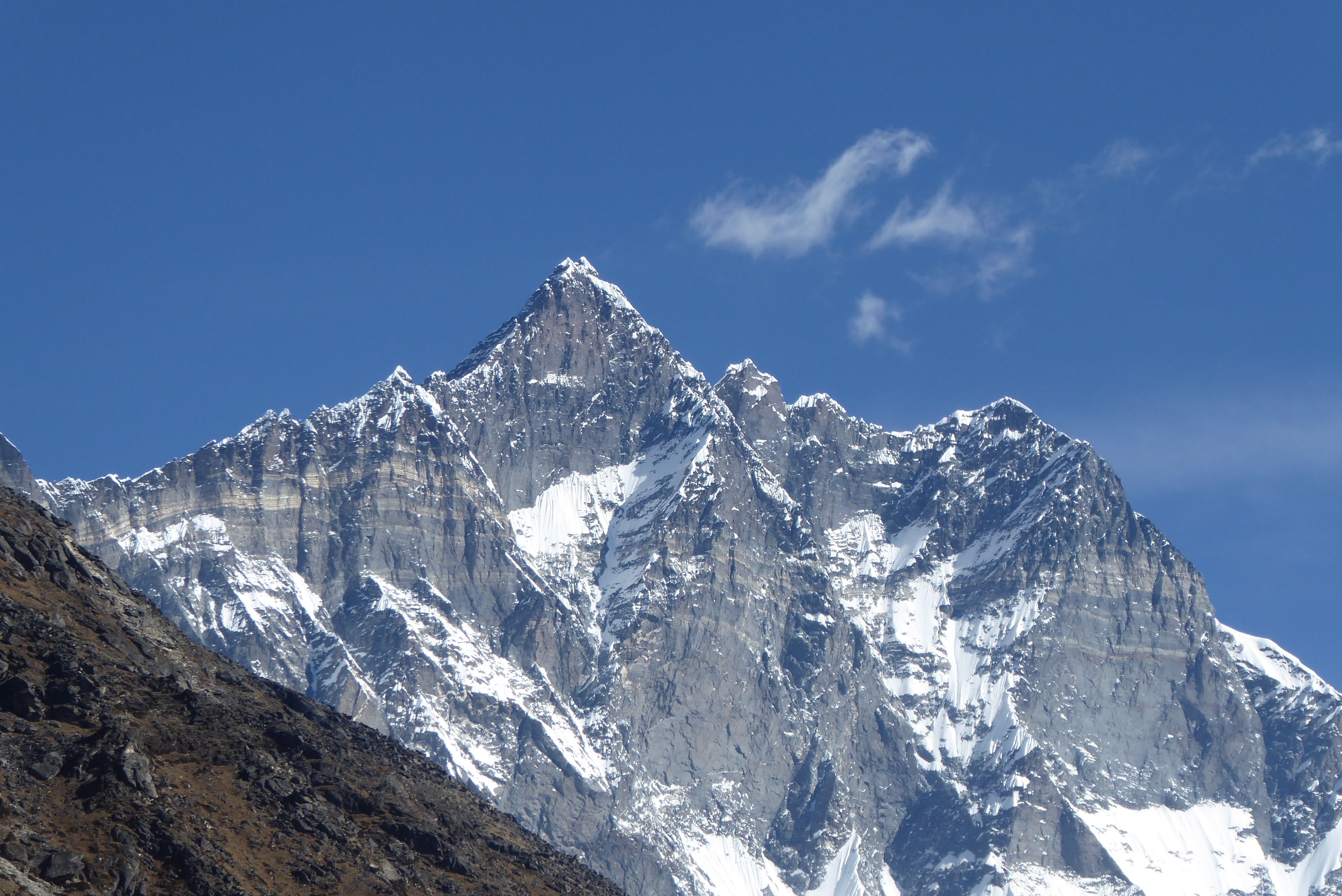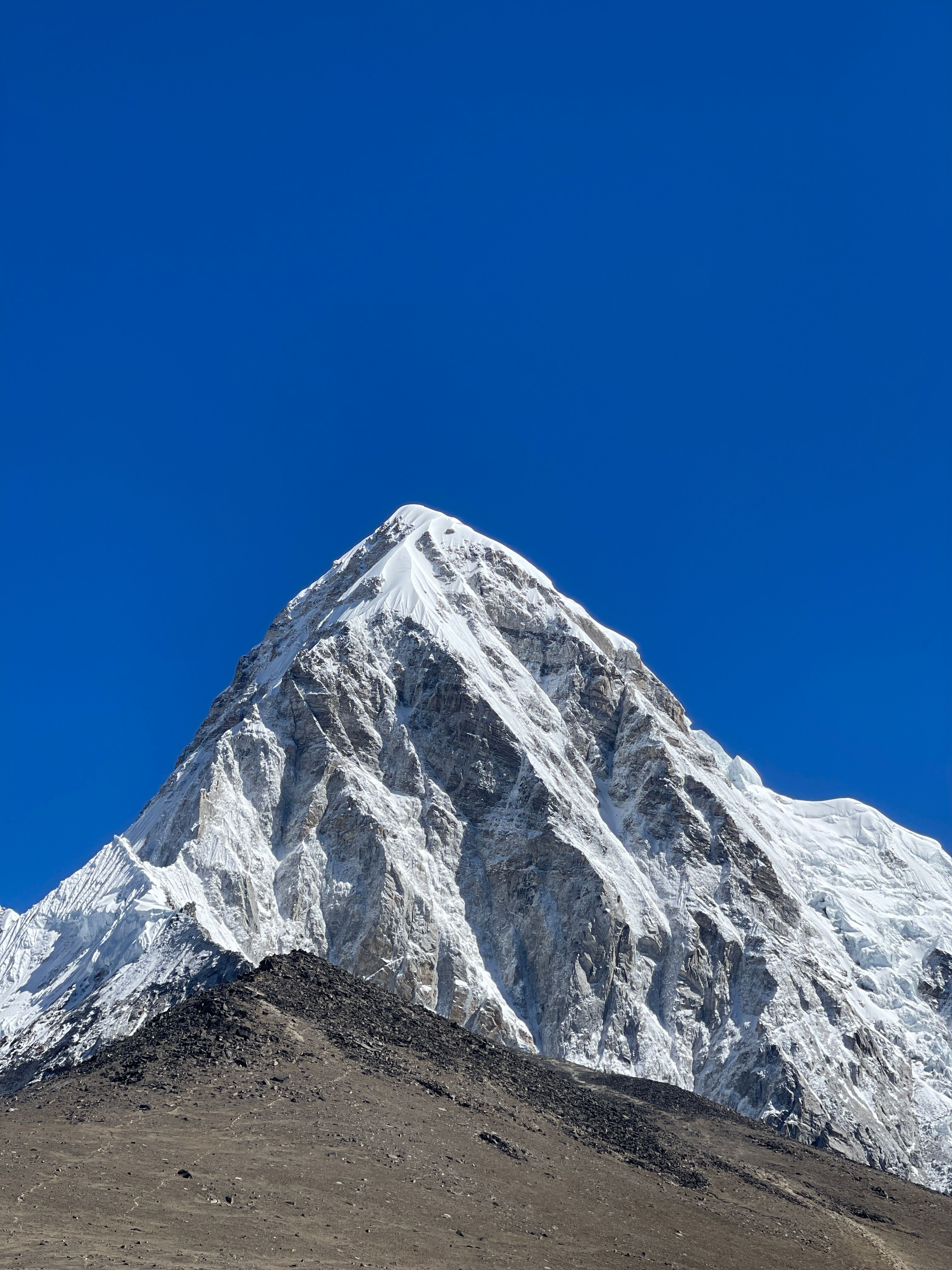
Mount Pumori is a popular climbing peak in Nepal for those who want to climb up to a 7000m+ peak of the Himalayas of Nepal. It is an awesome trek to the Base Camp of Everest, a fantastic close-up view of Mt. Everest, Lhotse, Cho-Oyu, and Tibet. The first ascent of Pumori was made by a German-Swiss party led by Gerhard Lenser on May 17th, 1962. The trek to Pumori is becoming popular among mountaineers as many climbers find it a perfect preparation for more demanding climbs on the summit of 8000m peaks as well as the summit of Mt. Everest.
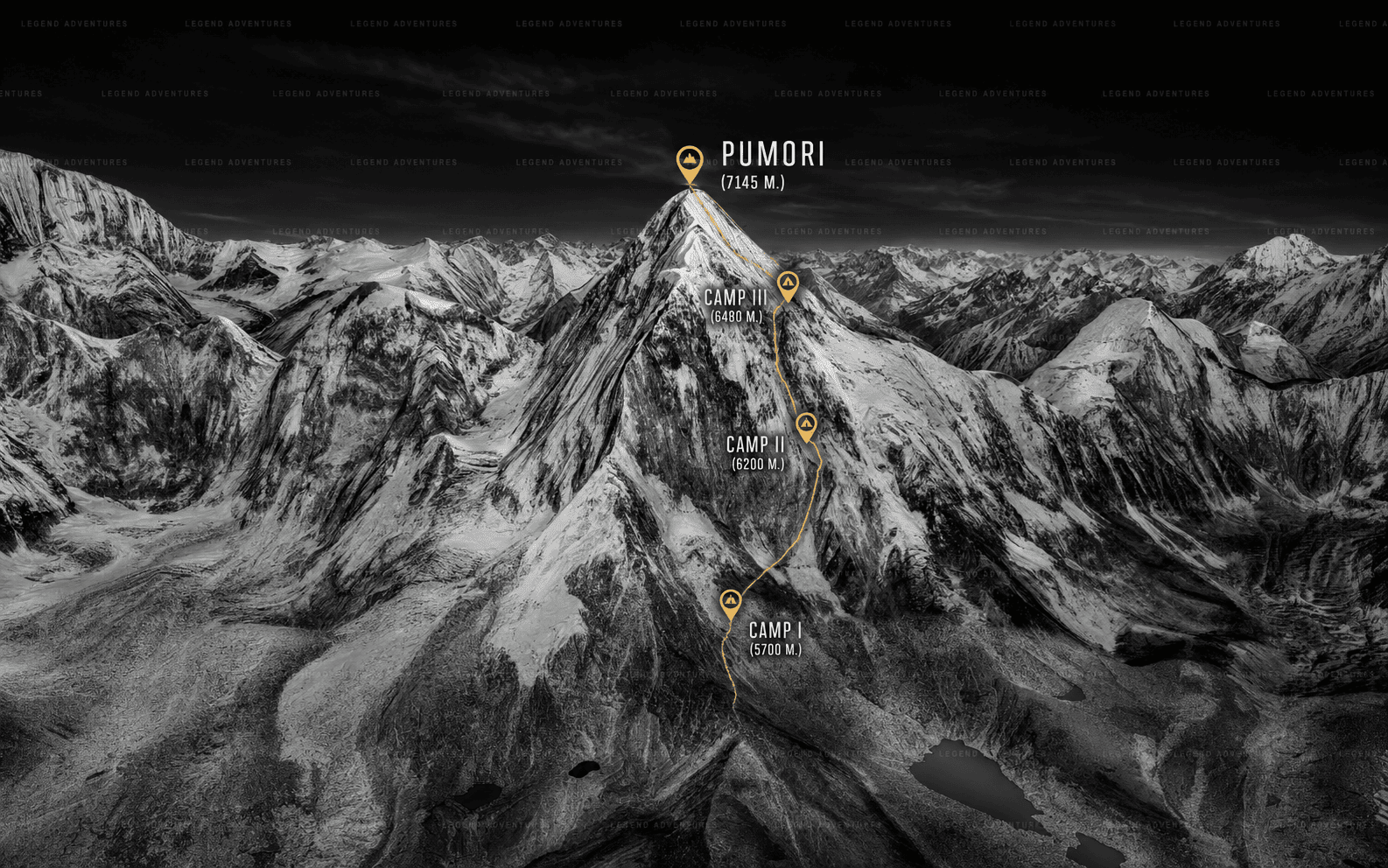
It is the most usual route to the summit of Pumori, which is the Southeast Ridge, and we have established three camps (with the Base Camp) en route to the summit of Pumori. We will have our base camp at 5280m with a glacier climb to Camp I (5750m) in 4-5 hrs. Climbing the snow wall and crevasses, Camp 2 (6200m) will be set up. Climbing from prone to avalanches on large ice hanging on the shoulder, we established Camp 3 at 6470m. Passing through crevasses, a long snow field will lead to the Summit; we return the same way and trek back to Lukla.
Best season to Mt. Pumori
Mt. Pumori is best done in the spring (April-May) and autumn(August-September). It's not cold or hot and will provide the best sights en route.
Preparation and Training
Pyramid Peak is one of the more challenging peaks in the Khumbu region, 8km west of Everest. Sherpa's 'little daughter' or Pumori as it's called locally, is a popular training ground for climbers heading up to the 8000m mountains. The route on the Southeast Ridge is a sustained 30-60° snow and ice climb with narrow ridge camps and crevasse riddling between Camp 2 and Camp 3 and requires the climbers to be comfortable with alpine snow and ice climbing grade 3, and have experience with peaks between 6000 and 6500m.
In addition, there is a strong cardiovascular component to the training (e.g., long hikes with a heavy pack, running, biking, etc), and technical training: steep snow/ice climbing in various directions, fixed-ropes climbing and descending, crevasse rescue technique, several portions of the route run in avalanche terrain, glacier terrain. The trek to the Khumbu is already quite demanding, and the comfort of trekking several days in a row above 4500-5000m is definitely beneficial. Fitness, strength and stamina for the long, arduous summit approaches, which typically start at midnight and end before the afternoon weather deteriorates, are essential, which is provided by the pack, jacket, rucksack, poles and boots for a long technical stamina test.
Gear and Equipment
Pumori is a mixed terrain ice and snow system, which calls for both a complete technical alpine kit and normal high altitude and camping gear.
-
Technical mountaineering boots with double layers and crampons.
-
Crampons, Ice axe, Technical tool 2, for steeper sections.
-
Climbing Harness, Ascender, descender and Carabiners.
-
Helmets, headlamps, glacier glasses and sunscreen.
-
Heavy insulated layers/down suit for higher camps and summit day.
-
An extremely cold-temperature-rated sleeping bag.A sleeping bag that is suitable for use in cold conditions.
-
For every weather condition: base layer, fleece, and waterproof hardshell.
-
Approach Trek: Trekking Poles and Day Pack.
-
Personal first aid kit and any prescribed medicine.
-
Ropes and routes set up and prepared by the team (provided)
-
All of the above items will be covered by the cost of camping/high camp equipment (tents, kitchen equipment).
-
Travel insurance and high altitude rescue policy.High Altitude Rescue insurance and Travel insurance.
Safety and Support
The main dangers are limited to the steep (40-60°) ice walls separating Camp 1 from Camp 3, the narrow camps on ridges, and the avalanche-prone slopes near Camp 2, where careful route selection and the use of ropes is always essential. A good expedition has a tight climbing party (typically 1:2 climbers to Sherpa), guides that have experience in rope fixing through the technical parts of the route, and they keep an eye on the snow stability as part of the route is a particular area of danger for avalanches. Camp 3 is set up on an exposed ridge just before 6,480m, and kept to a minimum to minimise time spent in a high-consequence area before the final push to the summit.
The summit approach normally starts around midnight and is expected to be done before the weather gets bad during the afternoon so as to get back to lower camp. This acclimatisation cycle consists of rotation between Base Camp and Camp 1 and Camp 2 before attempting a summit, and evacuation from Base Camp or any of the Base Camp trekking route points is done by helicopter when required.
This trek is led by our experienced Sherpa climbing team, and we have a good understanding of the Southeast Ridge of Pumori; it's a good step-up section for those wanting to take the next step towards 8,000m summits.