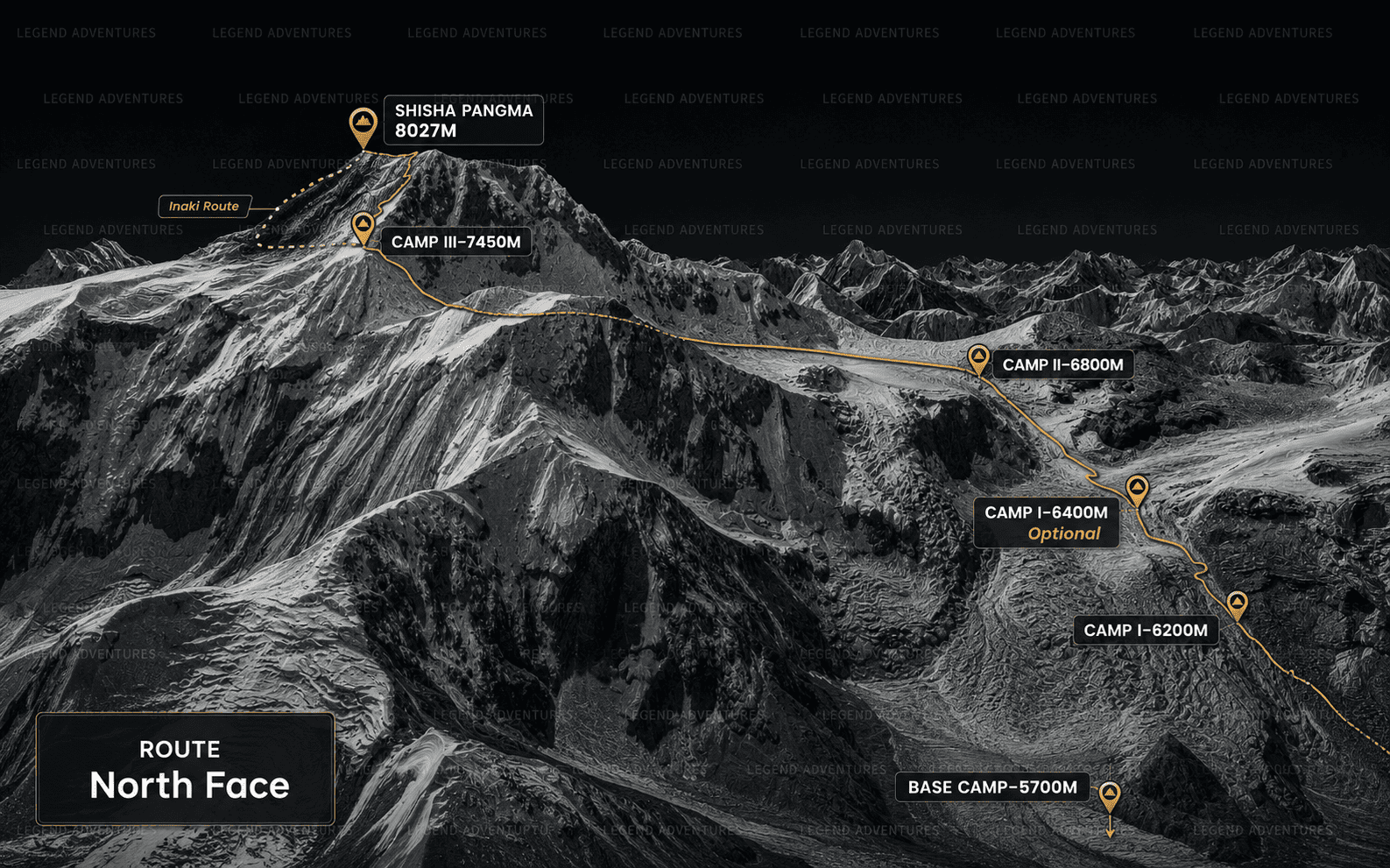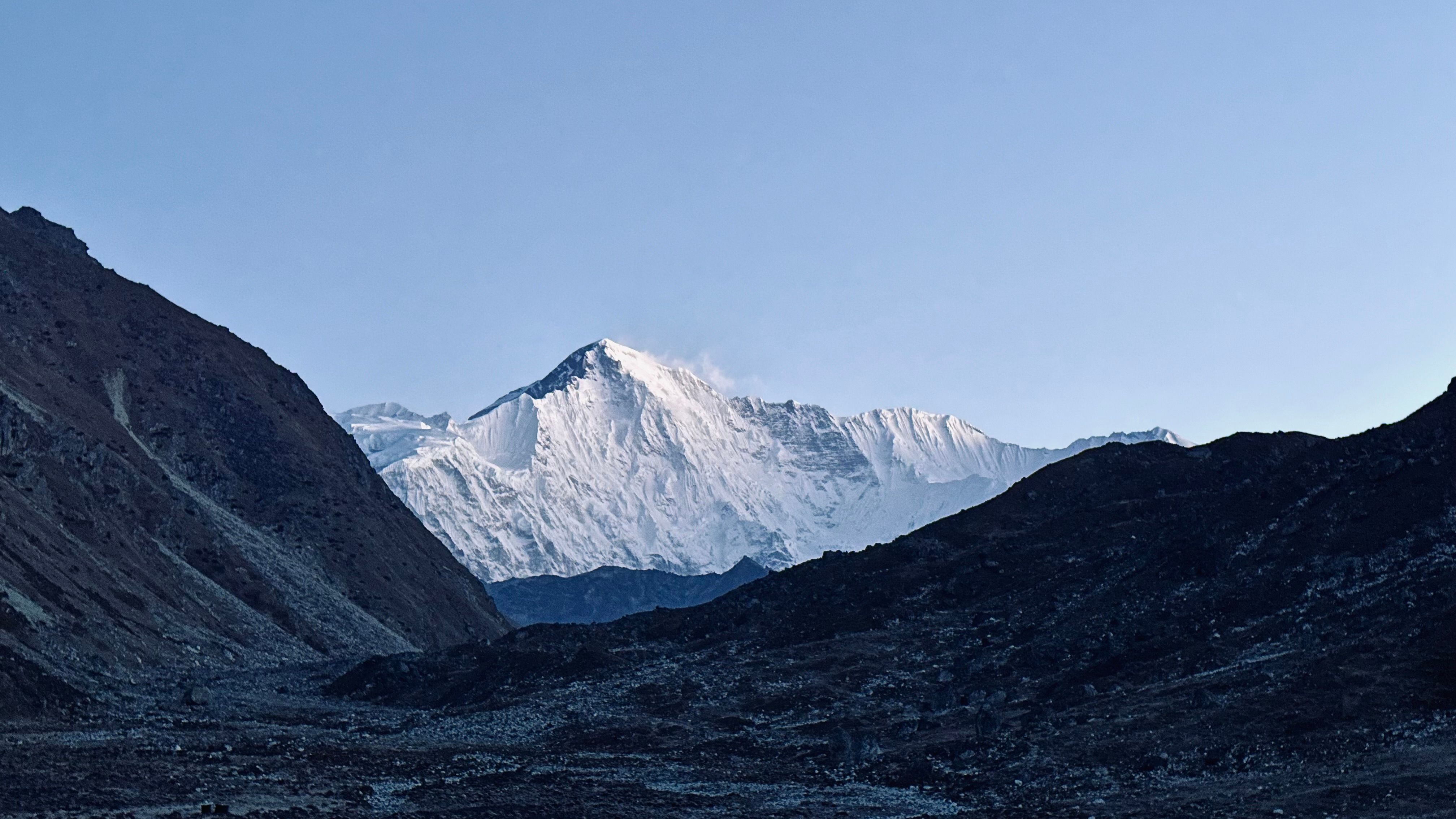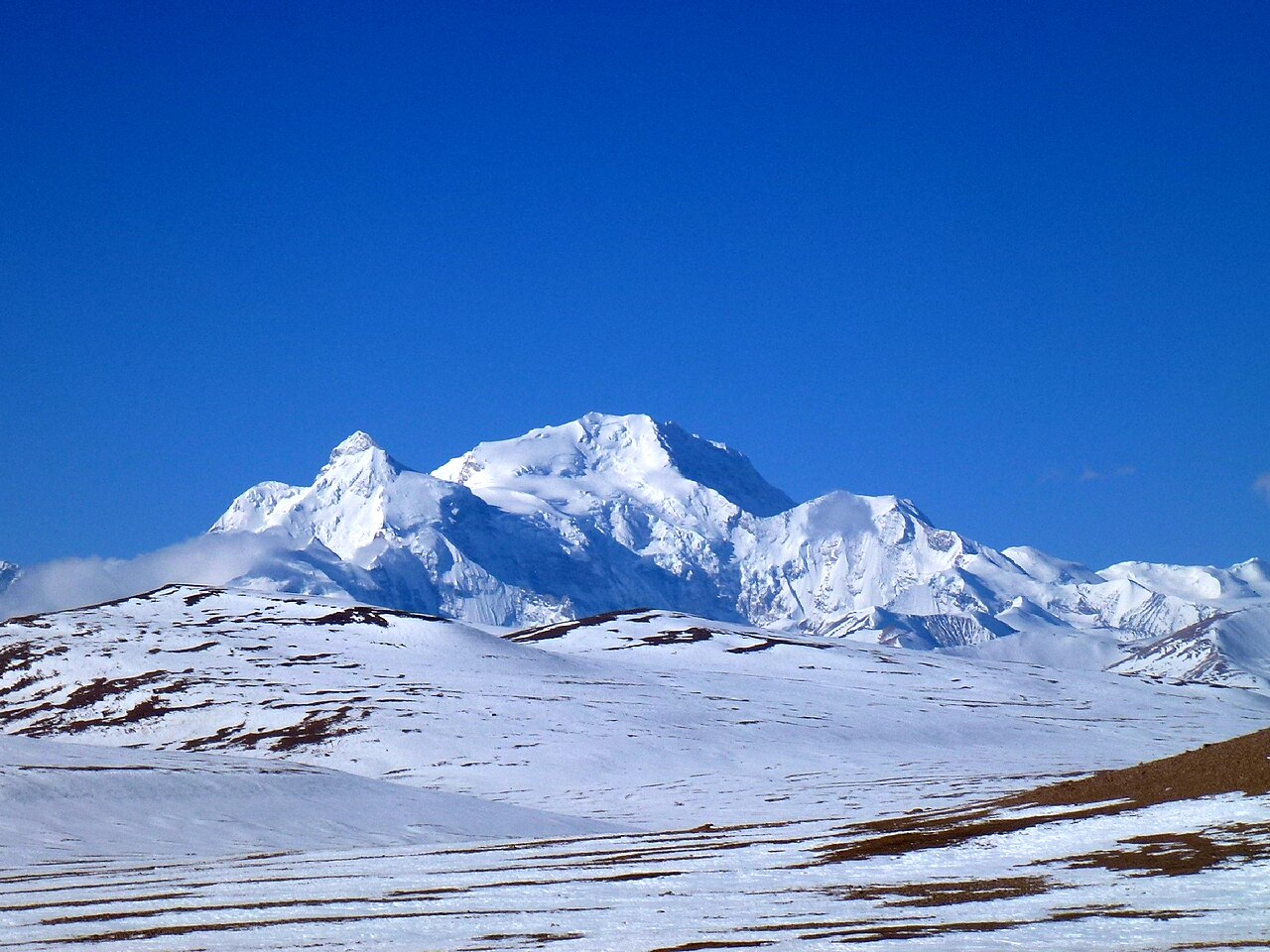
Shishapangma is the world’s 14th highest and one of the youngest mountains, standing at 8027 m. It lies in south-central Tibet just 6 kilometres away from the Nepal-Tibet border along the Himalayan range. This mountain is also called by the Tibetans as “the big grassy field”. Only very few climbers have so far scaled Mt. Shishapangma after the Chinese opened Tibet to the western summiteers in 1978 A.D. It is straightforward to climb and less technically demanding. It would be an appropriate mountain for those climbers who want to scale an 8,000m peak without taking much risk. It is the only 8,000m peak completely situated within China on the Tibetan Plateau.
In 1964, the first ascent to this magnificent peak was made by Xu Xing and 10 other climbers. Sishapangma was the most recent of the 8000ers to be climbed. The ascent is very technical, and features a long, steep southern face over 2,000m high, a spectacle for anyone in its presence. There have been numerous successful ascents to the peak, but most climbers only make it to the West/Central summit at 8013 m. There is a main summit which is a few hours away from the central summit, but it is too technical and difficult. The natural climbing route goes through the snow and ice climb, where the climbing route is equipped with crampons and ice axes, and fixed ropes are used along the route.
The best season for Shishapangma Expedition
The best time to attempt a Shishapangma expedition is in Spring and Autumn, as the weather is clear and pleasant and the nature around is at its best. The road to the base camp is open all the time.
Preparation and Training
As the only 8,000m peak entirely in Tibet, Shishapangma is considered one of the easier access points into the realm of 8,000m mountaineering due to the ease of its northwest ridge route and drivable access to Base Camp at ~5,000m. Despite this, those climbing should have previous experience above 6000-7000m, be comfortable with fixed-rope climbing on new snow and ice (35-45°), and be competent in glacier travel as both the area around Camp 2 and the traverse to the summit are crevassed.
Aerobic training should be done 6-8 months out, and should be based on a solid aerobic base (long hikes with a heavy pack, running, cycling), to prepare for long summit day pushes, and strength training for legs and core. Technical preparation should involve the practice of jumaring, rappelling, cramponing on mixed snow and ice, and practice in crevasse rescue, because the approach and lower camps are in substantial glaciated terrain. In contrast to Base Camp for peaks like K2 or Everest, the road access reduces the trekking in fitness requirement, so rotations to the high elevation prior to arriving at Base Camp are more important than fitness capacity here.
Gear and Equipment
Basic 8,000m equipment is recommended, and special care should be taken for cold weather gear in view of the windy plateau conditions in Tibet.
-
8,000m down suit and high altitude summit boots
-
Crampons, harness, ascender, ice axes, and carabiners
-
Helmets, headlamps, glacier glasses and sun screens.
-
Three layers: base, mid, and insulated jacket for Base Camp, ABC and summit push.
-
First aid kit and prescribed medication (if required)
-
A duffel bag and daypack (backpack) with trekking poles.
-
Mask and regulator (if required, can be supplied upon request)
-
Headed up to the summit with the team's help of fixed ropes and route preparation.
-
Camp or Base Camp/Advanced Base Camp gear (tents, kitchen, dining facilities)
-
High-altitude rescue insurance
Safety and Support
The primary hazards focus on crevassing on the glacier below Camp 2, exposure to avalanche hazards near Camp 3, and the narrow corniced summit traverse between the Central Summit (8,013m) and the true East Summit (8,027m) of Shishapangma. On the summit day, a good expedition will maintain a climber/guide ratio of approximately 1:1, and will ensure that the Base Camp manager is experienced in coordinating weather information and route-fixing throughout the group.
For those who wish, supplemental oxygen may be arranged, but many climbers choose to scale Shishapangma without it, for its relatively easy technical grade. The mountain lies entirely on Tibetan soil, and the logistics are Chinese territorial rather than Nepal and Pakistan territorial; the availability of road points near Base Camp determines the ability of helicopters to arrive in the Tibetan Plateau as compared with the Khumbu region of Nepal. The process of acclimatization is done in a planned, multi-rotation format between Base Camp, ABC, and the higher camps, allowing the body time to acclimatize before attempting a summit.
Pemba Rita Sherpa, a founder himself, is a fourteen-time Everest summiteer and experienced weather window reader and team pacing guide, who knows firsthand how to navigate long, arduous routes at high elevations. This experience will be directly applicable on Shishapangma's inhospitable summit traverse.