Ama Dablam is a technical peak in the Khumbu region of Nepal which is the most challenging peak to climb among the Himalayas. It stands at 6,812 meters (22,349 feet) above sea level. Ama Dablam expedition requires technical climbing equipment such as ropes, ice axes, crampons, ice screws, and cams and jumars. Ama Dablam difficulty is one of the primary reasons the mountain is considered a renowned objective among the climbers.You need to have experience climbing at altitudes and also be good at rock and ice climbing as well. The Sherpa people think Ama Dablam is a mountain that holds deep cultural and spiritual significance.
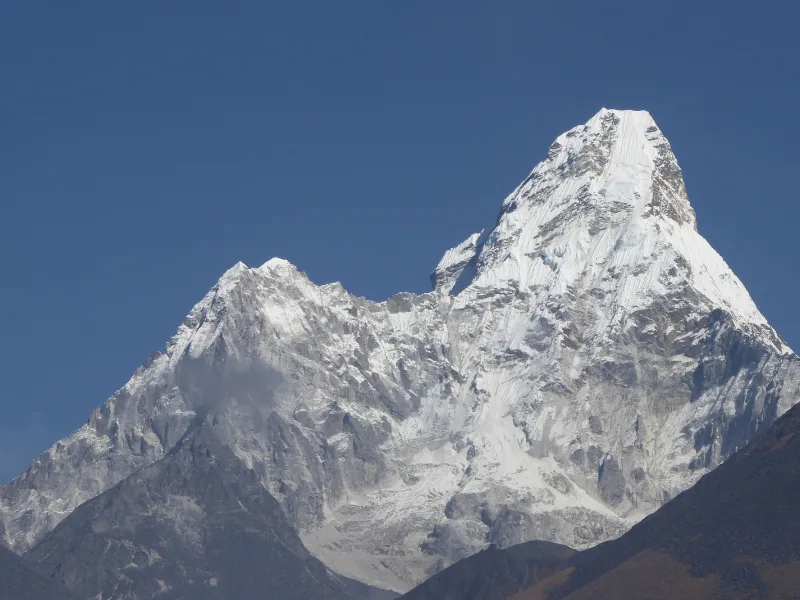
Understanding Ama Dablam Difficulty
Ama Dablam expeditions is one of the most difficult and technical as well as challenging climbs among the Himalayas. Although the mountain height is not as much as Mount Everest , it is a very serious climb due to its sharp edges, steep slope and frozen sections that requires special preparation, skill and focus. As it combines rock, ice and mixed climbing all in a single route, Ama Dablam is described as a true test of both body and mind. There are many factors that contribute to the Ama Dablam climbing difficulty by making a serious objective.
Ama Dablam has narrow ridges and steep rock walls that require careful use of ropes and climbing tools as well. The main challenge is about the road. Climbers must have equipment like crampons, ice axes and fixed ropes during various sections of the route. Some parts of the climb like the Yellow Tower and Grey Tower are especially difficult because they are almost vertical and it requires good climbing experience.
Another big factor that adds to Ama Dablam difficulty is the altitude. The oxygen is very less and the air is quite thin as the summit is 6,812 meters above the sea level which can make breathing difficult and may cause altitude sickness if climbers do not acclimatize in time.Most teams spend many days at Base Camp and higher Camps to enable their bodies to acclimatize to the high altitude before moving further up. Without adequate acclimatization , climbers may experience headaches, fatigue and other serious health risks too.
The climb can take around three to four weeks according to the weather and route conditions. Setting the camps, carrying the gear and moving through the steep takes lots of effort so climbers should support other climbers and should follow the expert sherpa guidance. All the technical skills are the main reason why Ama Dablam climbing difficulty is significantly higher than the non- technical trekking peaks.

High Camp And Route Breakdown
The Ama Dablam route starts from Lukla, which is the entry point to the Everest region. Starting from lukla, the same trail is followed by the climbers used in Everest Base Camp Trek. The journey passes through sherpa villages i.e Namche Bajar and Pangboche which is the best place to take rest and enjoy great views of Everest, Lhotse and as well as Ama Dablam. Three high camps are set up above the base camp to climb Ama Dablam.
Base Camp (4,600m)
From Pangboche, the trek to Ama Dablam Base Camp begins. Ama Dablam is at 4,600 meters above sea level. The Camp is in an open field.You can see the views of the Imja Valley from here.

Base camp to Camp I (5,795m)
The initial part starts from Base Camp to Camp 1 at around 5,700 meters i.e one and half-hours walk above Yak Camp. This path has rocks and grassy slopes. Camp I is located on a small flat spot with great views of the surrounding peaks.
Camp I to Camp II (5,980m)
The next stage of Ama Dablam, from Camp I to Camp II. Camp II is located at the top of the Yellow Tower on a narrow platform with the emerging views. Yellow Tower is a vertical rock wall and known as the toughest part of the mountain. It requires careful rope work and rock-climbing skills due to the vertical rock wall. Climbers need to follow the safety line and move slowly.
Camp II to Camp III(6,440m)
Camp III includes the Grey Tower and another difficult area with mixed rock and ice climbing. Here the exposure is very high which means climbers move along steep and open drops on both of the sides. Camp III is around 6,300 meters and often called “hanging camp” as it sits on a small edge just below the Ama Dablam. The sherpas will often use a full camping rope to tie the tents down.
Summit Day
The final part of Ama Dablam starts from Camp III to the summit at 6,812 meters. It also has options either direct from Camp II to Summit day or Camp III to summit. It has steep ice slopes and frozen ridges and you can also see Everest and other big mountains like Makalu and Lhotse with a 360-degree view. Climbers have to be careful when they go down after reaching the summit using the same route back to Base Camp.
Conclusion
Ama Dablam is one of the most beautiful mountains to climb in Nepal. Climbing Ama Dablam is a great mountaineering experience in Nepal. However, Ama Dablam difficulty should not be underestimated, as the mountain features sharp ridges, steep icy slopes, and technically challenging climbing sections. Climbers from all over the world come to the Himalayas to see if they can climb mountains or not as they want to test their skills. Climbers can climb the mountain safely with good preparations and training. Those who know the mountain should guide the climbers.
Legend Adventures cares a lot about climber safety during the expedition. We help with getting used to altitudes planning the best route to set the camps and managing the equipment. The guides are expert at handling technical sections like the Yellow Tower and Grey Tower. They teach people how to use ropes as well as help with climbing one ice and using crampons on Ama Dablam climbing.
People who like to climb can come from all over the world. The Ama Dablam climbing difficulty is what makes many mountaineers to give a lot of respect.Ama Dablam climbing is all about having a big adventure.
Ready to Climb Ama Dablam? Take on one of the Himalaya’s most iconic peaks with our expert-guided Ama Dablam expedition. Book Your Expedition Today!
FAQs
1. What about the Ama Dablam difficulty?
It is not about height alone. The climb is technical, exposed, and demands real skill. Many say it feels harder than expected, also some climbers say it is harder than climbing Everest.
2. What kind of experience is needed?
Climbs above 6000 meters help a lot for acclimatisation, but technical climbs really help you with technique and the altitude experience. And comfort to traverse the knife-edge drop, climbing vertical rock and ice is important. Not something to figure out on the way, like climbing Island Peak or Mera Peak.
3. Do fixed ropes make it easier?
They help, yes. But they do not do the work for you. You still need proper technique and control.
4. When is the best time to climb?
Spring and autumn. But autumn is often better. More stable weather, clearer days.
5. Can the weather affect the climb?
Yes, very quickly. Clear mornings can turn difficult in hours. Plans often change because of it.
6. How important is acclimatization?
Very. Without it, the body struggles quickly. Headaches, fatigue, and slower thinking. It changes everything.
7. Why do climbers attempt Lobuche before Ama Dablam?
It helps the body adjust. Also builds confidence. A useful step before going higher. Also, the difficulty is less than the Ama Dablam difficulty. They also skipped the rotation of Camp-II of Ama Dablam, because the tent pitching place is limited. If not lucky, then no place to sleep at camp-II.
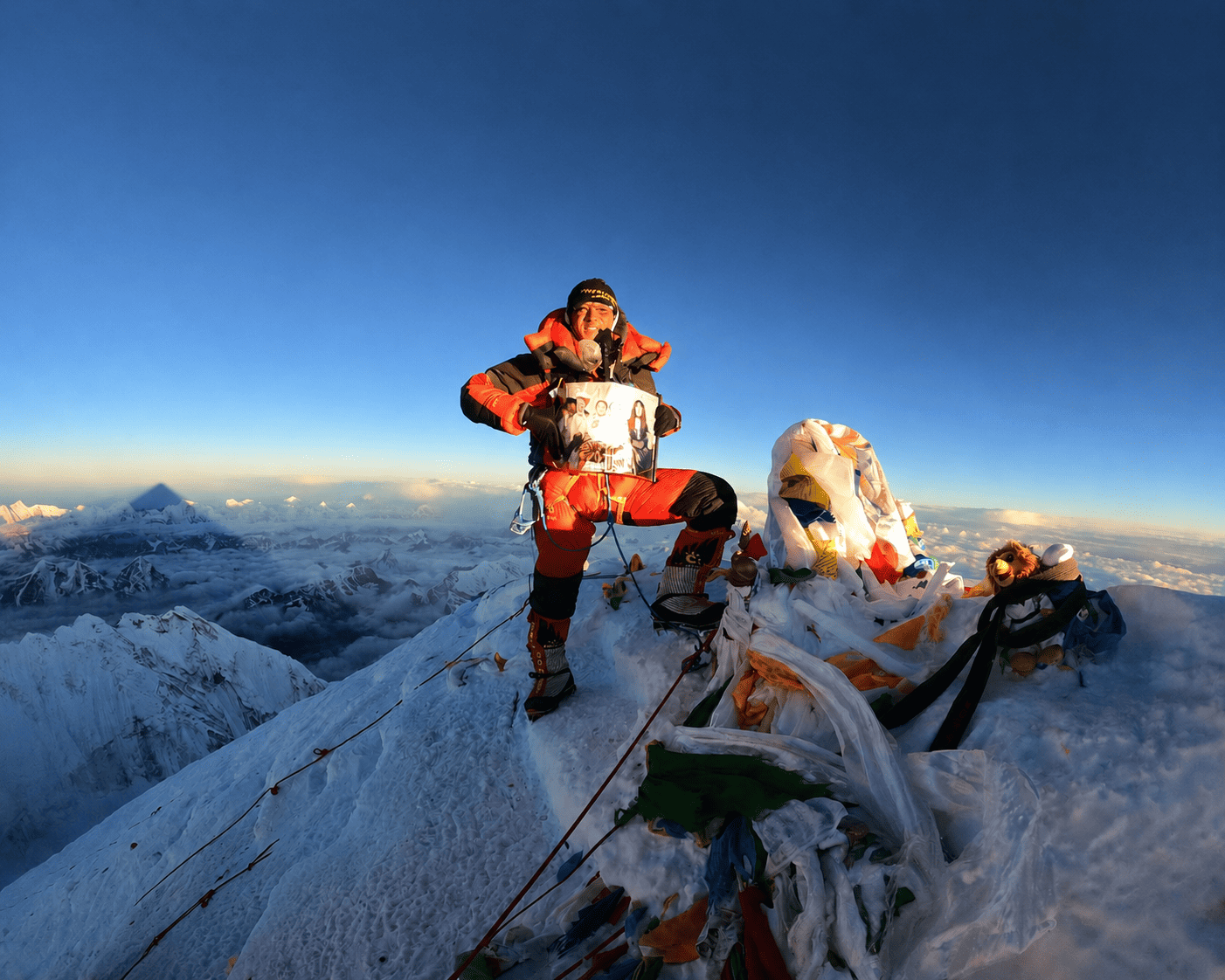
Founder & Lead Expedition Guide
Pemba Rita Sherpa
With more than 25 years at the forefront of Himalayan mountaineering, he is an NNMGA/IFMGA-certified mountain guide, instructor, and accomplished expedition leader. His remarkable climbing record includes 14 Everest summits—3 from the Tibet side and 11 from Nepal—and two successful ascents of K2. He has reached 8,000m peaks 26 times, 7,000m peaks 19 times, and climbed numerous 6,000m peaks, alongside 15 successful ascents of Mustagh Ata.
A pioneer driven by exploration and technical excellence, he was the first person to summit Ganchempo via the South East Ridge. As the founder of Legend Adventures, he brings decades of high-altitude experience, mountain judgment, and expedition leadership to every mission. Fluent in English, Japanese, Chinese, Nepali, and Hindi, he leads with a deep respect for the mountains and a commitment to delivering professionally managed, authentic Himalayan expeditions for climbers from around the world.
INSPIRED BY A STORY?
PLAN YOUR OWN EXPEDITION
Let our experts turn your dream adventure into reality.