The physical terrain of the Region
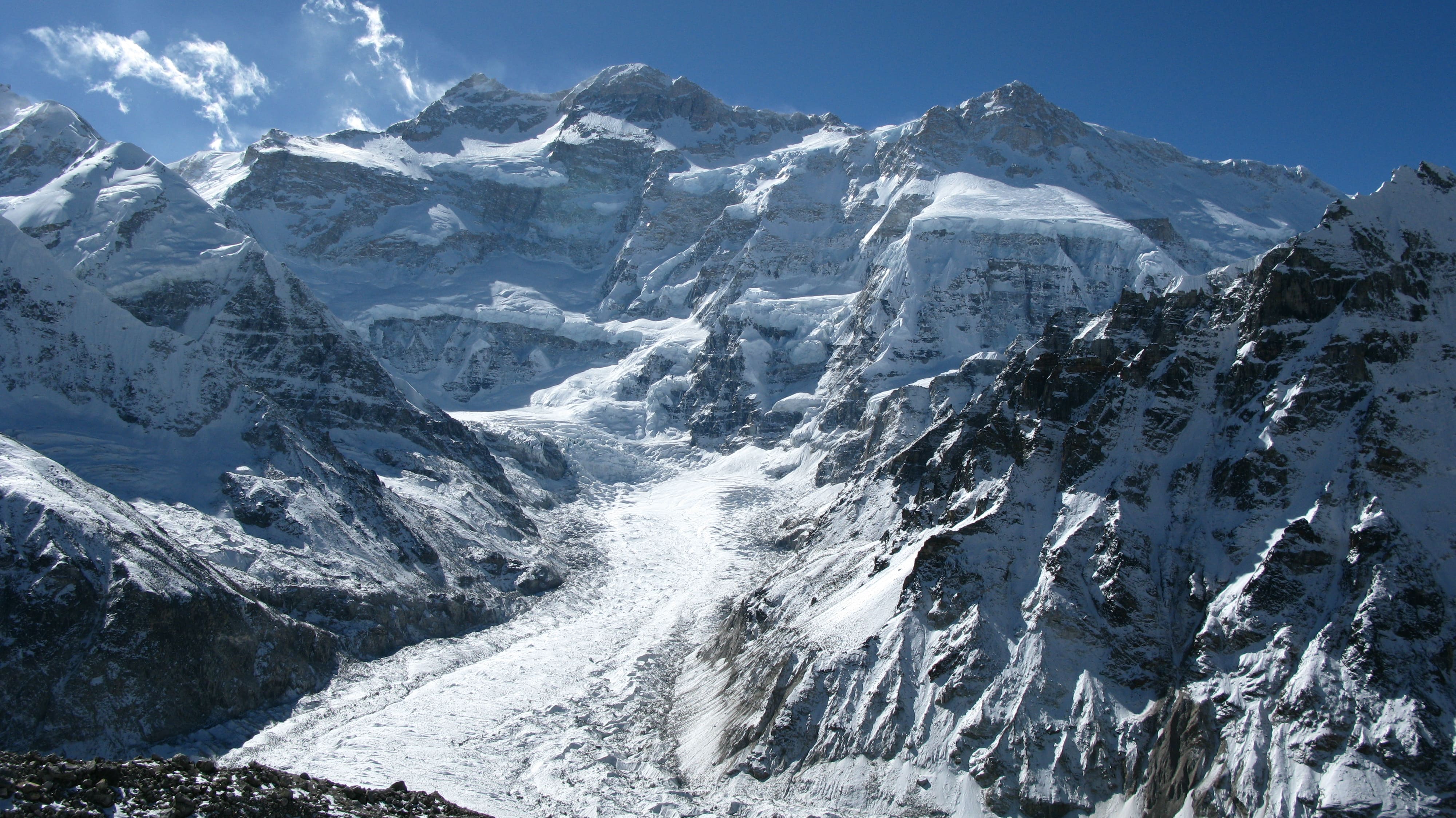
An Everest expedition from the South Col takes climbers through the serene Khumbu Valley. Khumbu is the high valley system of Solukhumbu district, surging from the forested banks of the Dudh Koshi and up to the ice of the Khumbu Glacier. Located inside Sagarmatha National Park, it is undoubtedly one of the most concentrated stretches of extreme terrain and extreme culture in Nepal. Snow leopards and Himalayan tahr share this ground with blood pheasant, monasteries, and the busiest high-altitude economy in the world. The aura of this place is captivating and resides in the memories of those who have been here for a lifetime.
The trek to the base camp is more than just a fun adventure. It's where the body actually begins to learn to work with less air. You'll feel lowland Nepal fall away behind you, and somewhere around Namche the landscape becomes altitude, ice, and mountains standing over every village you pass.
The Culture in the Khumbu Region
The Khumbu region is the homeland of the Sherpas. This expedition also allows travellers to experience the unique culture of the native Sherpa People. Namche Bazaar, Khumjung, Tengboche: villages built around monasteries, mani walls and prayer wheels that were guiding traders through this valley long before mountaineering existed as a pursuit. Pause at the chortens for tranquillity. Keep to the correct side of the mani walls. Each step you take forward, you shall be welcomed by the warm hospitality of ever-smiling locals.
Every expedition on this route also holds the Puja before the climbing actually starts, in which a lama blesses the climbing equipment and formally prays to the mountain for safe passage and successful summit. For the Sherpa team, this isn't a photo opportunity, and it never becomes one on our trips.
The Summit Overview: Everest via the South Col
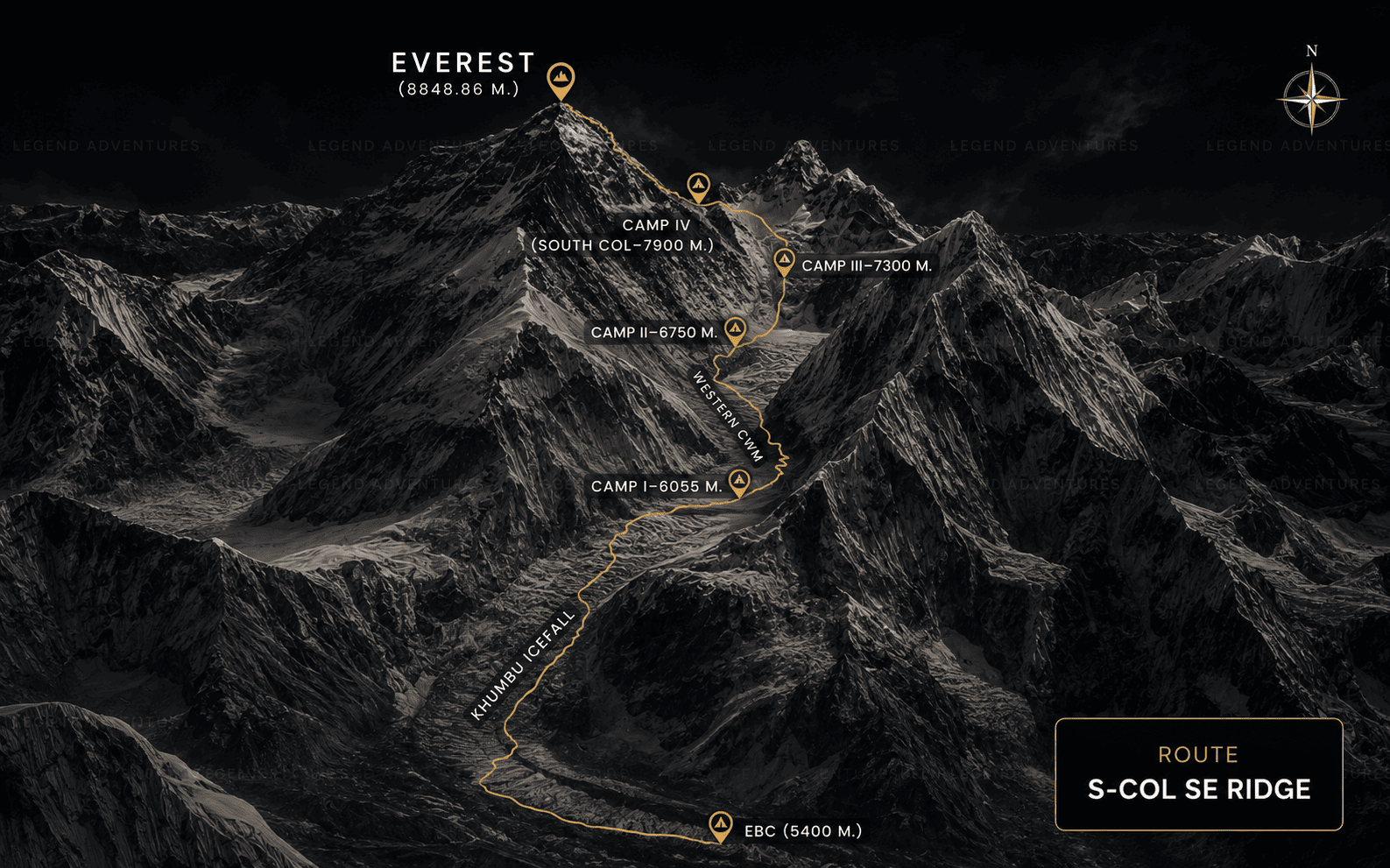
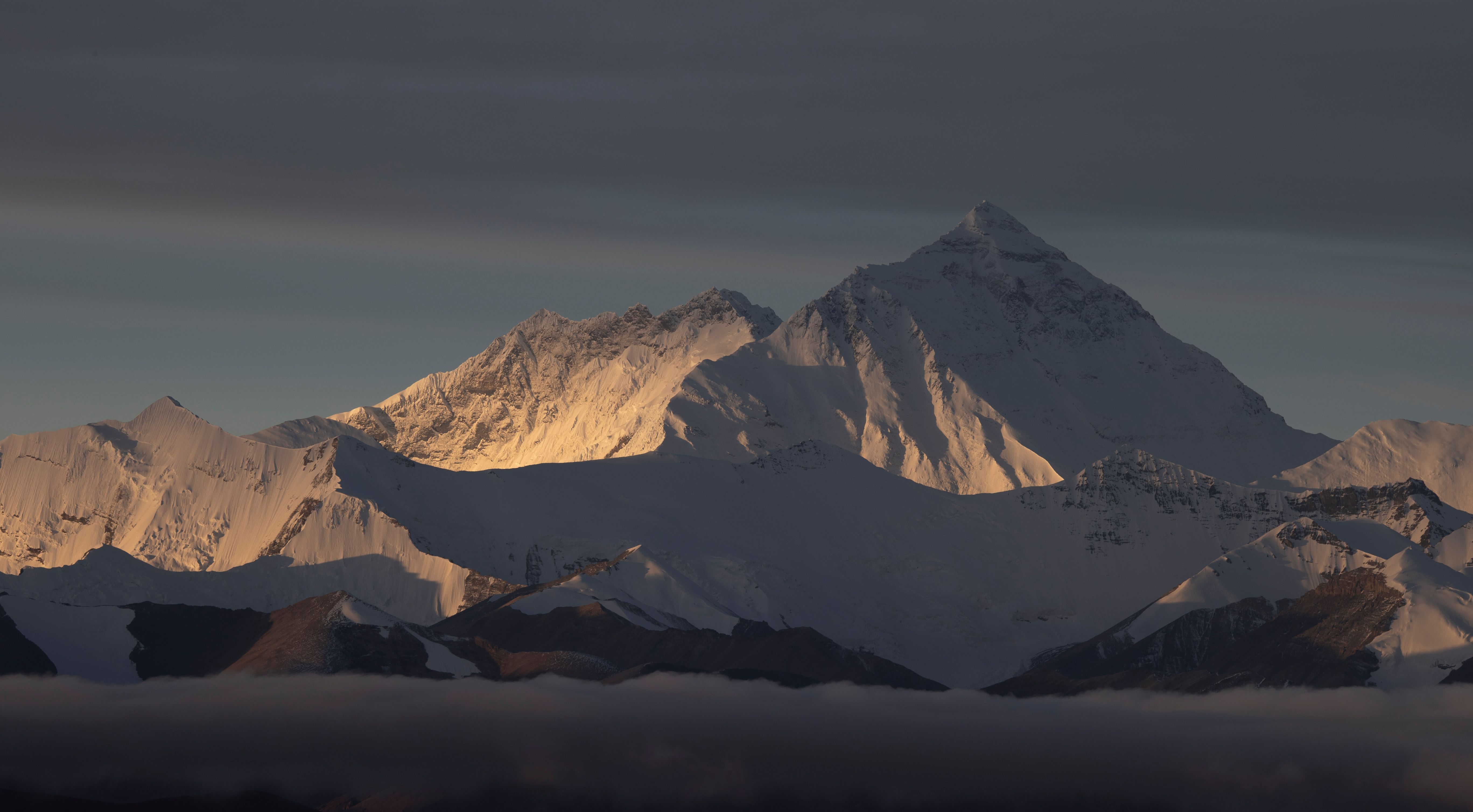
The trek to Everest Base Camp is not a difficult one with one hard day bolted onto the end of it. It's a sustained, multiple weeks-long journey against altitude, cold, moving ice, and fatigue that accumulates whether you're ready for it or not. Endurance and determination, with solid logistics, planning, and expertise, are the key to a successful summit experience. The South Col line runs up the Khumbu Valley to Everest Base Camp, then through the Khumbu Icefall, the Western Cwm, the Lhotse Face, the Yellow Band and Geneva Spur to the South Col itself, before the final stretch through the Balcony, the South Summit, the exposed summit ridge and the Hillary Step sector to 8,848.86 metres. Camp positions shift season to season. Fixed lines get re-run most years too, because the glacier underneath all of it never actually stops moving. With the expert team at Legend Adventures, leave the planning to us and allow yourself to rest, relax, and prepare for the summit ahead.
Best Season for Mt Everest Expedition
The spring pre-monsoon window (late March through late May), particularly the second half of May, is the ideal season for this route, as jet-stream winds ease. While other seasons are technically possible, they do not suit standard expeditions. A "weather window" indicates a period judged less hostile rather than genuinely "good" weather; the decision to use it belongs exclusively to the expedition leader, not the calendar.
Considerations and Trip Notes
Visa Requirements
Most nationalities get a Nepali tourist visa on arrival at Tribhuvan International Airport, in 15, 30 or 90-day multiple-entry options. For a 60-day expedition, excluding the inevitable Lukla weather delay on either end, the 90-day visa really is the best pick. Anything shorter and you're looking at a mid-expedition trip to the Department of Immigration, which is not how anyone wants to spend a rest day. Fees are cash only, in major currencies, paid at the airport counter. Extensions past 90 days are possible in Kathmandu, but it is advised to purchase VISAs for a longer period as per your vacation plan.
Insurance Requirements
There is a hard truth about insurance policies, especially when it includes high altitude mountaineering; a standard travel policy will not be accepted for this expedition. Every climber needs specialist mountaineering cover explicitly rated for technical climbing above 8,000 metres, covering helicopter evacuation from high camps, hospital treatment and deposit guarantees in Kathmandu, trip cancellation and interruption, and repatriation.
Nepali regulation now also requires a minimum level of death and repatriation cover before your permit can even be finalised, and separately mandates increased insurance for the high-altitude Sherpa team supporting your climb. You'll need to submit proof of an accepted policy, one our medical coordinator can contact directly, with no altitude exclusion anywhere below the summit, before your final balance is due.
And insurance, to be fair, funds and authorises a rescue; it can't manufacture a landing zone or force an aircraft to fly through weather that's grounded it. That's exactly why the operational rescue plan above the reliable helicopter zone still relies on Sherpas and guides physically moving a casualty down until flying actually becomes possible again.
With Legend Adventures, we guarantee an expert team of Sherpas, top-class logistics, adequate preparation and proper rotation before the expedition and aim for a successful summit and a safe return.
Fitness, Technical and Experience Standards
-
A prior successful summit above 7,000m is the minimum entry standard. Documented 8,000m experience is strongly preferred and will be reflected in the acceptance review.
-
You need to independently demonstrate automatic-crampon technique, front-pointing on hard ice, fixed-line ascent, Jumar changeovers, ladder crossings, and oxygen mask and regulator operation.
-
Comfortable movement with a 10–12kg pack at altitude. Genuine self-sufficiency inside a high camp, not just familiarity with the gear.
-
Final acceptance runs through a climbing resume review, guide references, medical screening and a hands-on technical assessment. This expedition isn't sold on budget alone, and we'd rather turn a booking away than take someone up unprepared.
Environmental Conduct
At Legend Adventure, we strive to stick with a strict leave no trace policy. We carry our waste and bring it back. Use of approved biodegradable bags, defecation within toilet tents, no reckless dumping and secure return of oxygen cylinders are mandatory during the expedition.
Gear List Suggestions
-
800-fill 8,000m down suit and three-layer waterproof shell system.
-
Triple mountaineering boots (rated -40°C) with a compatible modular sock/glove system.
-
Category-4 glacier glasses (with spare pair).
-
Personal climbing hardware: automatic crampons, low-profile harness, matched Jumar, classic alpine axe, and fixed-line safety gear.
-
Sleeping system: -40°C-rated sleeping bag and dual sleeping-pad system.
-
Electronics/Medical: satellite communicator, cold-rated power banks, and personal prescriptions.
-
Rule: Test all gear thoroughly before departure; new gear must be proven.
Our team will provide you with a checklist of all required gear and equipment for the Mt Everest Expedition.
Team Expertise at Legend Adventure
The team is led by an internationally certified IFMGA/UIAGM mountain guide, backed by a senior Sirdar and a team of high-altitude Sherpas, one-to-one with a climber through the rotation cycles and the summit push itself. A dedicated expedition doctor, or at minimum a designated medical officer, runs your baseline health screening at Base Camp and keeps up daily clinical checks for the rest of the climb. All of that sits alongside a full satellite communications and forecasting service, whose entire job is reading the jet stream and finding your summit weather window before anyone else does.