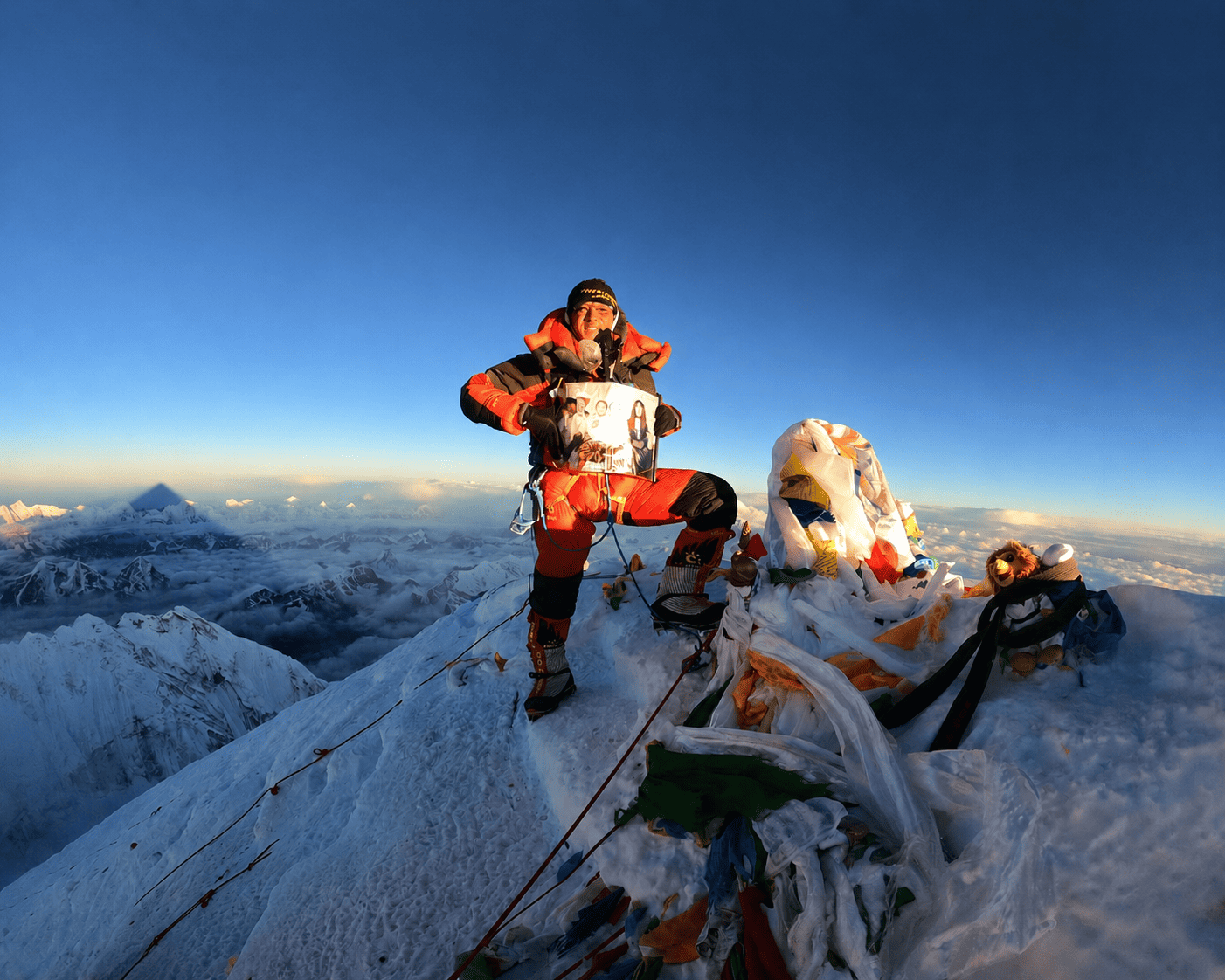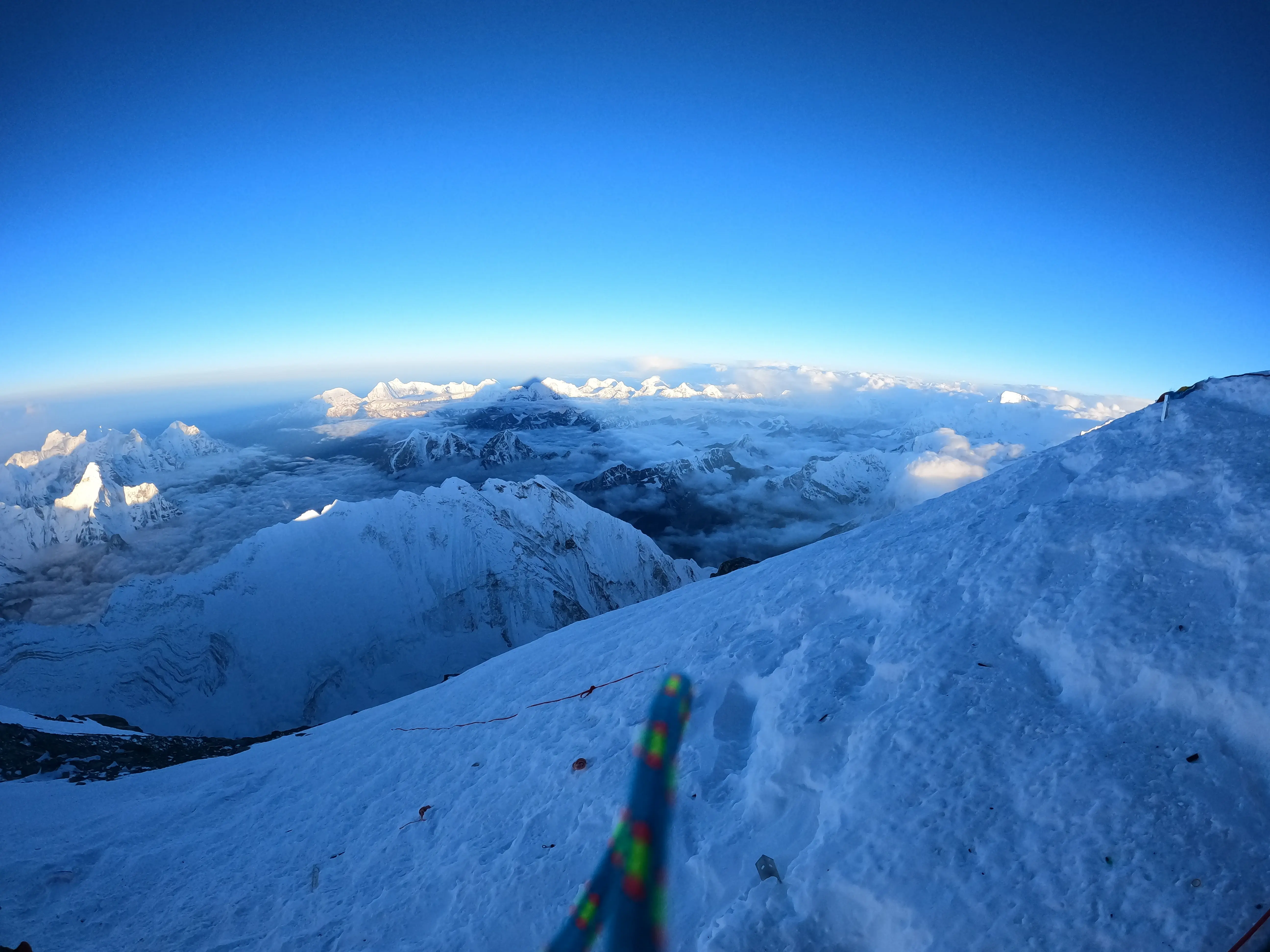
Above the earth, where the wind is fierce and the air is thin, there stands a titan mountain that has amazed people for many years. Mount Everest, the highest point on the earth, reaching 8,848 meters (29,031.69 feet) above sea level. The highest mountain in the world, Mount Everest, is located in Nepal which marks the border between Nepal and Tibet. If you'd like to experience the frisson of an Everest adventure you should know the facts about Everest. Imagine standing at the top of this spacious mountain, where you can see the curve of the earth.
If you're organizing an Everest expedition, looking into a future adventure or just eager for facts about Everest, the guide from Legend Adventures offers the most thorough, current and intriguing information about the highest mountain on earth. From the essence of the Sherpa community to the science of the death zone, from escalating environmental challenges to masked wildlife, get ready to view Everest from a different perspective.

Different essential and fun facts about Everest –
1. Everest is not only tall, Its the highest elevation on earth’s surface
The difference is significant . Everest, standing at 8,848.86 m (29,031.7 ft), is the tallest point assessed from sea level. Nonetheless, Mount Chimborazo in Ecuador is technically the most distant location from Earth’s center because of the equatorial bulge of the planet.
2. The height was formally adjusted in 2020
For many years, Everest's altitude was reported as 8,848m (29,029ft), according to a measurement from a 1954 survey of India. In December 2020, China and Nepal collaboratively declared the updated official height: 8,848.86m (29,031.7ft), including the new cap measurement for the first time.
3. The “Death Zone” starts above 8,000 meters
Above 8,000 meters, the human body starts to deteriorate quickly due to insufficient oxygen. Climbers cannot stay there for an extended period without severe repercussions.This facts about everest is very known among all the people
4. More than 310 individuals have lost their lives on everest
By 2025, a minimum of 315 individuals have lost their lives trying to ascend or descend Everest. The leading causes of death include falls, avalanches, and exposure. A large quantity of corpses lies on the mountain — preserved by the icy temperatures, they occasionally act as somber markers for climbers.
5. Sir edmund hillary may not been the initial individual to reach the summit of mount everest
The official record of the first successful ascent of mount everest was made in 1953 by Sir Edmund Hillary and Tenzing Norgay Sherpa. Nonetheless, some argue that the initial successful summit occurred much earlier.
In 1924, climbers george mallory and andrew irvine attempted to summit mount everest back in 1924. However , they were last seen alive just beneath the peak, advancing upwards. They both were never spotted again. Even today, it remains unclear if the pair reached the summit or not.
6. Ceremonies of a spiritual nature
Numerous climbers and sherpa perform traditional buddhist blessing rituals and puja (worship) at the base camp prior to starting their ascent to the summit, to seek protection. Spiritual ceremonies at the base camp are quite common, numerous trekkers and climbers feel fortunate to experience such rituals on their journey to Everest.
These spiritual rituals highlight the varied culture and customs of the Everest areas which are the most interesting facts about Everest.

7. Multiple Life-Threatening conditions strike above 8,000 m
In death zone, climbers are at acute risk of:
-
High-altitude cerebral edema (HACE)- brain swelling.
-
Cardiac incidents due to extreme cardiovascular stress.
-
Hypoxic hallucination- vivid imagination due to lack of oxygen
-
Extreme frostbite resulting in loss of fingers, toes or entire limbs
- High altitude pulmonary edema(HAPE)- fluid filling the lungs.
8. Climbing mount everest can range in cost from $25,000 to $70000
The average cost of Mt.Everest Expeditions is approximately $50000, varying with the amount of assistance required.
9. Kami Rita Sherpa holds the record with 32nd successful Everest summits.
Nepali Climber Kami Rita Sherpa, 56, has achieved the summit of Mount Everest for a record 32nd time, furthering his own record for the most climbs of the world's tallest peak.
10. Climate change is swiftly reducing the glaciers on everest
The Khumbu glacier in Nepal extends for 17 kilometers across Sagarmatha national park, forming one of the most striking landscapes in Nepal. Some studies estimate parts of the glacier have thinned by more than 50m since 1960. It grew rapidly because of glacier melt and became a global focus point for GOLF risk reduction efforts. This is also an incredible facts about everest .
Everest vs. The World's Other Highest Mountains
|
Mountain |
Height (m) |
Location |
First Summit |
|
Everest |
8,848.86 |
Nepal/China |
1953 |
|
K2 |
8,611 |
Pakistan/China |
1954 |
|
Kangchenjunga |
8,586 |
Nepal/India |
1955 |
|
Lhotse |
8,516 |
Nepal/China |
1956 |
|
Makalu |
8,485 |
Nepal/China |
1955 |
|
Cho Oyu |
8,188 |
Nepal/China |
1954 |
|
Dhaulagiri |
8,167 |
Nepal |
1960 |
|
Manaslu |
8,163 |
Nepal |
1956 |
|
Nanga Parbat |
8,126 |
Pakistan |
1953 |
|
Annapurna I |
8,091 |
Nepal |
1950 |
Conclusion: The peak that represents human aspiration
The facts about Mount Everest reveal a narrative much deeper than any one can figure. This is a mountain that emerged from the depths of an ancient ocean to reach the sky at 8,848.86 meters. A mountain where ordinary human biology fails and remarkable human spirits take over.
From the silent dangers of the death zone to the sherpas people's sacred relationship with Chomolungma, from the daily spectacle of the Khumbu icefall to the pressing urgency of climate change - the mount everest explored in this guide revealed the world as complex as it is magnificent. Learning about the mountain from an IFMGA certified mountain guide can also provide valuable insight into its challenges, environment, and the realities of high altitude climbing.
Whether you dream of reaching the summit yourself, hiking to the base camp or understanding the mountain's beauty and unique nature as well as captivating, you should know how to approach with respect, preparation and wonder.
FAQ: Frequently Asked Questions About Mount Everest
1: How tall is Mount Everest exactly?
Mount Everest stands exactly 8,848 meters (29,031.7 feet) above sea level, as officially verified by the joint survey conducted by China and Nepal in December 2020. This is the most accurate measurement so far, considering the snow cover on the stony summit.
2: Where is Mount Everest located?
Everest is situated at the boundary between Nepal (southern side) and the Tibet Autonomous region of China (Northern side), in the Mahalangur Himal sub-range of the Himalayas. The closest significant city is Kathmandu, Nepal, located about 130km to the southwest.
3: Who was the first to reach the summit of Mount Everest?
On May 29, 1953, the first confirmed ascent of Mount Everest was achieved by Sir Edmund Hillary from New Zealand and Tenzing Norgay Sherpa from Nepal. They participated in the British Mount Everest Expedition of 1953, which was led by Colonel John Hunt considering the historical facts about Everest.
4: How challenging is it to climb Everest?
Climbing Everest is highly challenging. Most of the climber face:
- Reduced oxygen levels
- Frigid temperatures
- Avalanches and icefalls
- Extreme weather
5: What is the 2pm rule?
It is an unspoken rule in mountaineering states that climbers must arrive at the summit by 2:00 pm; exceeding this hour requires heading back to ensure a safe journey back to camp before nightfall.