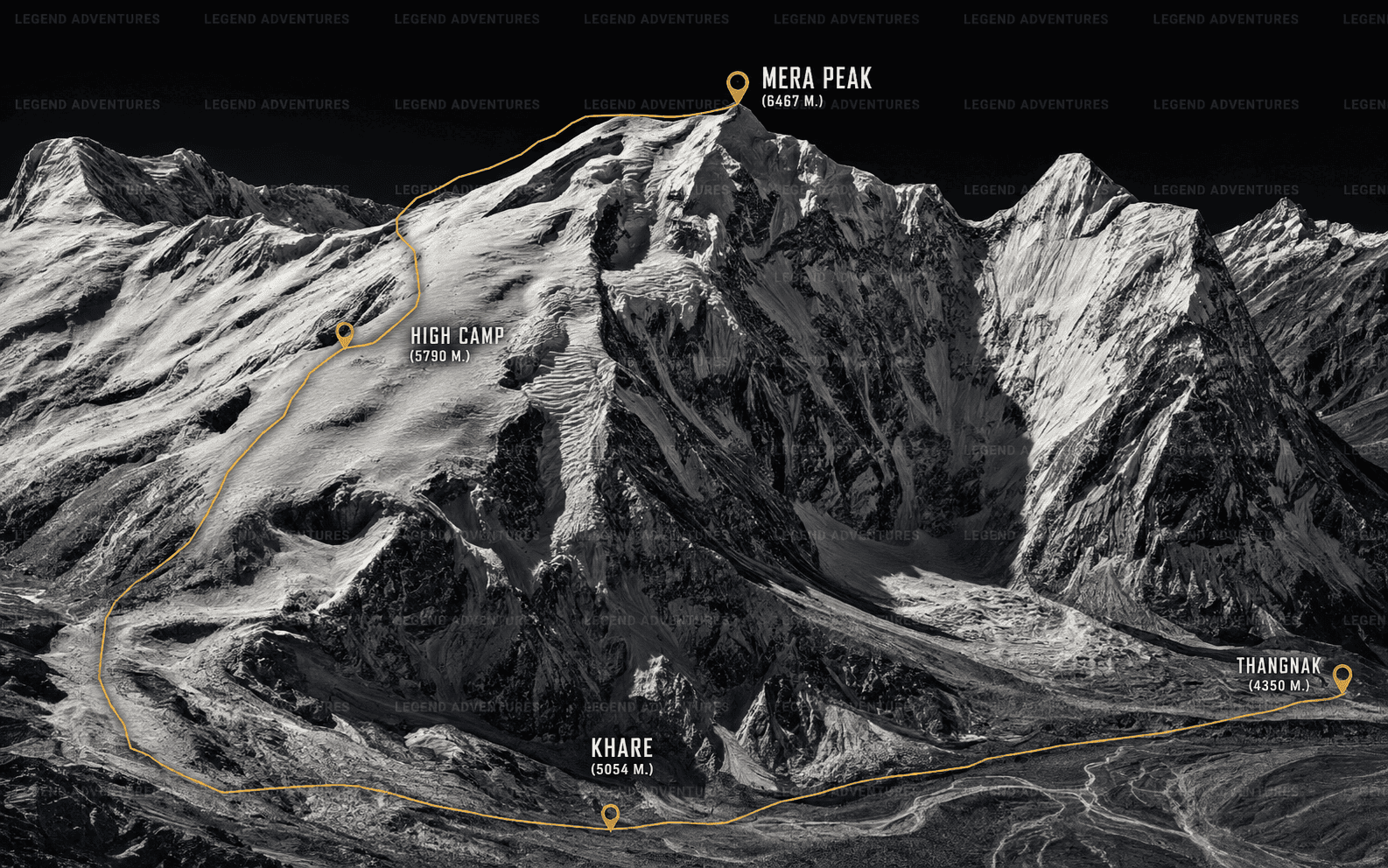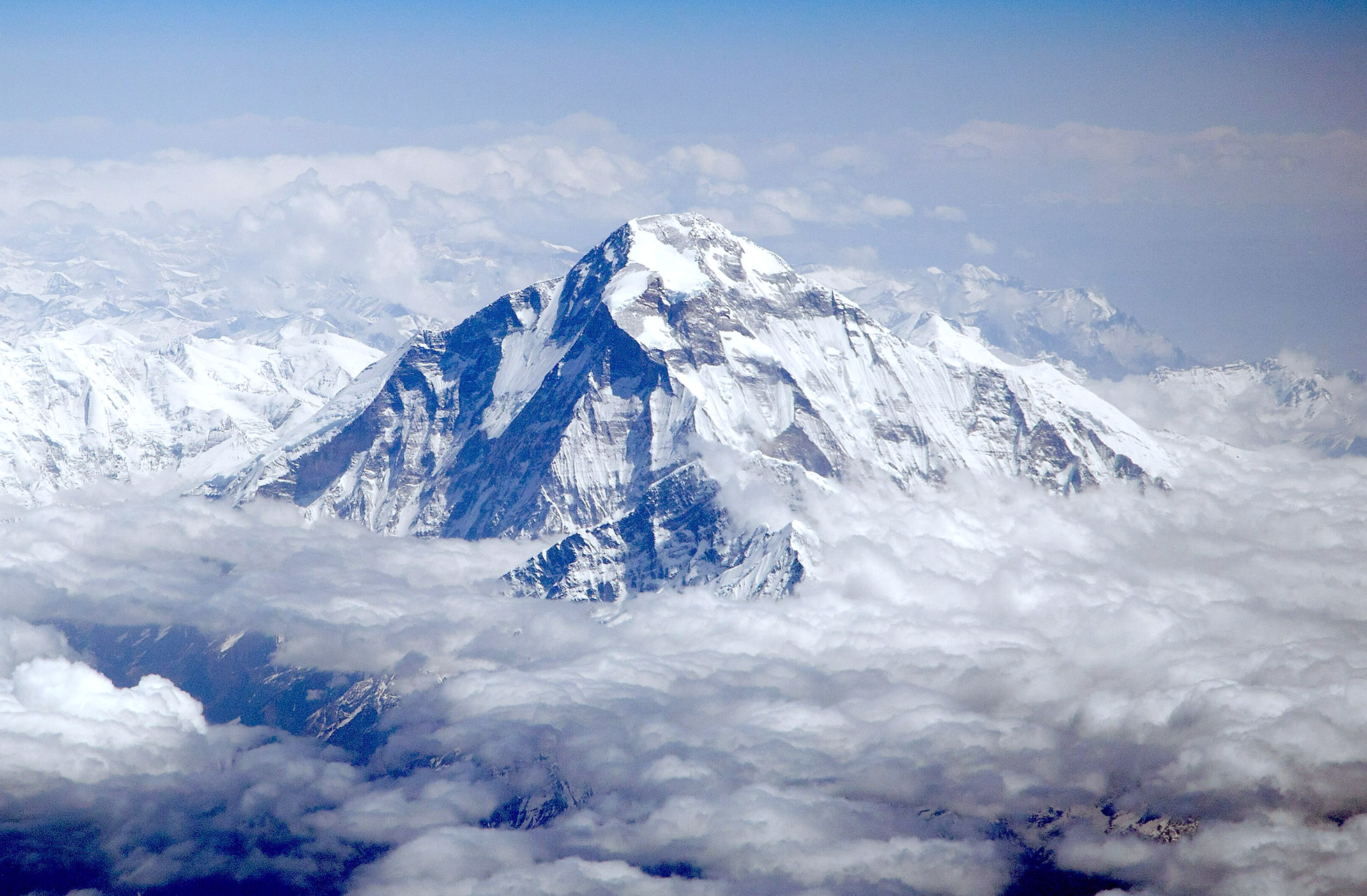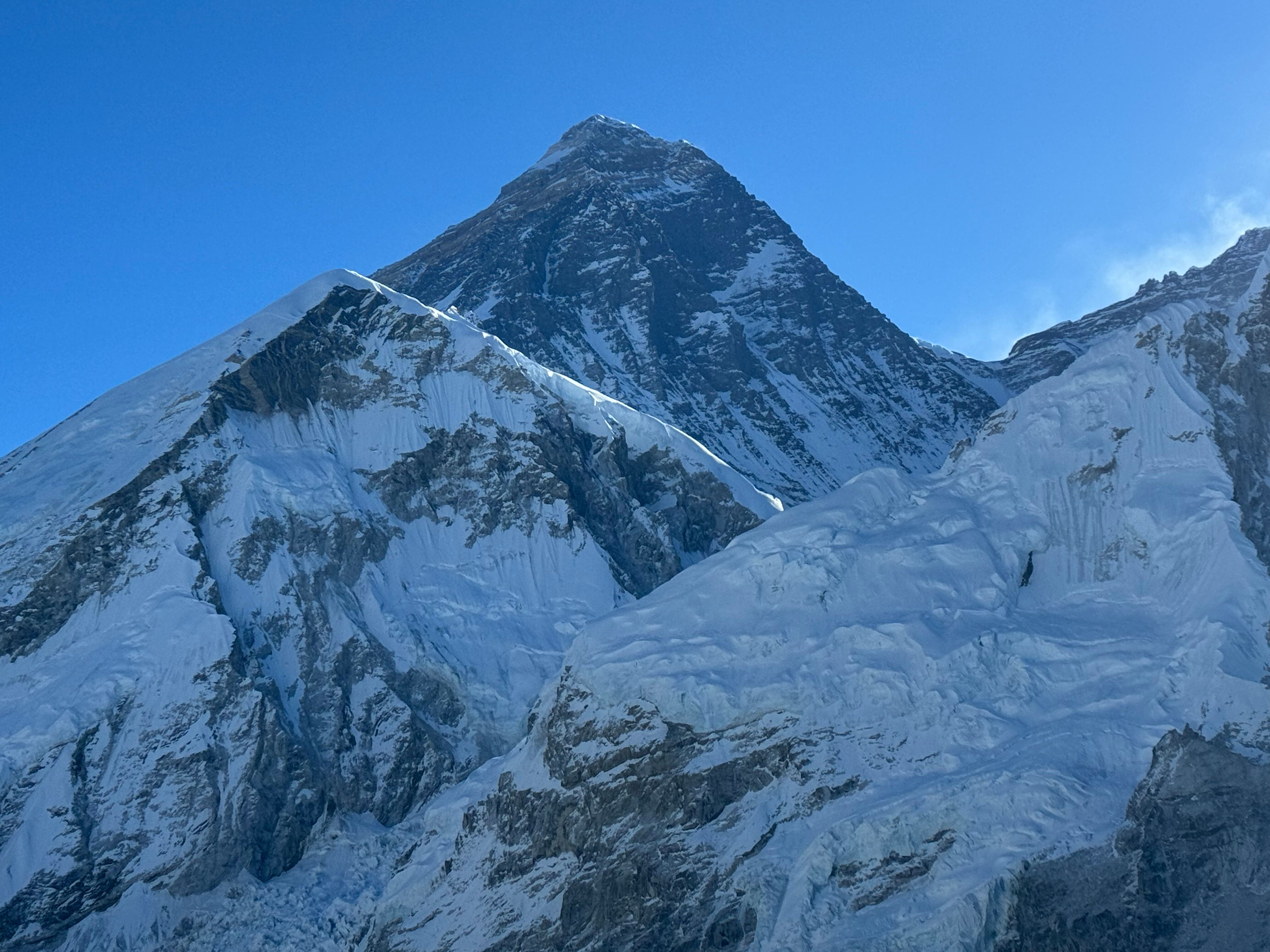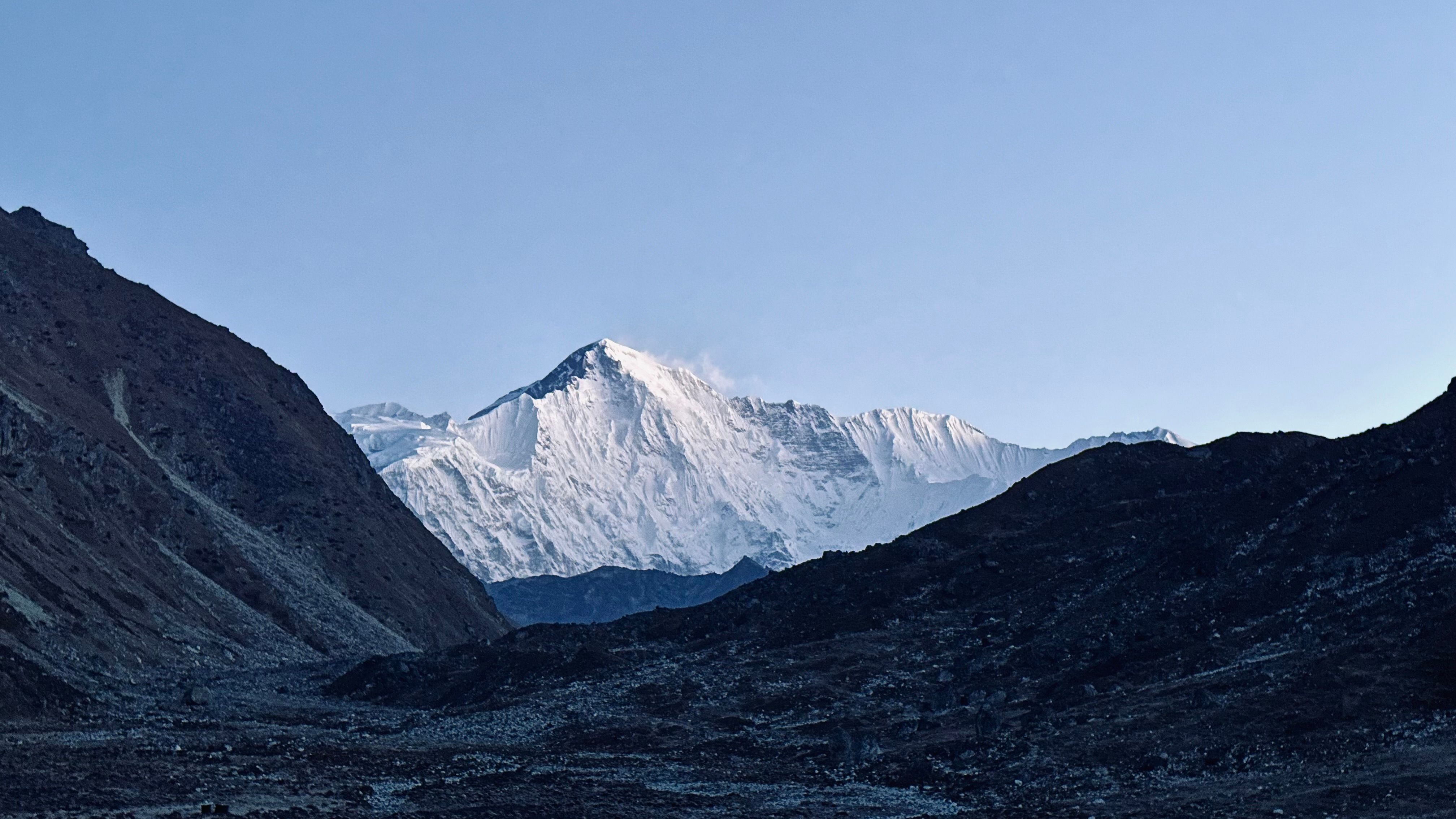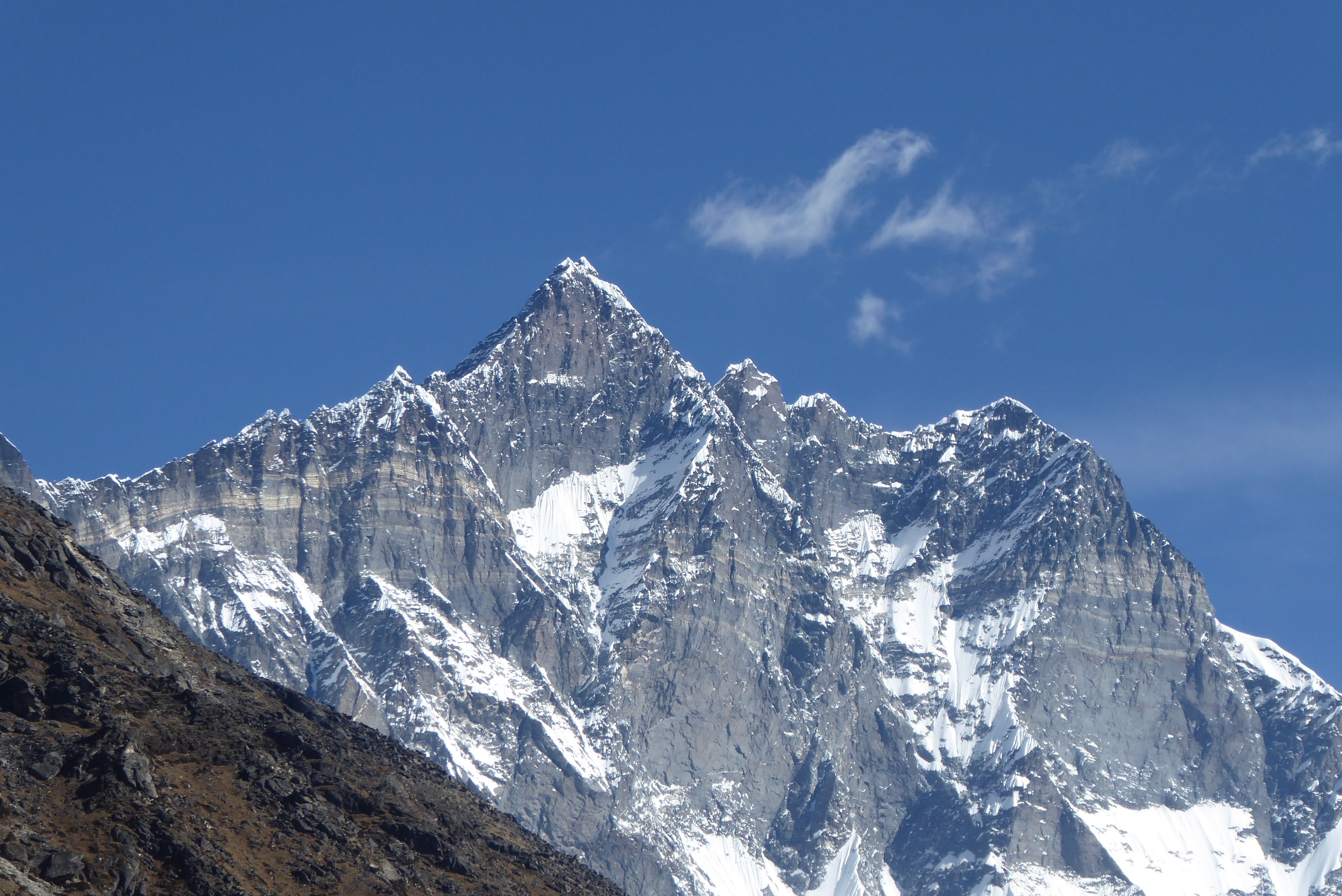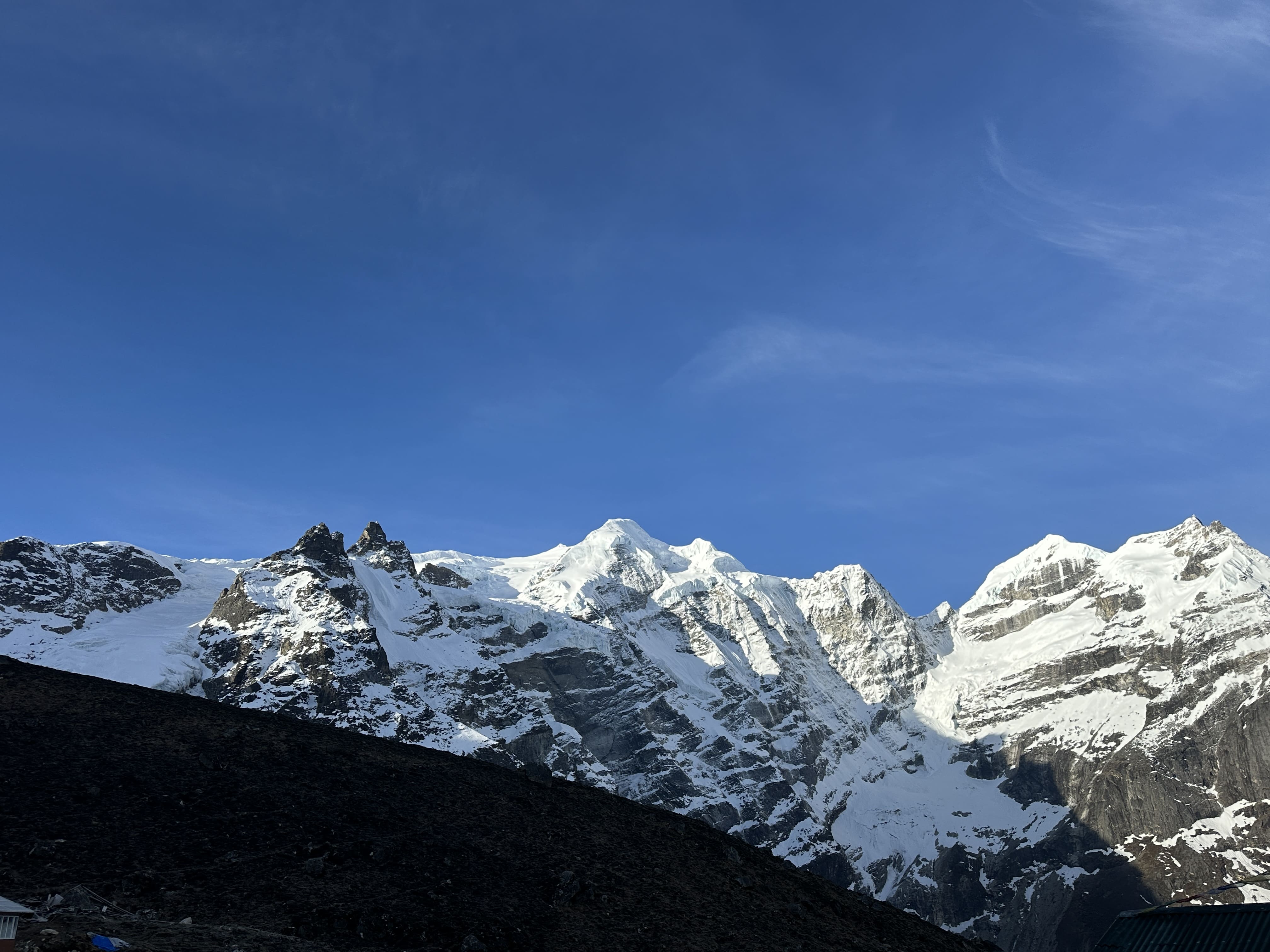
Rising to an impressive 6,476 meters in the heart of the Himalayas, Mera Peak is one of Nepal’s most iconic trekking peaks, offering an exhilarating high-altitude climbing experience and spectacular views of the world’s highest mountains. Mera, on the South side of Mt. Everest, was first reached by the regular path on the normal snow route. The technical aspect of Mera Peak is not challenging, and one needs minimal equipment on top, such as crampons and an ice axe. Ropes will be patched up wherever necessary, and our guides will be willing. We meet in Lukla and start our trek to Mera Peak climbing in the north-east. By a high, rocky ridge, we will pass the trail of a deep forest, cross various streams before we are on the pass, which will take us onto the remote and fairly deserted Hinku Valley.
Best Season to Climb Mera Peak Himalaya
The most favorable seasons for climbing Mera Peak are the spring (March to May) and the autumn (September to November) seasons, when the weather is stable; the spring season provides clear skies, picturesque mountain views, and rhododendron displays.
After all, you will be gaining victory over the snowy peak above 6000 m with basic trekking skills. Embark on an exciting trek to Mera Peak Climbing 2026/2027. We make your travel fun-filled and memorable as no one else does.
Preparation and Training
Mera Peak is the highest official trekking peak of Nepal; it is technically straightforward (F/PD, Alpine 1B) and thus no climbing experience is required before climbing. It is by no means easy. The main difficulty is altitude and endurance: the climbers will be hiking for up to 10 hours a day in the remote Hinku Valley and at an altitude of 5,300m will reach Base Camp.
Doing the training is essential, as it should start 3–4 months in advance and emphasize cardiovascular endurance, long-distance running (10–15km 3–4 times weekly), cycling and hiking with a load of 10–15kg to develop long-day endurance capacity. The guide team provides a brief introduction to basic crampon, ice axe and rope use on the mountain – a pre-mountain short mountaineering course would be useful, but not a requirement. Overall fitness is more important than any one technique as the final two days of the ascent (High Camp to the summit) are the most challenging.
Gear and Equipment
For the glacier walk and the summit day, basic mountaineering equipment is combined with general trekking equipment for Mera Peak.
-
Insulated and crampon-compatible climbing boots and warm trekking boots.
-
Crampons, Ice axe, harness, and Carabiners
-
Helmet, headlamp, glacier glasses and sunscreen
-
Down and insulated layers for High Camp and summit nights.Down and insulated layers for High Camp/summit nights!
-
Teutonic sleeping bags suitable for sub-zero temperatures.Teutonic sleeping bags with sub-zero temperature rating.
-
The outer shell is waterproof, base layers and fleece.
-
A daypack and trekking poles.
-
Personal first aid kit, prescribed medication.
-
Planned, set up, and marked routes on the upper mountain (with materials supplied by the team).
-
Camping and Base Camp/High Camp equipment (tents, kitchen equipment)
-
Travel insurance and high altitude rescue insurance.
Safety and Support
The primary danger on Mera Peak is altitude, rather than technical terrain: The ascent from Lukla to Base Camp is about 2,440m over 7–9 days and a well-planned, slow pace and a good acclimatization plan are key to a safe climb. Three to four small crevasse openings that are easily negotiated are crossed, but otherwise it's glacier walking on moderate slopes that is straightforward. Summit day guides work very closely with climbers and offer practical instruction using crampons and ropes to newcomers. Emergency evacuation is conducted in a regular manner, using the climber's insurance company to notify helicopter services of the need to evacuate the climber to the nearest practicable location, which is next to the insurance company upon their contact. As Mera Peak is located in the relatively tranquil Hinku Valley as opposed to the more crowded Khumbu trekking route, the trekking itinerary is designed to allow for an additional buffer day to cover for its logistics.
Mera Peak is a great introduction to high altitude mountaineering for first timers and is very well supported by our Sherpa climbing team who carefully go through the process of slow acclimatisation and hands-on technical instruction.