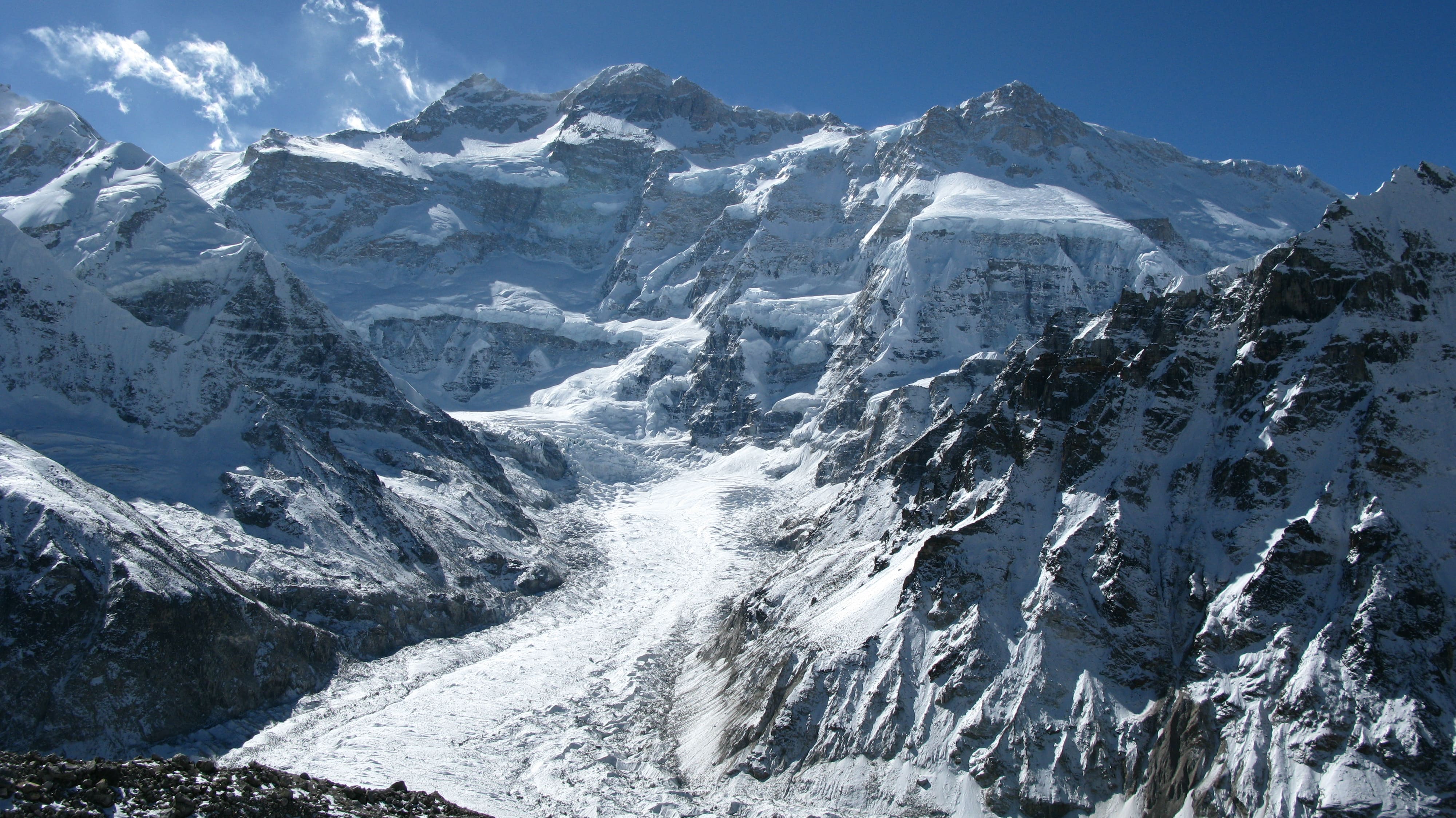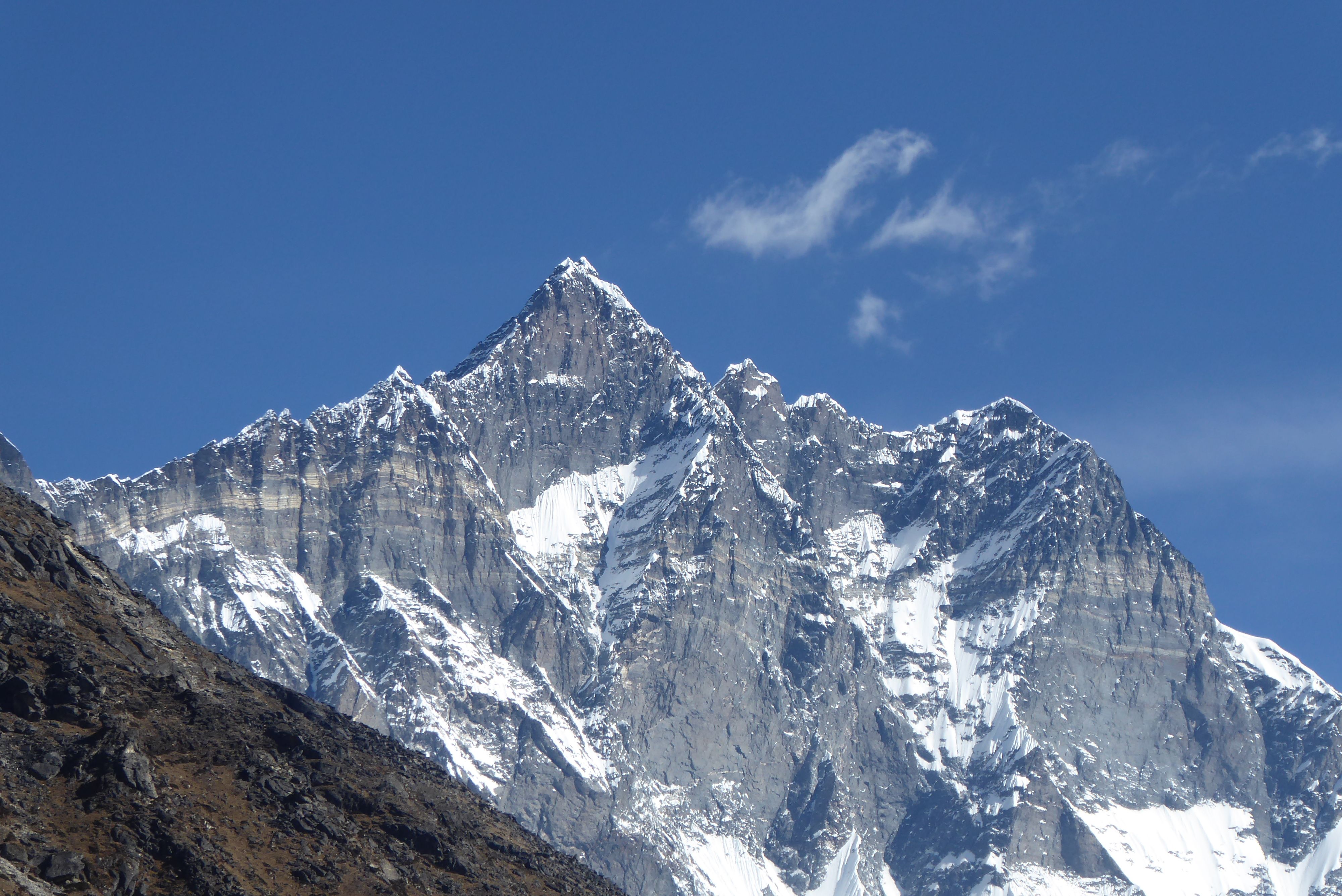
The Physical Terrain of the Region
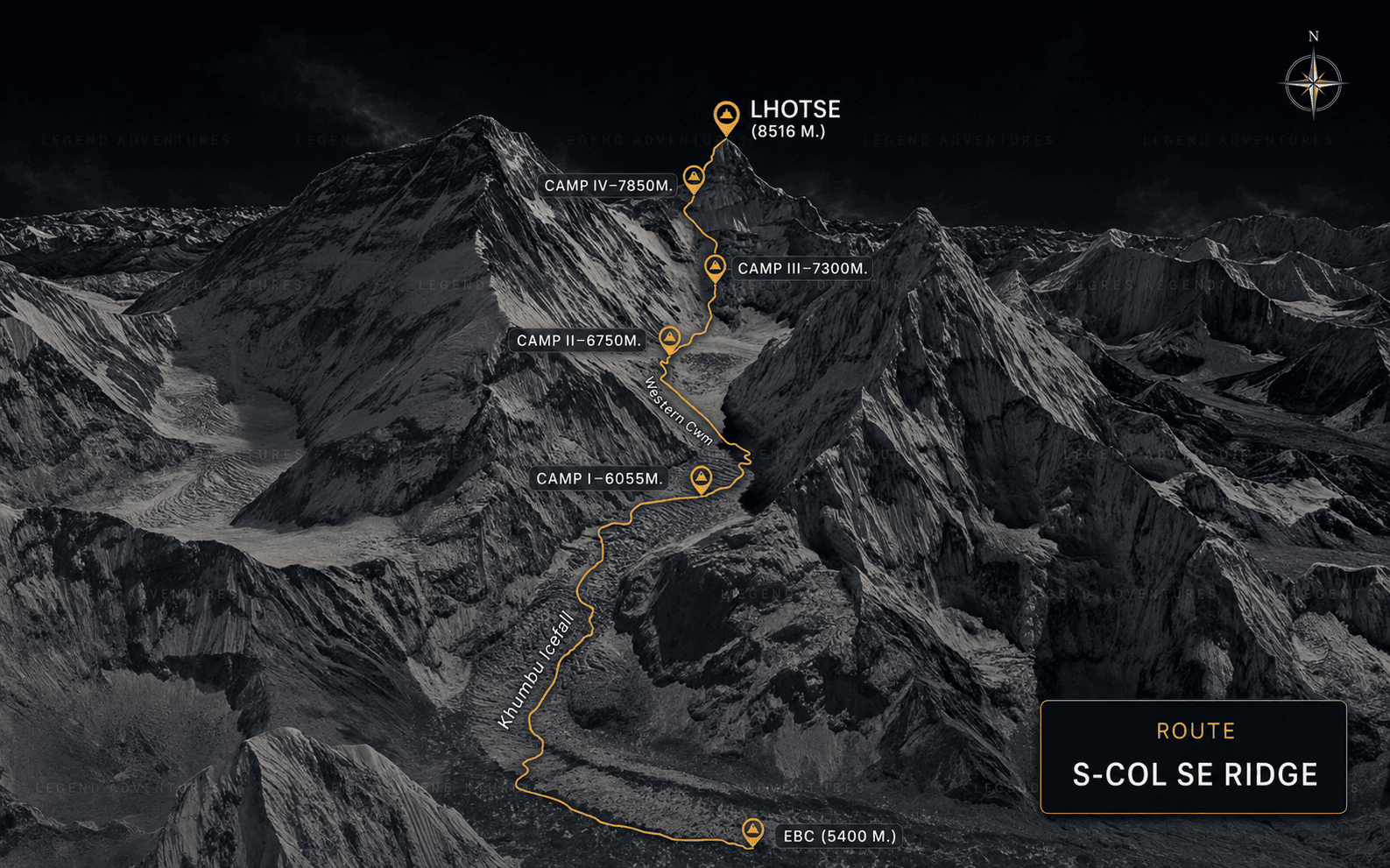
Lhotse lies just south of Everest, connected by a high ridge above eight thousand metres. For the first three weeks, both expeditions follow the same route through the Khumbu Valley, Sagarmatha National Park, and along the Dudh Koshi river. The routes diverge at the South Col, where Lhotse climbers turn from the ridge to ascend the steep West Face Couloir, a narrow chute of hard snow and blue ice leading directly to the world’s fourth highest peak.
Lhotse is always in the shadow of its famous neighbour, and that shadow is what attracts serious climbers to its slopes. The Khumbu’s lodges, Sherpa knowledge, and detailed weather forecasts support Lhotse climbers just like they do Everest climbers. But on summit day, Lhotse offers a special challenge: constant front-pointing up steep, solid ice, testing focus and stamina in a way Everest’s wide ridge does not.
The Culture in the Khumbu Region
Every Lhotse expedition passes through the core of Sherpa country. Villages such as Namche Bazaar, Khumjung, and Tengboche are centred around ancient monasteries, prayer wheels, and stone mani walls. Please walk respectfully, keep to the correct side of mani walls, and pause at chortens as appropriate. The hospitality here is based on tradition rather than visitor numbers.
As with all major expeditions on this route, a Puja ceremony is held before climbing begins. A lama blesses equipment and requests the mountain’s permission for the team. For Sherpa climbers, this ceremony is a sincere act of faith, not a formality for visitors.
The Summit Overview: Lhotse via the West Face Couloir
A Lhotse ascent mirrors Everest’s lower route: the same daunting Khumbu Icefall, the same shimmering Western Cwm, the same exposed climb up the Lhotse Face to Camp 3, and onward to the South Col at Camp 4. But the final act is different. Rather than veering north toward Everest’s Balcony, Lhotse climbers launch straight up the mountain’s namesake couloir. This steep, funnel-shaped gully channels rockfall and spindrift into a single, relentless line. There is no airy ridge at the top, no lengthy traverse-just a continuous, demanding climb on hard ice, ending at a summit so compact that only two or three climbers can stand together at once.
Due to the couloir’s risk of falling debris, timing and team discipline are as critical as physical strength. Fixed ropes are replaced each season because the gully’s walls shed rock and ice unpredictably. Legend Adventures schedules climbs to address Lhotse’s unique hazards, rather than following Everest’s approach.
Best Season for the Lhotse Expedition
Spring, from late March to late May, is the best time to climb, controlled by the same jet-stream winds that affect Everest. But on Lhotse, the couloir’s risk of falling debris makes cold, steady weather even more important. A good weather window means not only calm winds above but also firm, stable snow in the gully below. The final decision on timing is made by your expedition leader, based on daily weather reports rather than a fixed date.
Considerations and Trip Notes
Visa Requirements
Most nationalities can obtain a Nepali visa on arrival at Tribhuvan International Airport, with 15, 30, or 90-day multiple-entry options. For a 50-day expedition and likely Lukla weather delays, the 90-day visa is recommended to avoid mid-expedition visits to the Department of Immigration. Fees are payable in cash, in major currencies, at the airport.
Insurance Requirements
Lhotse Expedition requires climbers to sign up for mountaineering insurance that covers technical climbing over 8000m, helicopter rescue from high camps, medical treatments in Kathmandu, expedition cancellation as well as repatriation if needed. The Lhotse Expedition permit approval requires a minimum death and evacuation coverage policy, along with coverage for the high-altitude Sherpa Team. Proof of an approved policy, with no altitude restrictions below the summit, must be provided before final payment. Our medical coordinator will confirm coverage directly with your insurer. Therefore, we suggest you obtain proper information before purchasing the insurance policy.
Insurance covers and authorises rescues, but cannot guarantee helicopter landings in the couloir or during poor weather. Above safe helicopter altitude, rescues rely on Sherpas and guides physically assisting climbers down to a point where evacuation is possible.
Fitness, Technical and Experience Standards
-
A prior successful summit above 6,500m is the minimum entry standard, with genuine ice and mixed-terrain experience carrying real weight in the acceptance review.
-
You must independently demonstrate automatic-crampon technique, sustained front-pointing on hard ice, fixed-line ascent, Jumar changeovers, ladder crossings and oxygen mask and regulator operation.
-
You must be able to move comfortably with a 10 to 12kg pack at altitude and demonstrate true self-sufficiency in a high camp, beyond basic familiarity with equipment.
-
Final acceptance runs through a climbing resume review, guide references, medical screening and a hands-on technical assessment.
Environmental Conduct
Legend Adventures enforces a strict leave-no-trace policy. All team members must use approved biodegradable waste bags, restrict defecation to toilet tents, avoid dumping on the glacier, and ensure all oxygen cylinders are returned securely.
Gear List Suggestions
-
800-fill 8,000m down suit and a three-layer waterproof shell system.
-
Triple mountaineering boots rated to minus 40 degrees Celsius, with a compatible modular sock and glove system.
-
Category-4 glacier glasses, with a spare pair carried separately.
-
Personal climbing hardware: automatic crampons, a low-profile harness, a matched Jumar, a classic alpine axe and fixed-line safety gear.
-
A sleeping system rated to minus 40 degrees, with a dual sleeping-pad setup.
-
A satellite communicator, cold-rated power banks and personal prescriptions.
-
Test every piece of gear thoroughly before you leave. In Nepal, equipment earns its trust; this is not the place for a first trial on the mountain.
Our team of experts will provide you with a detailed checklist of gear and equipment for the Lhotse Expedition.
Team Expertise at Legend Adventures
Leadership on this expedition sits with an internationally certified IFMGA or UIAGM mountain guide, supported by a senior Sirdar and a full team of high-altitude Sherpas working one-to-one with each climber through the rotation cycles and the summit push. A dedicated expedition doctor, or at minimum a designated medical officer, runs baseline health screening at Base Camp and continues daily clinical checks for the length of the climb, alongside a full satellite communications and forecasting service reading the jet stream for your summit window.